Rabat has long suffered from a reputation as a purely administrative city. That overlooks the fact that it packs several of Morocco’s great monuments into a compact area, is easy to get around by tram, and is never far from the ocean. Here are the essentials, sorted by mood.
Rabat’s great monuments
Hassan Tower and the Mohammed V Mausoleum
On the esplanade overlooking the Bouregreg, the Hassan Tower, the unfinished minaret of Yaqub al-Mansur’s great Almohad mosque, rises among its truncated columns. Opposite stands the Mohammed V Mausoleum, completed in 1971, which holds the tombs of King Mohammed V, King Hassan II and Prince Moulay Abdellah. Ceremonial guards at the entrance, a gilded cedar dome inside: entry is free and the visit takes about an hour.
Chellah
Away from the centre, Chellah combines the ruins of the Roman town of Sala with the necropolis of the Marinid sultans. Restored, the site reopened in May 2024 with a 29-stop trail and an audio guide. Storks still nest on the minaret.
The Kasbah of the Udayas
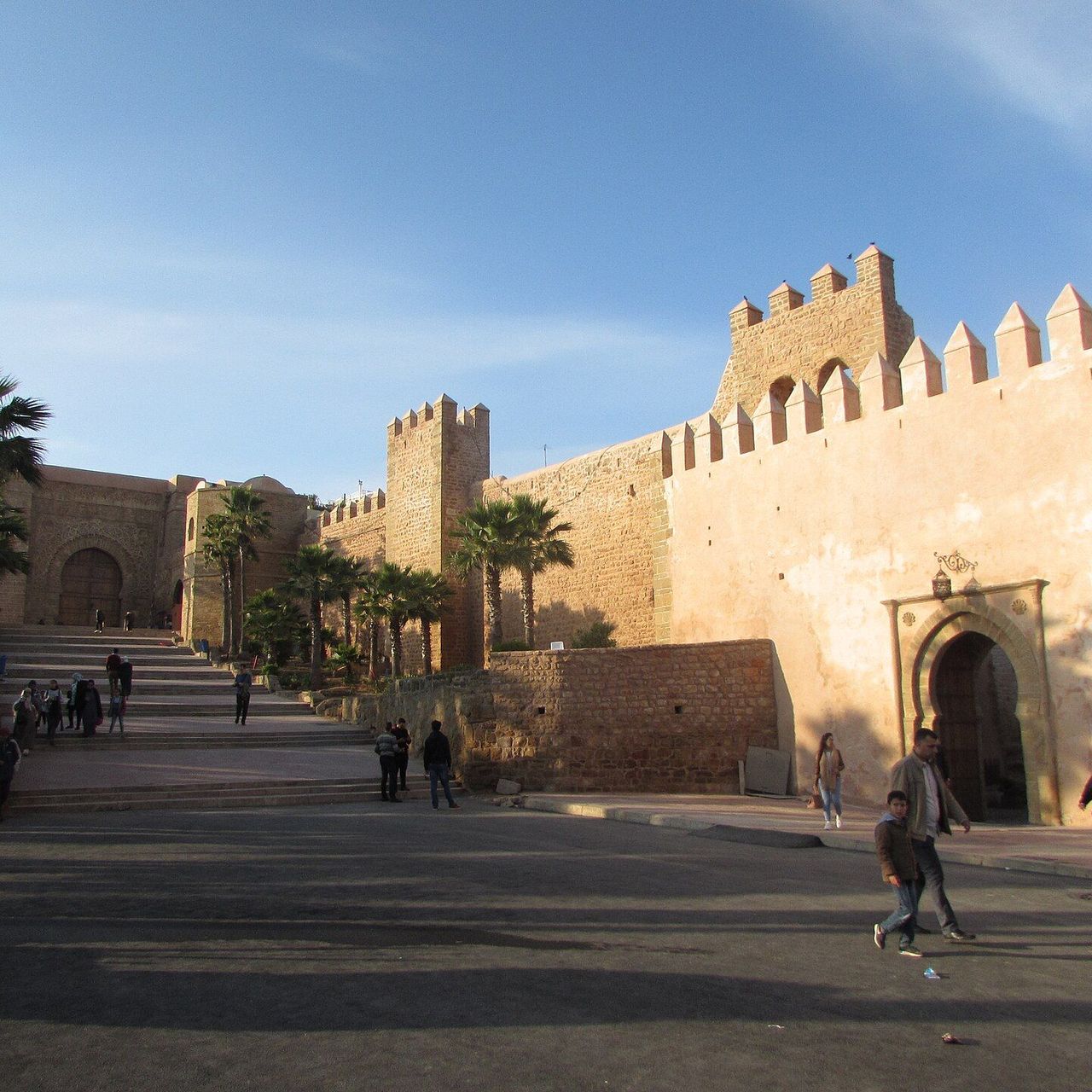
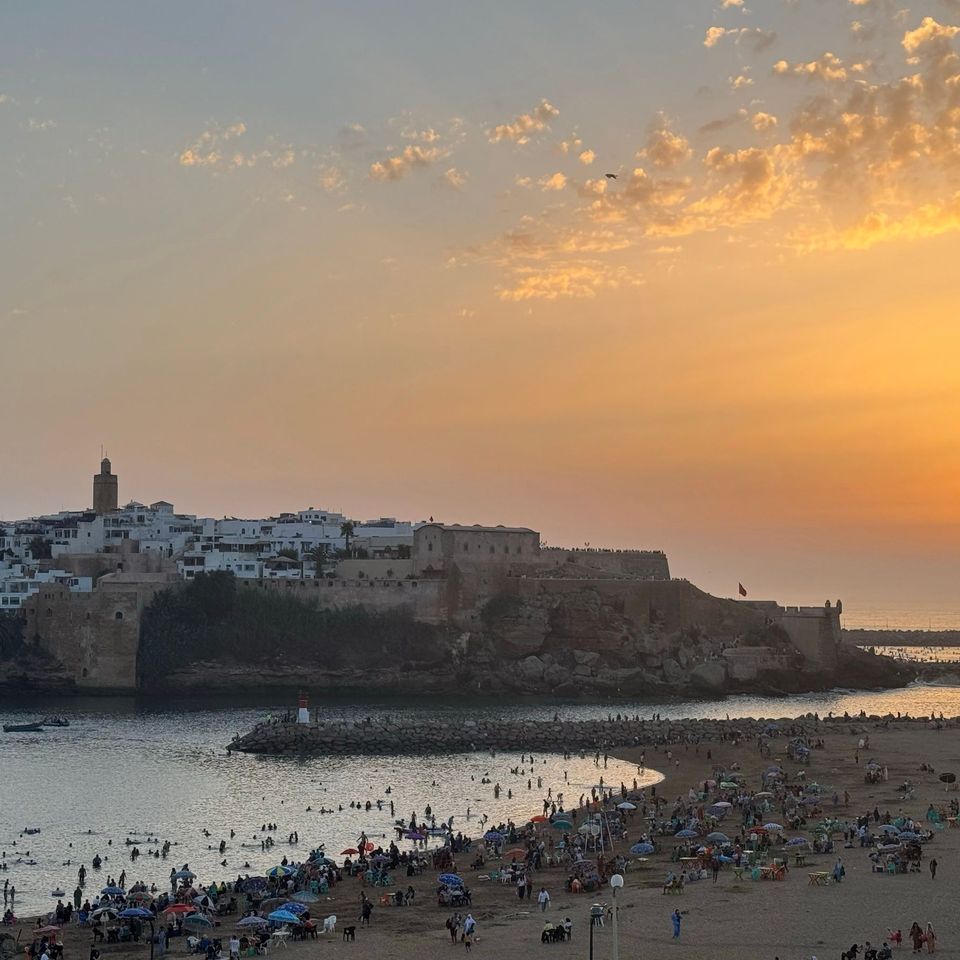
Perched above the river mouth, the Kasbah of the Udayas is entered through the monumental Bab Oudaya gate. Expect white-and-blue lanes, the old signal platform facing Salé, the National Museum of Adornment in Moulay Ismail’s former palace, then the Andalusian Garden and the Café Maure for mint tea by the river.
The medina, Rue des Consuls and the Almohad gates
Calmer than those of Fez or Marrakech, Rabat’s medina is easy to explore without a guide. Rue Souika and Rue Sidi Fatah for everyday shopping, Souk Sebbat for leather and slippers, then pedestrian Rue des Consuls, lined with carpets, silver jewellery, ceramics and workshops. It leads straight to the Udayas.
To grasp the scale of the Almohad city, follow the ramparts to Bab er-Rouah, Rabat’s finest gate, whose chambers regularly host exhibitions.
Museums and stages
Walks: gardens, river and seafront
Designed by Jean Claude Nicolas Forestier in the early years of the Protectorate, the Jardin d’Essais Botaniques (17 hectares) unfolds its palm alleys, ponds and bamboo groves between Agdal and Avenue de la Victoire. In the morning it belongs to families and joggers.
For a more urban stroll, take Avenue Mohammed V and the Hassan district, the heart of the new town designed by Henri Prost from 1913. Neo-Moorish and Art Deco façades, the railway station, the central post office, St Peter’s Cathedral and the Parliament form an open-air museum of 20th-century architecture, also part of the World Heritage listing. Allow an hour, ideally late in the day when the light warms the façades.
Below the medina, rowing boats still ferry passengers across the Bouregreg to Salé in a few minutes. On the far bank, the marina is lined with terraces and restaurants, while Le Dhow, a sailing ship moored on the Rabat side, suits a sunset drink. On the ocean side, the corniche runs from the Udayas to Fort Rottembourg, past breaking waves and anglers.
Beaches near Rabat
- Rabat Beach, below the Udayas: the most convenient, popular with surfers and surf schools.
- Plage des Nations, about 15 km north on the Salé side: a long stretch of sand and powerful waves, loved by surfers and walkers even out of season.
- Harhoura and Val d’Or, to the south towards Témara: more sheltered coves and shallow water, recommended by the tourist board for children.
- Skhirat, further south, for a quiet day out.
The Atlantic stays cold and can be dangerous: swim at lifeguarded beaches in summer.
Rabat with children
The capital is one of Morocco’s easiest cities with kids: wide pavements, a tram network and plenty of green space. The Jardin d’Essais and the Andalusian Garden make good pit stops, the rowing-boat crossing to Salé delights younger children and the beaches at Harhoura suit toddlers. About twenty kilometres north, the Exotic Gardens of Bouknadel, created in the mid-20th century by horticulturist Marcel François, take visitors through plant life from around the world. Teenagers usually enjoy a surf lesson at Rabat Beach and the Photography Museum.
Practical information
- How long? Two days for the highlights, three with the museums and a beach day.
- Getting around: the Rabat-Salé tram serves the medina, Hassan and the Bouregreg; blue petits taxis fill the gaps. The Al Boraq high-speed train stops at Rabat-Agdal.
- When to go: spring and autumn are the most pleasant seasons. In June the Mawazine festival takes over the city.
- Our addresses: tables under Restaurants, places to stay under Hotels, coffee breaks under Cafés and monuments under Arts & Culture.