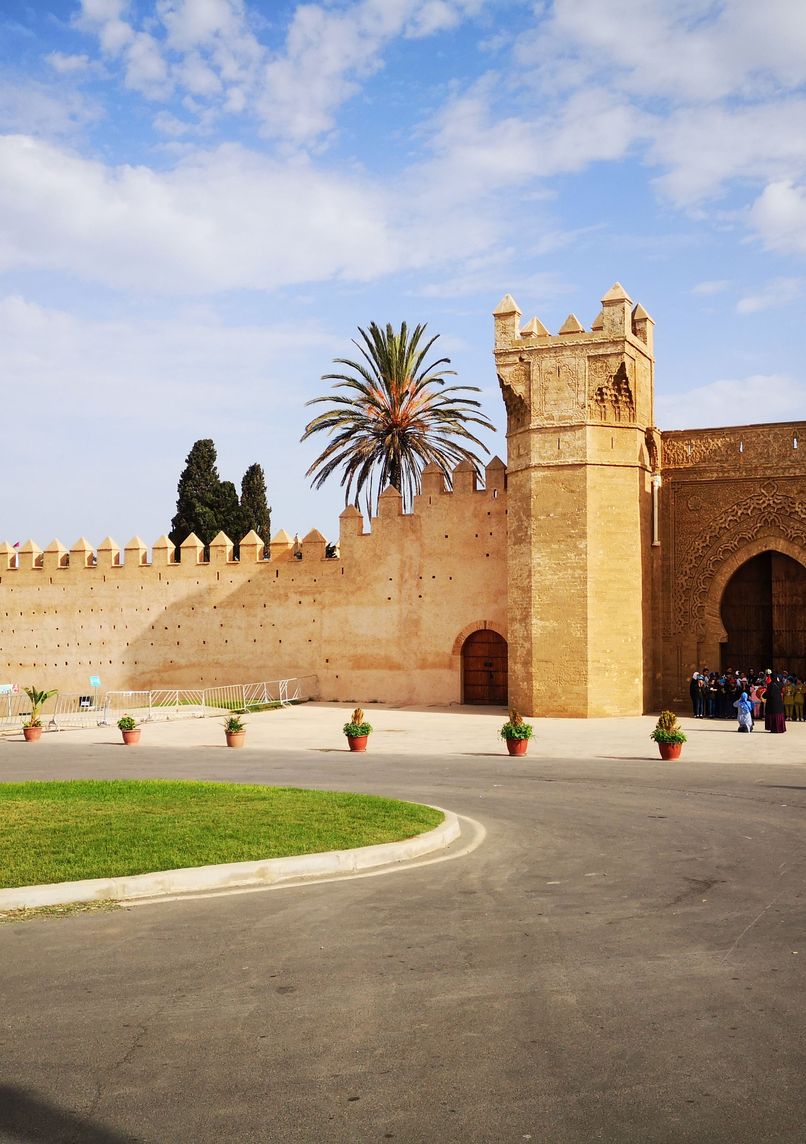
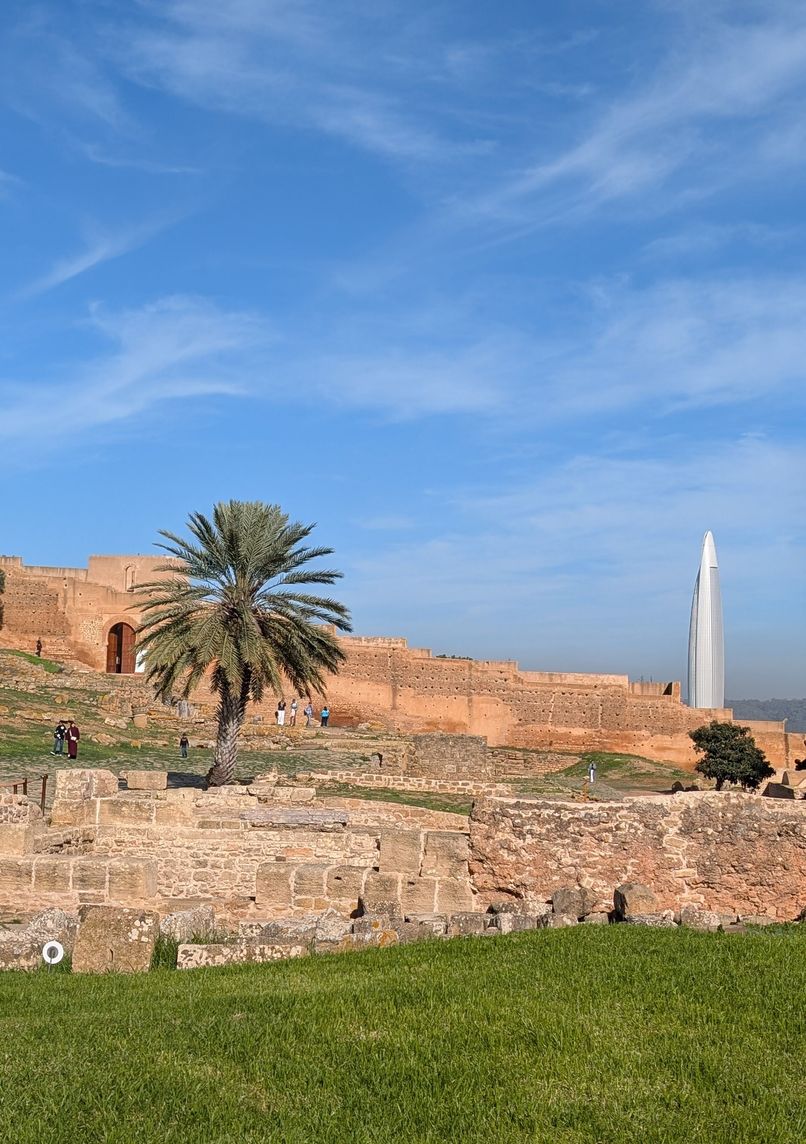
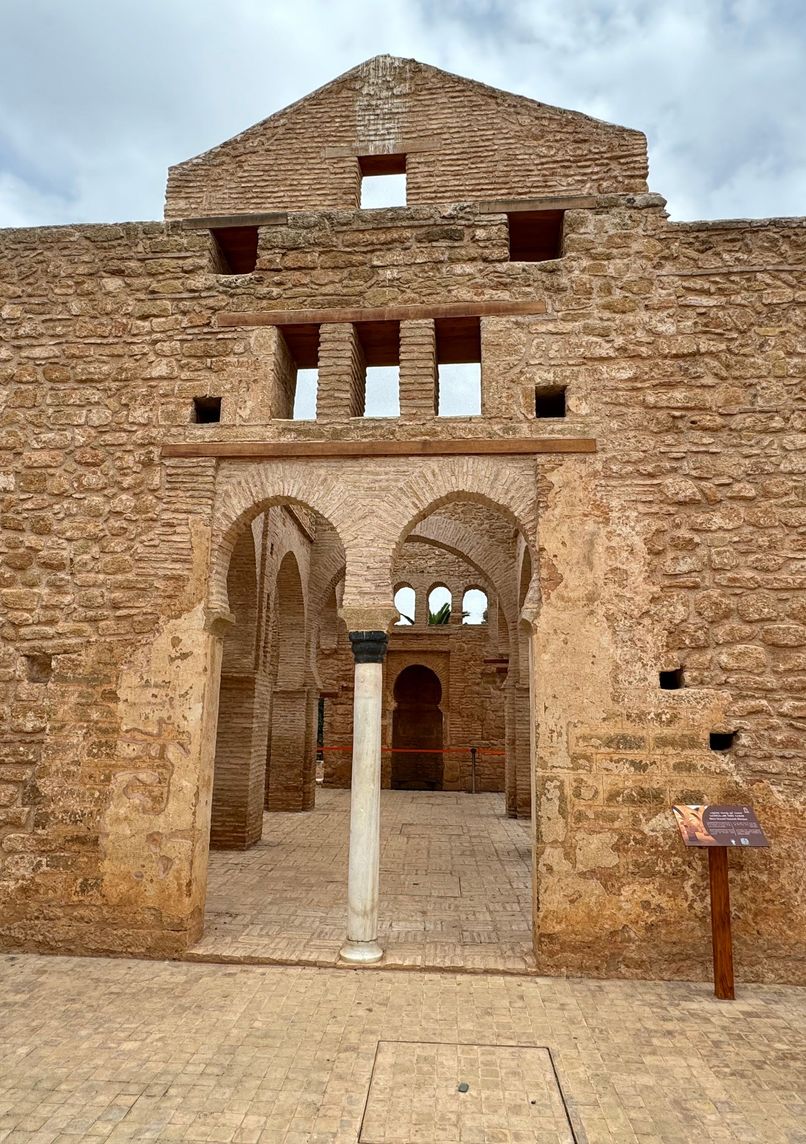
On the edge of Rabat, above the Bouregreg valley, Chellah combines the ruins of the Roman city of Sala with a Marinid royal necropolis completed in 1339. Restored and reopened in 2024 with an audio-guided route, this UNESCO-listed site is one of the most memorable visits in the capital.
Two thousand years of history at Chellah
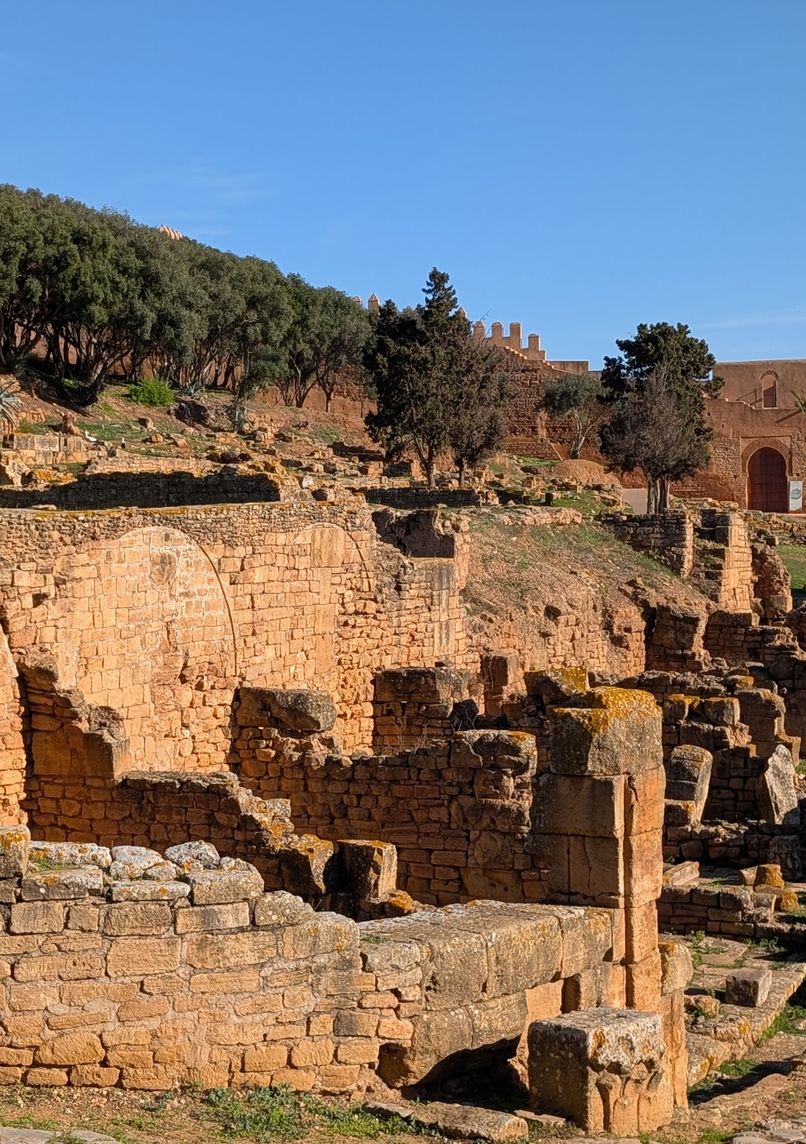
Behind its walls, the site layers several eras. Excavations have uncovered the Roman city of Sala Colonia, where you can walk through the forum, basilica, monumental fountain and triumphal arch. In the 14th century the Marinids turned it into a royal necropolis: the inscription over the main gate dates its completion to 1339, under Sultan Abu al-Hassan. Chellah has been a listed historic monument since 1920 and a UNESCO World Heritage site since 2012.
What to see
- The monumental Marinid gate and its inscription
- Roman remains: forum, basilica, fountain and arch
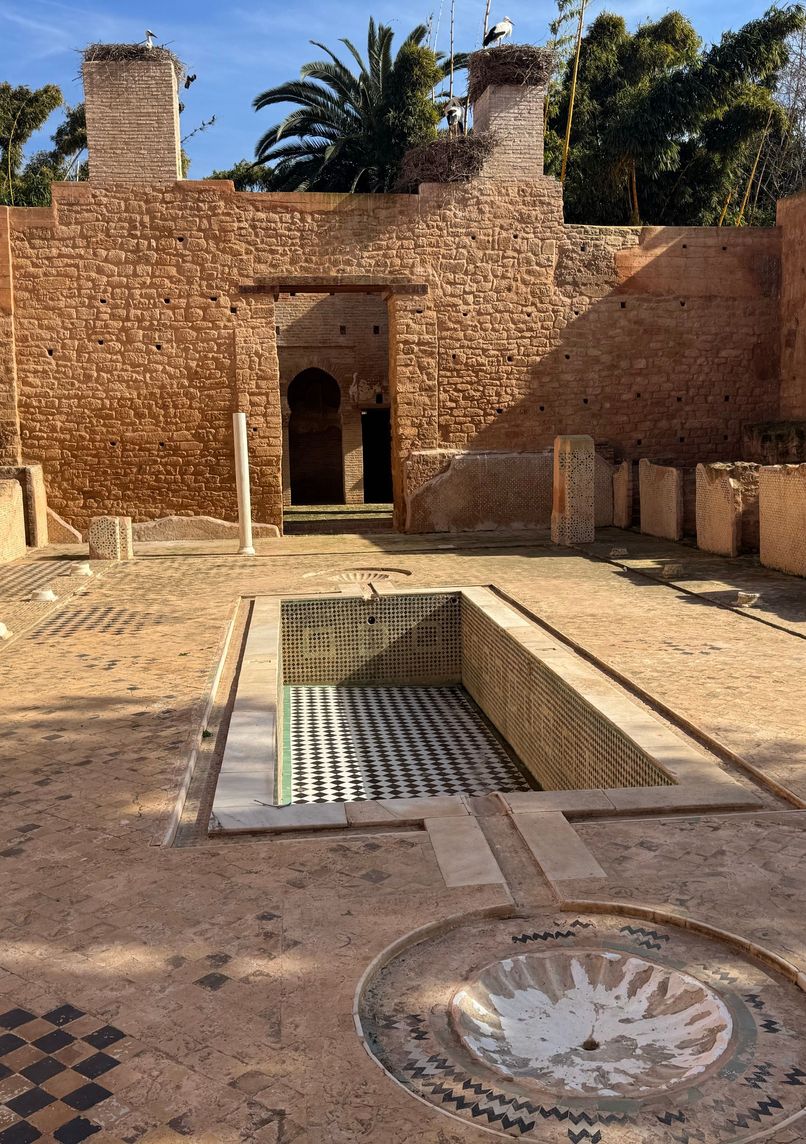
- The zawiya, its zellige-clad minaret and the tomb of Abu al-Hassan
- A small oasis of around ten hectares, where storks nest
A restored site
Following restoration, Chellah reopened on 20 May 2024 with a new visitor route. Individual audio guides and an app offer commentary in Arabic, French, English and Spanish, and on-site guides are also available. The ruins long hosted the Jazz au Chellah festival.
Practical information
- October to March: daily, 9am to 6pm
- April to September: daily, 9am to 8pm
- During Ramadan: 9am to 4pm
- Online ticketing via the official website
- Wear comfortable shoes, as the site is on a slope
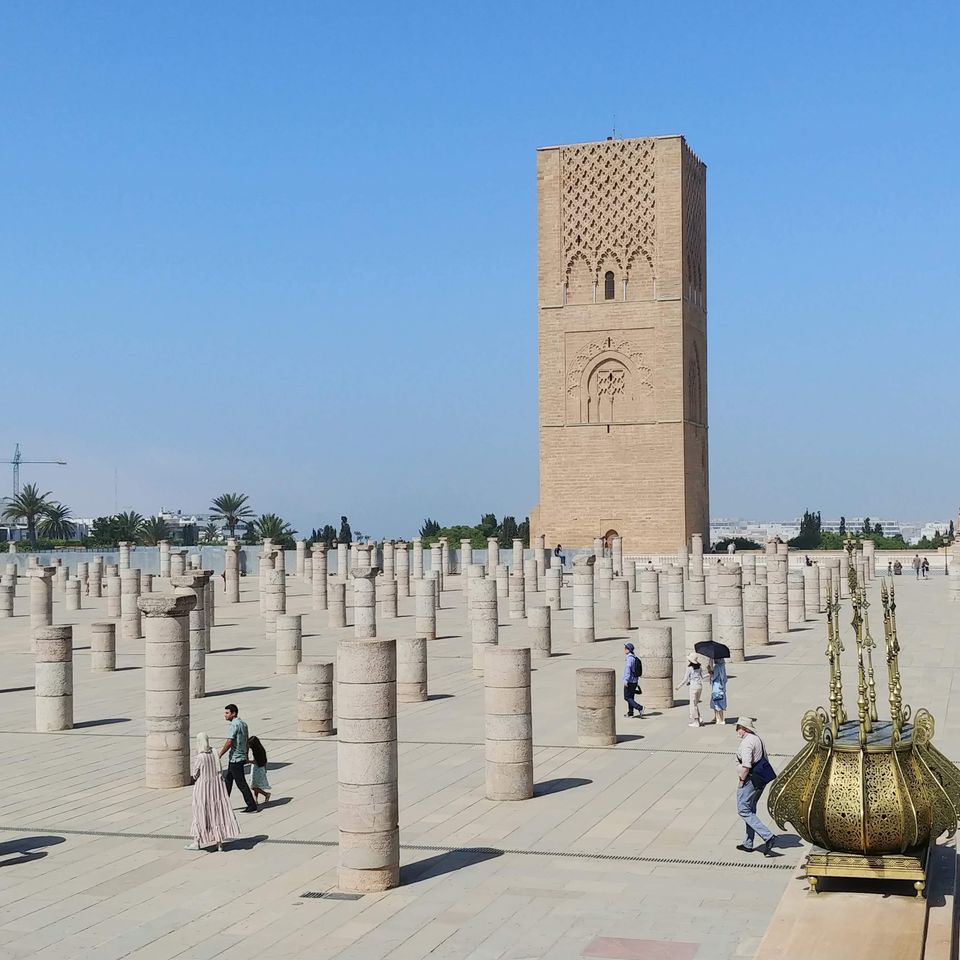
- Continue to Hassan Tower or the Botanical Test Garden