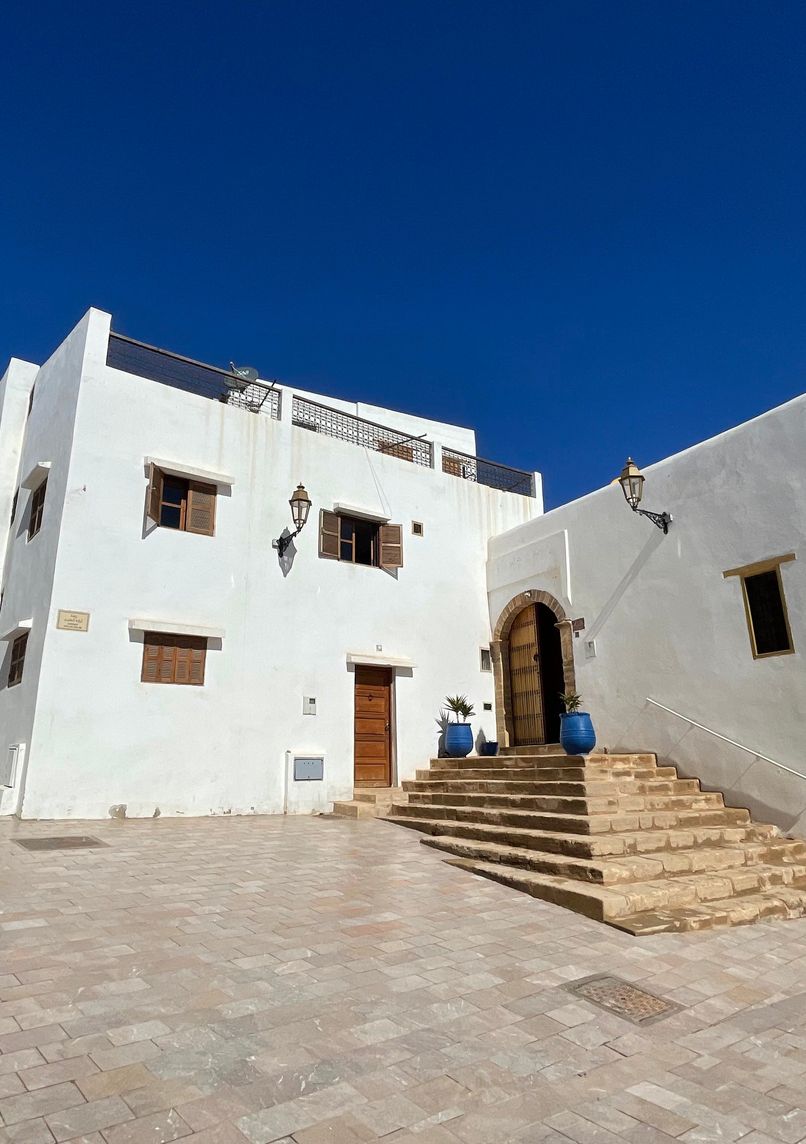
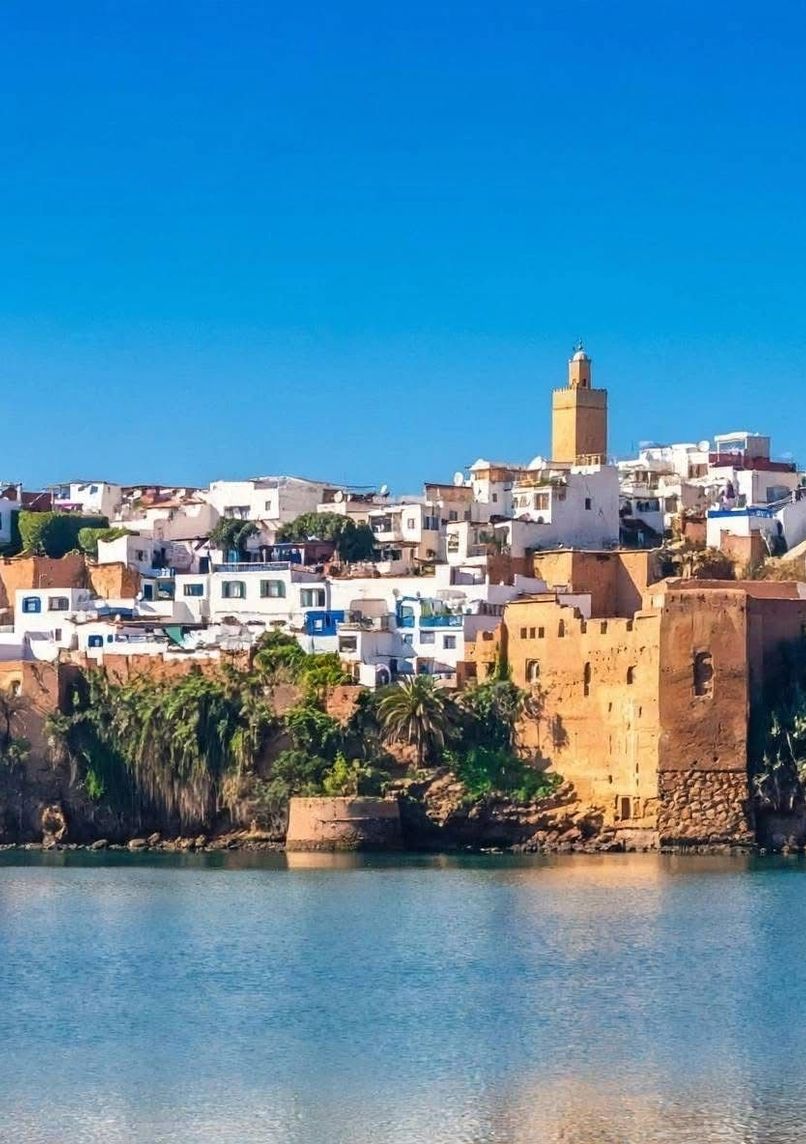
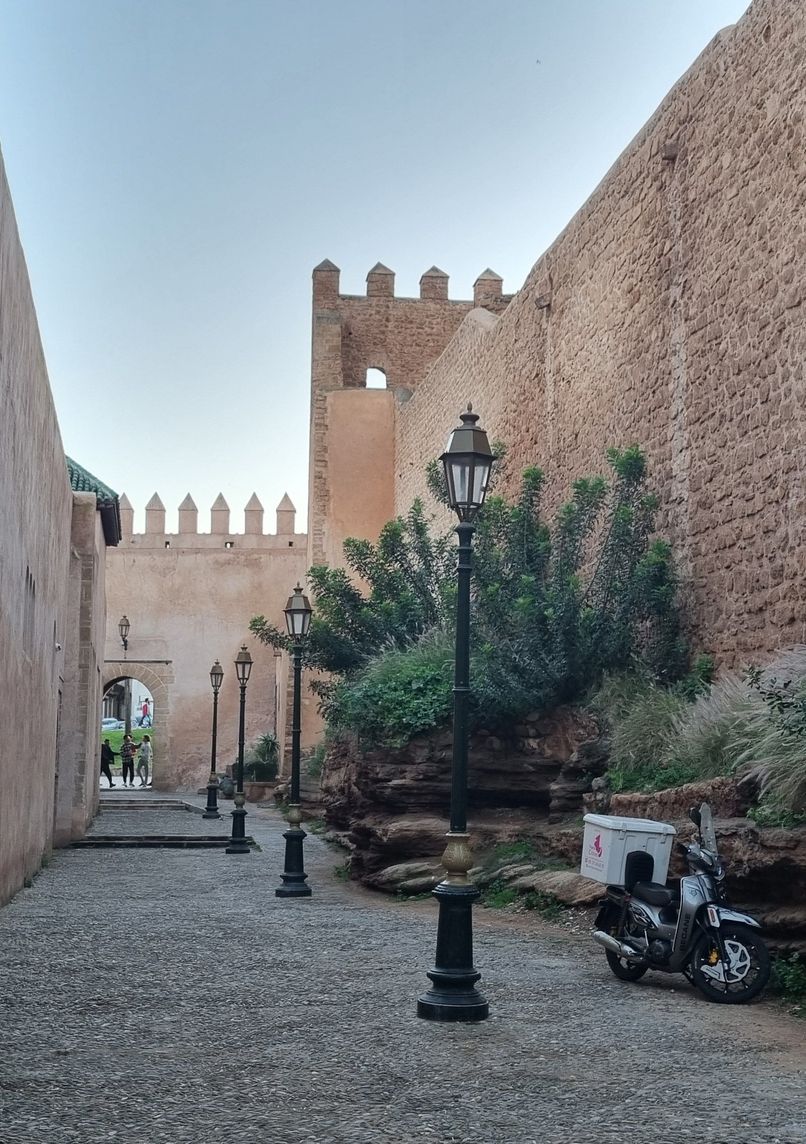
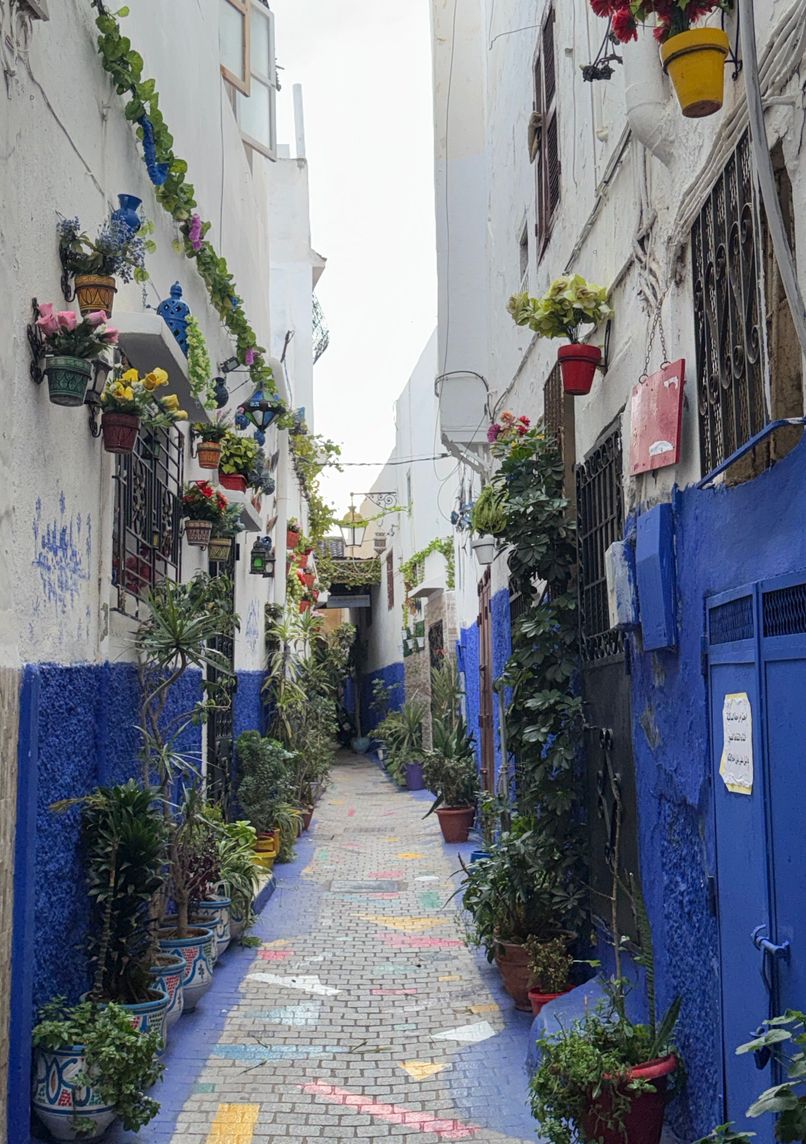
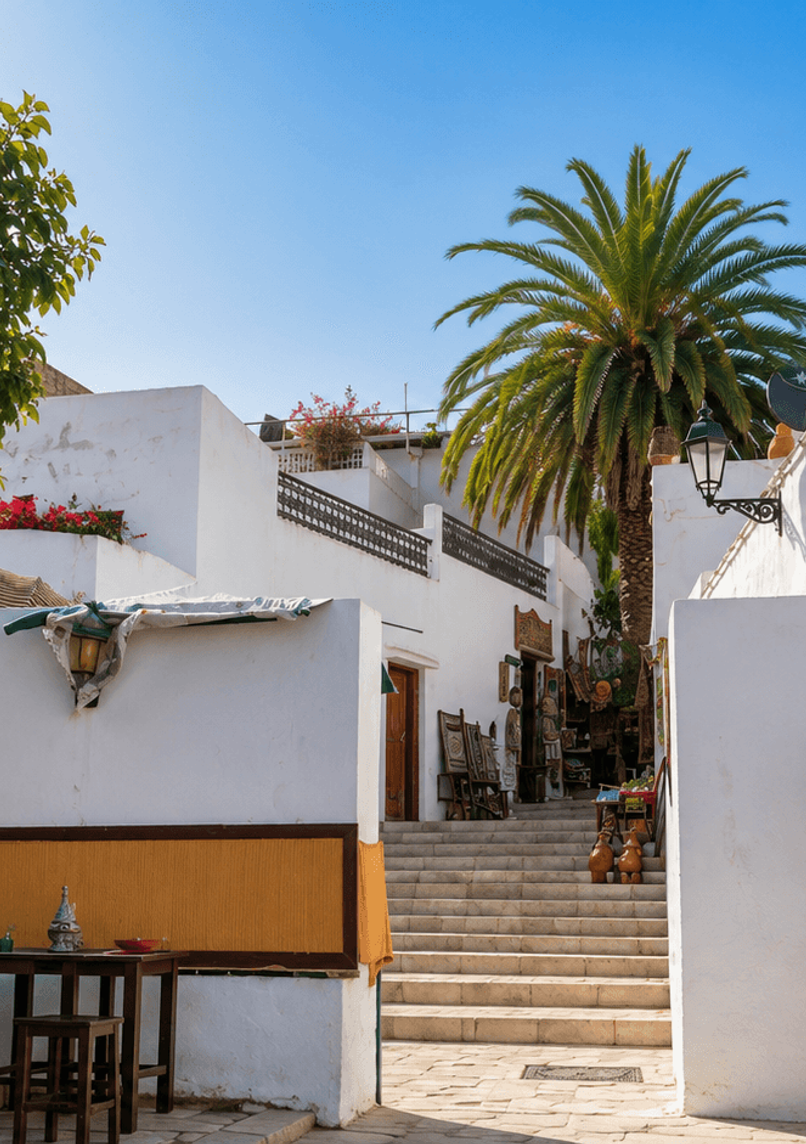
Set on a headland where the Bouregreg meets the Atlantic, facing Salé, the Kasbah of the Udayas is the oldest part of Rabat. Beyond the Almohad gate of Bab Oudaya lie whitewashed lanes, an Andalusian garden, a Moorish café and the National Museum of Adornment.
A fortress above the ocean
The Kasbah of the Udayas began in the 12th century as a fortified camp, held first by the Almoravids and then the Almohads, at the mouth of the Bouregreg. It takes its name from the Udaya tribe, settled here by Sultan Moulay Abderrahmane in 1833. It is part of the UNESCO World Heritage property “Rabat, Modern Capital and Historic City”, listed in 2012.
What to see in the Kasbah of the Udayas
- Bab Oudaya, the monumental gate built around 1195 under Yacoub El Mansour, with remarkable carved decoration
- Jamaa el Atiq mosque, built around 1150
- Whitewashed lanes trimmed in blue, with glimpses of the estuary, Salé and the Atlantic
- The Andalusian Garden, laid out during the Protectorate, and the Moorish café above the river
The National Museum of Adornment
Housed in Moulay Ismail’s former palace, completed between 1672 and 1694, the museum reopened on 9 January 2023 after restoration. Five sections trace the history of adornment in Morocco, drawing on King Mohammed VI’s personal collection of Amazigh jewellery. Until 31 January 2027, the exhibition “Tarz, Embroidering in Morocco, Yesterday and Today” focuses on embroidery.
Practical information
- Kasbah open daily, 8am to 6pm
- Museum of Adornment: 10am to 6pm, closed Tuesdays; 60 MAD for foreign visitors, 30 MAD for Moroccan adults, 15 MAD for under-18s
- Reach it on foot from Rue des Consuls or the seafront
- Stepped lanes: flat shoes recommended