July 1969: what we actually know
1969 was a turbulent year for Jimi Hendrix. On 3 May he was arrested at Toronto airport for drug possession; the trial, which ended in acquittal in December, hung over his whole summer. The Jimi Hendrix Experience had just split, and the guitarist wanted to get away from the noise.
In July he flew from Paris to Casablanca with friends, among them, according to some accounts, the designer Colette Mimram. The trip lasted about ten days across Morocco and included a short stay in Essaouira. Most testimonies place him at the Hôtel des Îles, facing the beach, rather than at the Riad Al Madina, the former Hôtel du Pacha, which nonetheless claims his visit. No official photograph of the stay has ever been published. A few weeks later, on the morning of 18 August 1969, Hendrix closed the Woodstock festival. He died in London on 18 September 1970, aged 27.
That is about as far as the record goes. His Dutch biographer Caesar Glebbeek sums it up: the short visit, he says, “produced a mountain of erroneous information and fictitious stories”.
The legends: a village, an island, a castle made of sand
Over the decades, Hendrix's visit has gathered episodes that the timeline simply does not support:
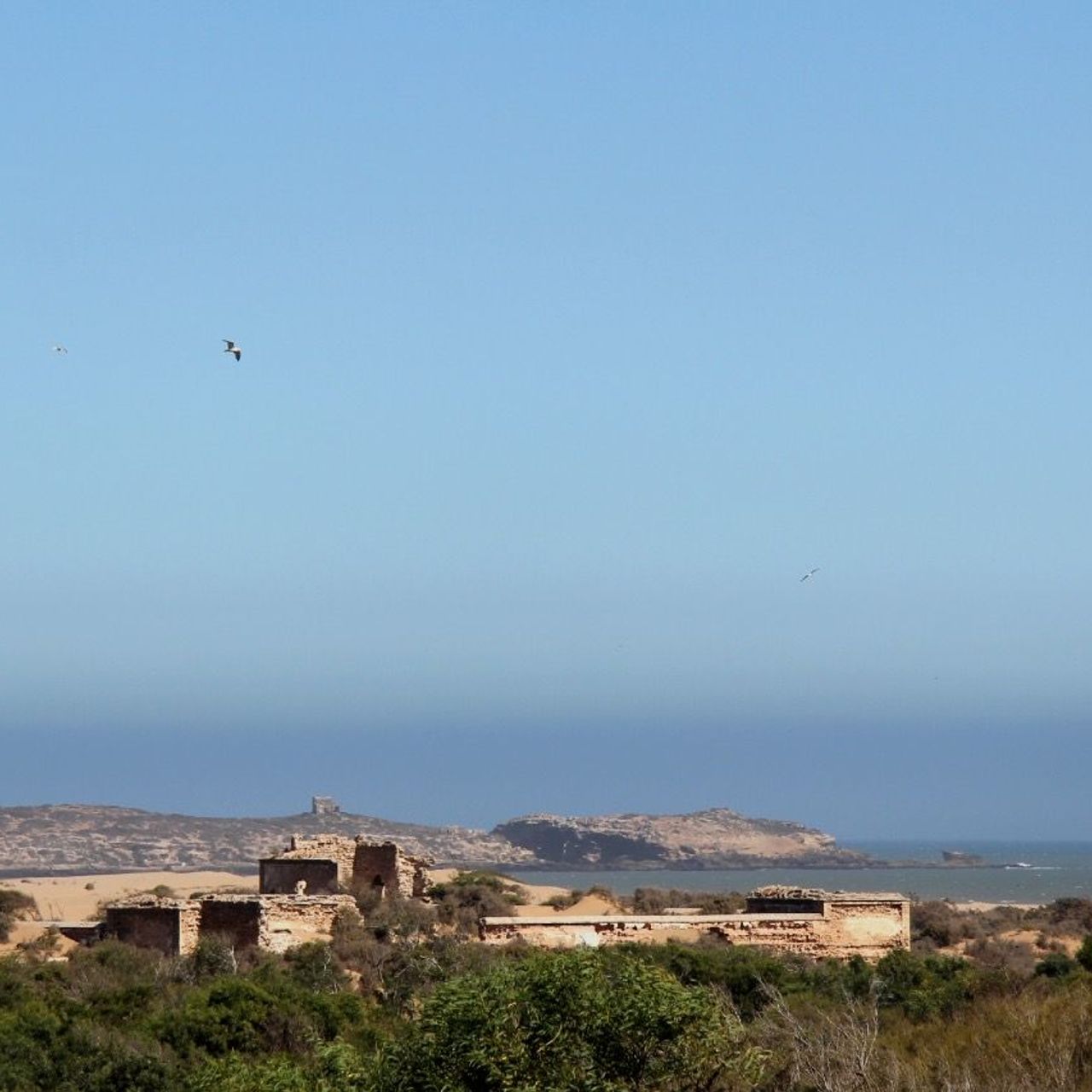
- “Castles Made of Sand” was supposedly inspired by the ruins of Dar Soltane, the sultan's former summer palace half-buried in the dunes, or by Borj El Berod on the beach. Yet the song appears on Axis: Bold as Love, released in December 1967, almost two years before the trip.
- Buying Diabat: he is said to have tried to purchase the village, or even one of the Mogador islands. There is no evidence of it, and Glebbeek maintains he never set foot in Diabat.
- Meals at “Chez Sam”, by the harbour: the restaurant did not exist in 1969.
- Jams with Gnawa musicians: an appealing idea, but not backed by any recording or specific eyewitness account.
In Diabat, however, several older residents insist they saw him. In 2020, for the 50th anniversary of his death, the AFP news agency gathered their memories of a young man “carrying a guitar on his back”, flanked by bodyguards. Memory or reconstruction? The line is blurred, and that blur is exactly what keeps the myth alive.
Diabat and the hippie scene
Hendrix may only have passed through, but the hippie wave stayed. In the late 1960s Essaouira and its surroundings became a stop on the trail heading south. Across the Ksob river, a few kilometres south of the medina, the small village of Diabat drew travellers from Europe and America who rented mud-brick houses and lived to the rhythm of music and the beach. The press has often listed musicians such as Frank Zappa and Cat Stevens among visitors to the area, and the American troupe the Living Theatre also left its mark.
The sociologist Georges Lapassade, a regular in Essaouira, believed this ferment influenced the town's young painters. The gallerist Frédéric Damgaard, sceptical at first, eventually came round to the idea: the Hendrix legend is also the story of an era when Essaouira opened up to the world.
What's left of Hendrix today?
The guitarist has become a kind of local patron saint, almost a brand. His face appears on the whitewashed walls of Diabat, where the Café Hendrix (sometimes called Café Jimi) serves mint tea to walkers and riders among portraits and murals. A guesthouse in the village also bears his name. Walking and horse-riding excursions from Essaouira often end here, after a stop at the ruins of Dar Soltane.
In the medina, a number of bars and shops play the same card, and the nickname “the Jimi Hendrix of the guembri”, given to Gnawa master Mahmoud Guinia, reflects the link people like to draw between psychedelic rock and Gnawa trance. To discover that very real music, read our story on Gnawa music and the June festival, and browse our things to do picks.
Why the legend endures
A rock star at the height of his fame, a fortified town swept by trade winds, ruins in the dunes and trance music: every ingredient of a great story was there. The rest is down to Essaouira itself, an open port and crossroads of cultures where each generation adds its own layer of memory. Knowing the facts takes nothing away from a visit to Diabat; if anything, it shows how a stay of a few days can shape a town's image for more than half a century.
Practical information
- Diabat: about 5 km south of the medina, across the Ksob river. Reach it by taxi via the Agadir road, or along the beach on a horse or camel ride.
- Dar Soltane: ruins with free access, listed as national heritage in 2020. Take care, the walls are fragile.
- Listen: “Castles Made of Sand” on Axis: Bold as Love (1967), and check the dates for yourself.