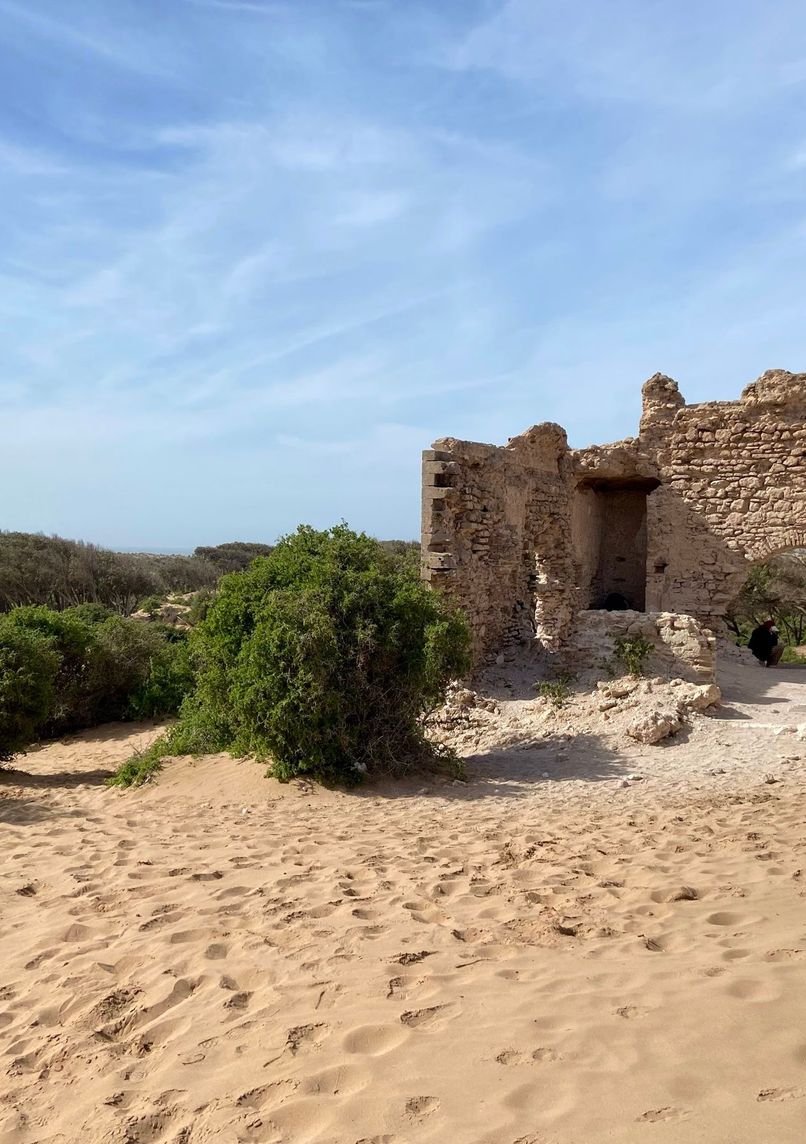
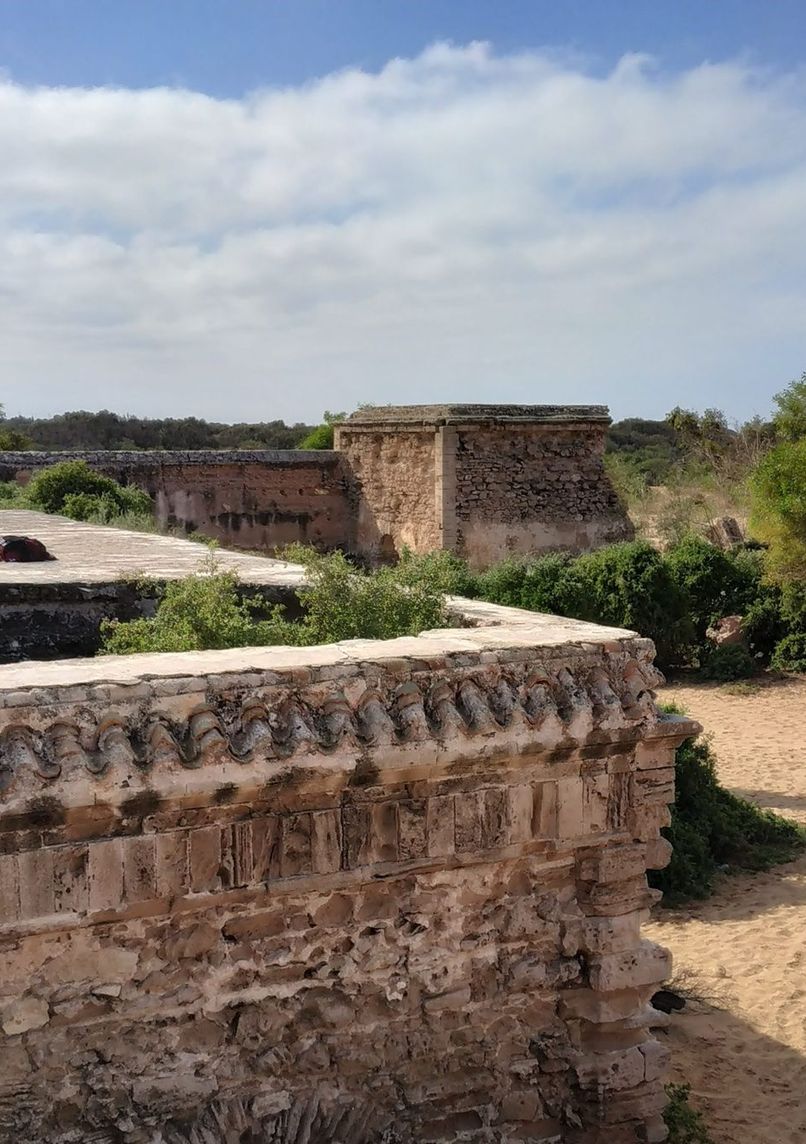
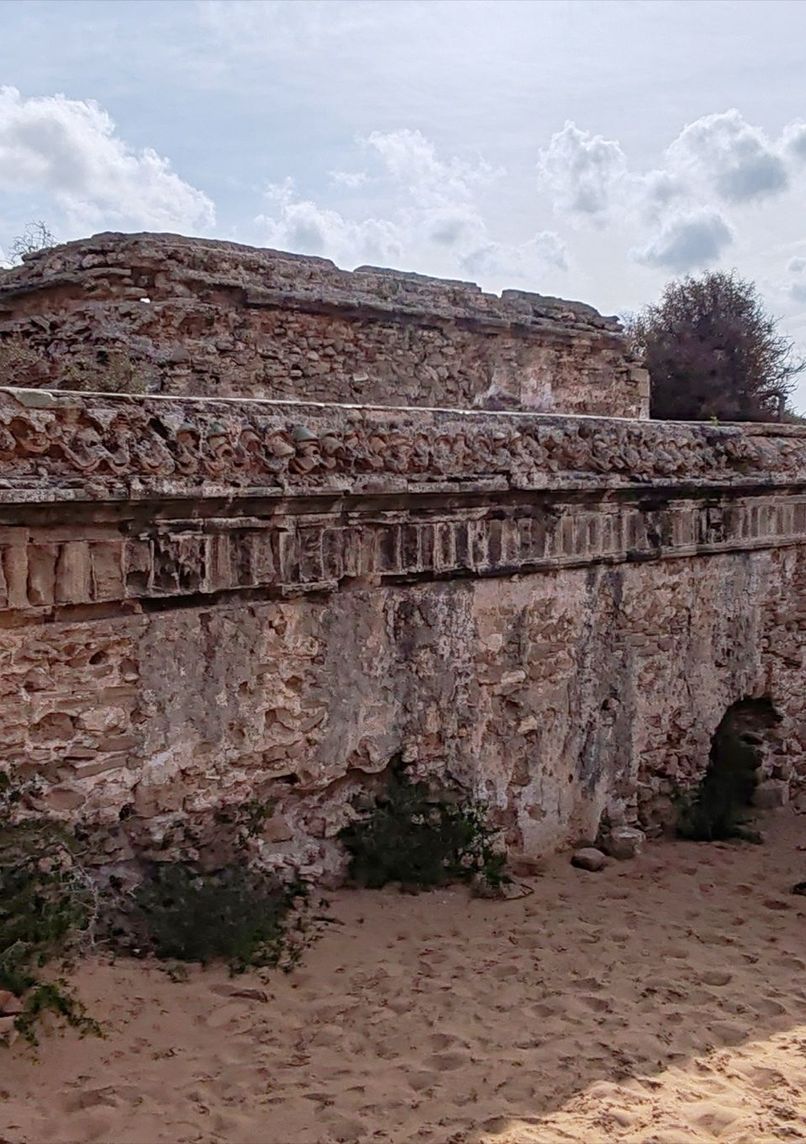
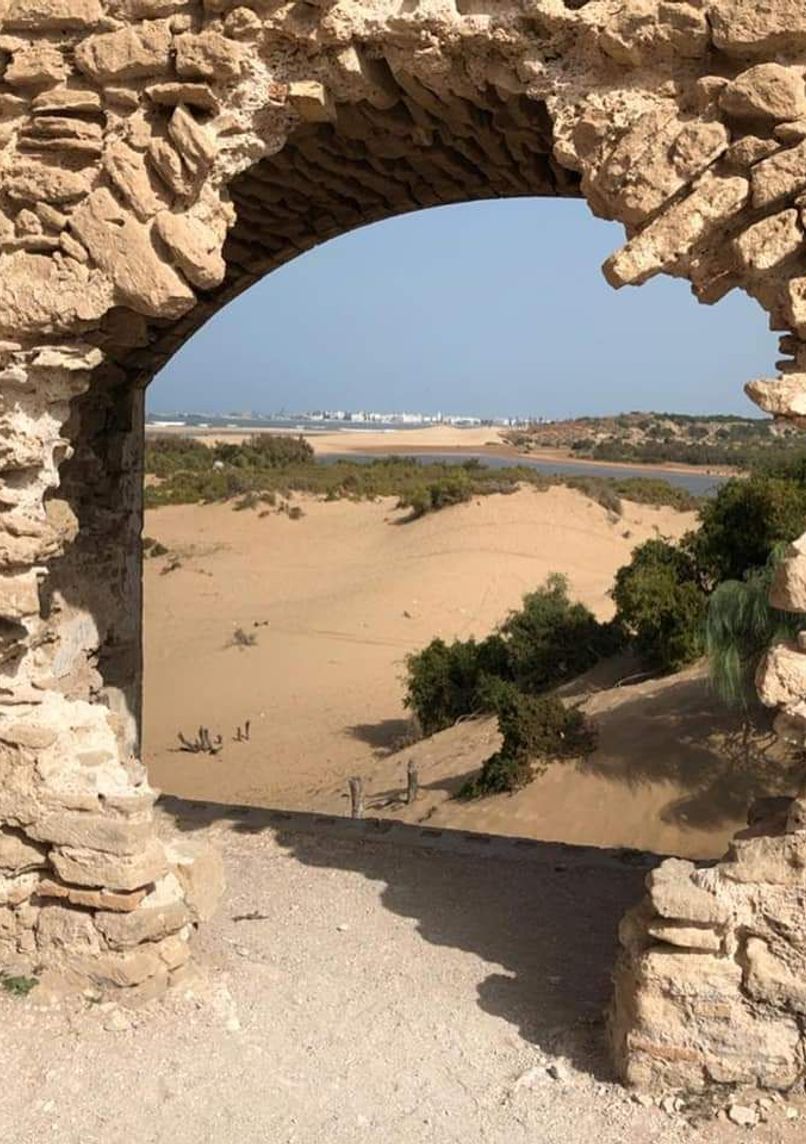
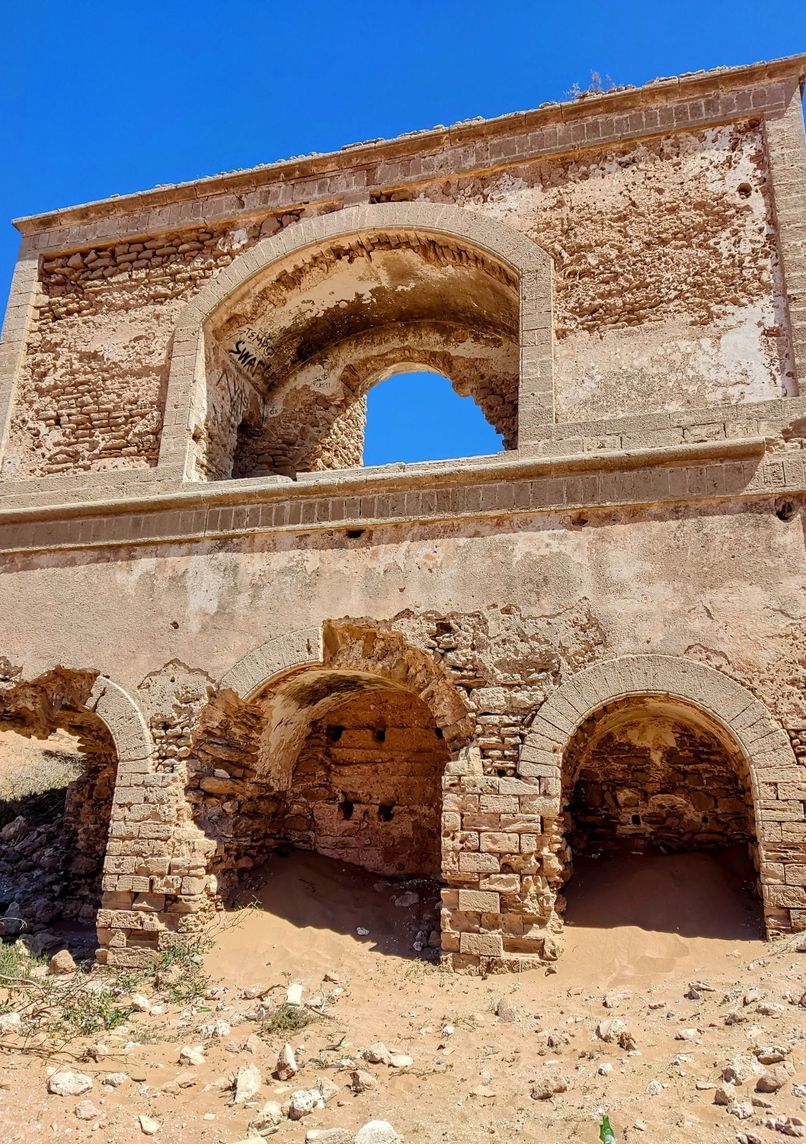
South of the Ksob river near Diabat, the dunes have swallowed Dar Soltane, the summer palace of Sultan Mohammed Ben Abdellah, Essaouira’s founder. On the beach nearby, Borj El Berod, a watchtower that collapsed in 1856, is slowly disappearing into the surf. Two 18th-century ruins, free to visit, reached on foot, on horseback or by camel.
Dar Soltane, the sultan’s summer palace
On the south bank of the Ksob river, away from the town, Sultan Mohammed Ben Abdellah, who founded Essaouira in the 18th century, built himself a summer residence. Historical accounts describe an Andalusian-style palace of pavilions arranged around a patio overlooking the river, where the sultan received the consuls of the nations trading with Mogador.
Abandoned in the late 19th century, it was gradually engulfed by the dunes. Today its stone walls, arches and vaults rise out of the sand amid the dune scrub. The palace was listed as national heritage in 2020 at the request of Morocco’s National Institute of Archaeology and Heritage (INSAP).
Borj El Berod, the sunken fort
About 1.5 km away on the beach, Borj El Berod (or Bordj el Baroud) was a watchtower built by the same sultan just south of the river mouth, on the remains of a Carthaginian building that served as a lighthouse. The tower collapsed on 13 January 1856 when the Ksob burst its banks. Its blocks now face Mogador Island and are slowly worn away by the tide.
The Hendrix myth
The Borj is often called "the Portuguese castle", a mix-up with the Castelo Real the Portuguese built in 1506. A persistent legend also claims it inspired Jimi Hendrix’s Castles Made of Sand. The dates don’t add up: the song came out in 1967, two years before the guitarist’s 1969 stay in Essaouira.
Getting there
- On foot along the beach from Essaouira, heading south across the bay to the Ksob river
- On horseback or by camel: rides towards Diabat, such as those run by Ranch de Diabat, often stop here
- By car or taxi via nearby Diabat village
Practical information
- Free access at all times; no facilities or warden
- The ruins are fragile: please don’t climb the walls
- Bring water, a hat and closed shoes for walking on sand
- The Borj is best seen at low tide, and late-afternoon light is the most beautiful for photos