The trade wind behind Essaouira’s surf scene
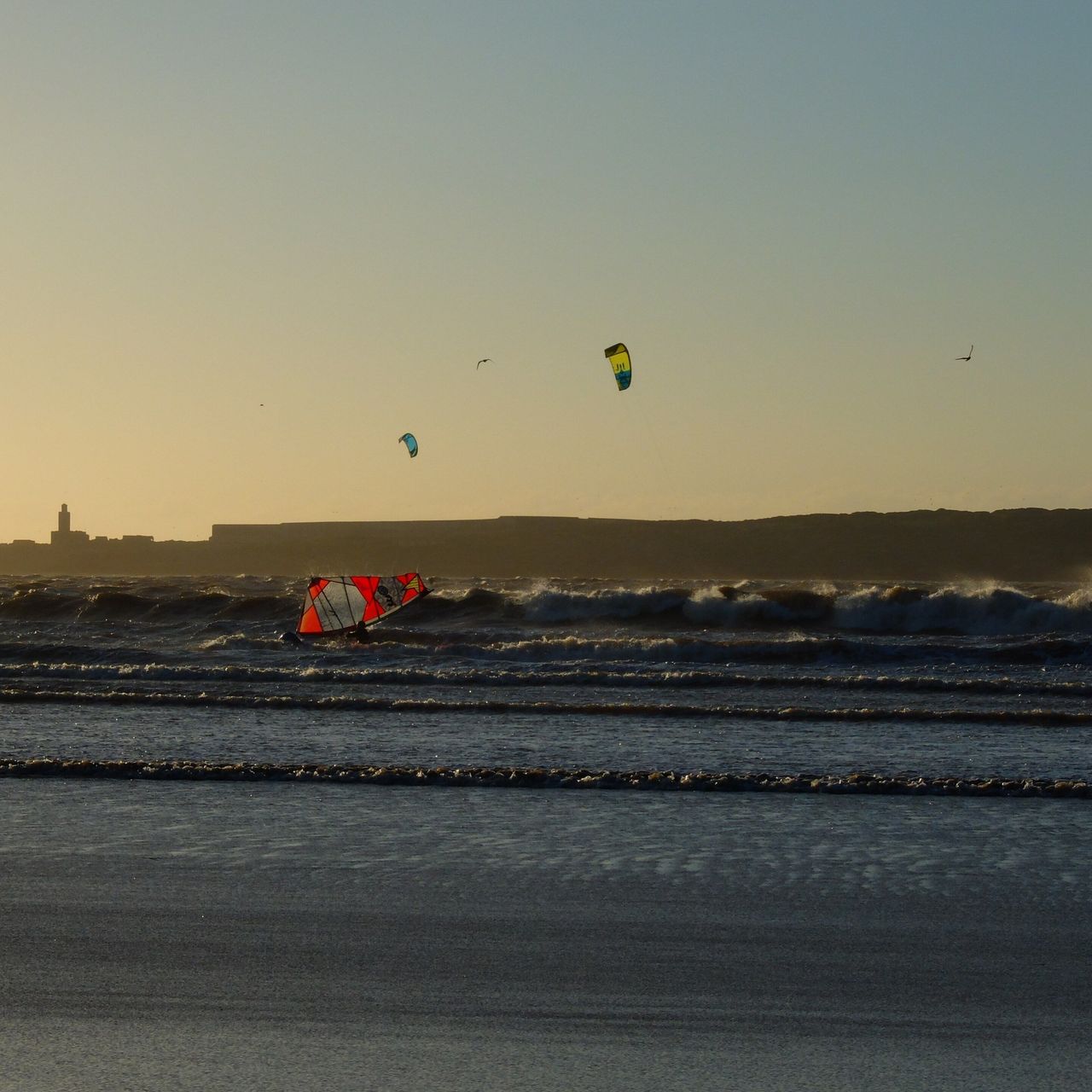
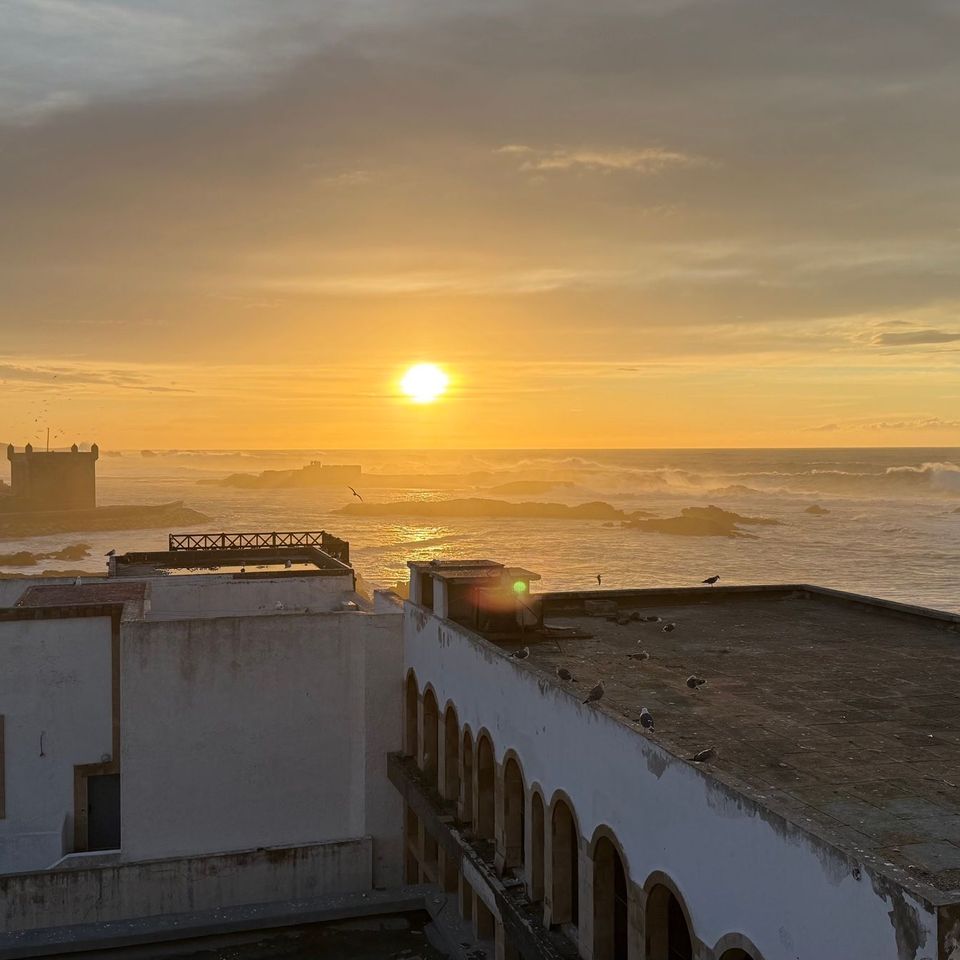
Essaouira is known as the “Wind City” for good reason: the wind blows for most of the year. Coming from the north to north-east, the trade wind builds through the day and peaks in mid-afternoon. Figures published by local schools and specialist sites give averages of roughly 10 to 17 knots from December to February, 16 to 22 knots in April and 20 to 28 knots in June, July and August, with gusts above 35 knots at the height of summer. Offshore, the Mogador archipelago blocks part of the swell, so the bay stays manageable when the surrounding coast is breaking hard.
That pattern explains the town’s double reputation. Kitesurfers and windsurfers come for the steady wind of spring and summer; surfers come for the winter swells that roll in from the Atlantic when the wind drops.
Surfing or kitesurfing in Essaouira: when to go
- Kitesurfing and windsurfing: the main season runs from late March to September, peaking from June to August. October and November are often still good; from December to February the wind is lighter and less reliable.
- Surfing: the most consistent swells arrive from October to March, with powerful waves on exposed spots best left to experienced surfers. Beginners find good conditions in the bay all year, ideally in the morning before the wind gets up.
- Water: cool all year, around 17 °C in spring and 20 °C in late summer. A full wetsuit is essential: 4/3 mm in winter, 3/2 mm the rest of the year.
The best surf and kite spots around Essaouira
Essaouira beach, for learning
In front of town, Essaouira beach offers a huge stretch of water with no rocks and a cross-shore wind from the right. This is where the schools and beginners are, for both surfing and kiting. The wind is gustier close to the medina and the ramparts; to the south, the mouth of the Oued Ksob changes depth with the tides.
Diabat and “second beach”
About 5 km south of town, below the village of Diabat, the beach is more exposed to the swell. Waves are hollower and there is sometimes a light current: an intermediate spot where several kite schools have set up their base.
Sidi Kaouki, the surfers’ beach
Around 25 km south, Sidi Kaouki stretches for miles beneath the saint’s white shrine. The beach break works in moderate wind, with a powerful shore break and strong currents: beginners come here with an instructor, others on a rising tide. The village lives for surfing, with guesthouses, cafés and board rental.
Moulay Bouzerktoun, for experts only
Some twenty minutes north, Moulay Bouzerktoun is one of the world’s best-known wave-sailing spots. The wind is stronger than in town, waves reach 1.5 to 3 m in spring and you launch between rock slabs, so it is strictly for advanced riders. In 2018 the village hosted the first African stop of the PWA Windsurfing World Cup, an initiative of local champion Boujmaa Guilloul.
Further south, experienced surfers head to Imsouane for its long point-break waves.
Choosing a surf or kitesurf school in Essaouira
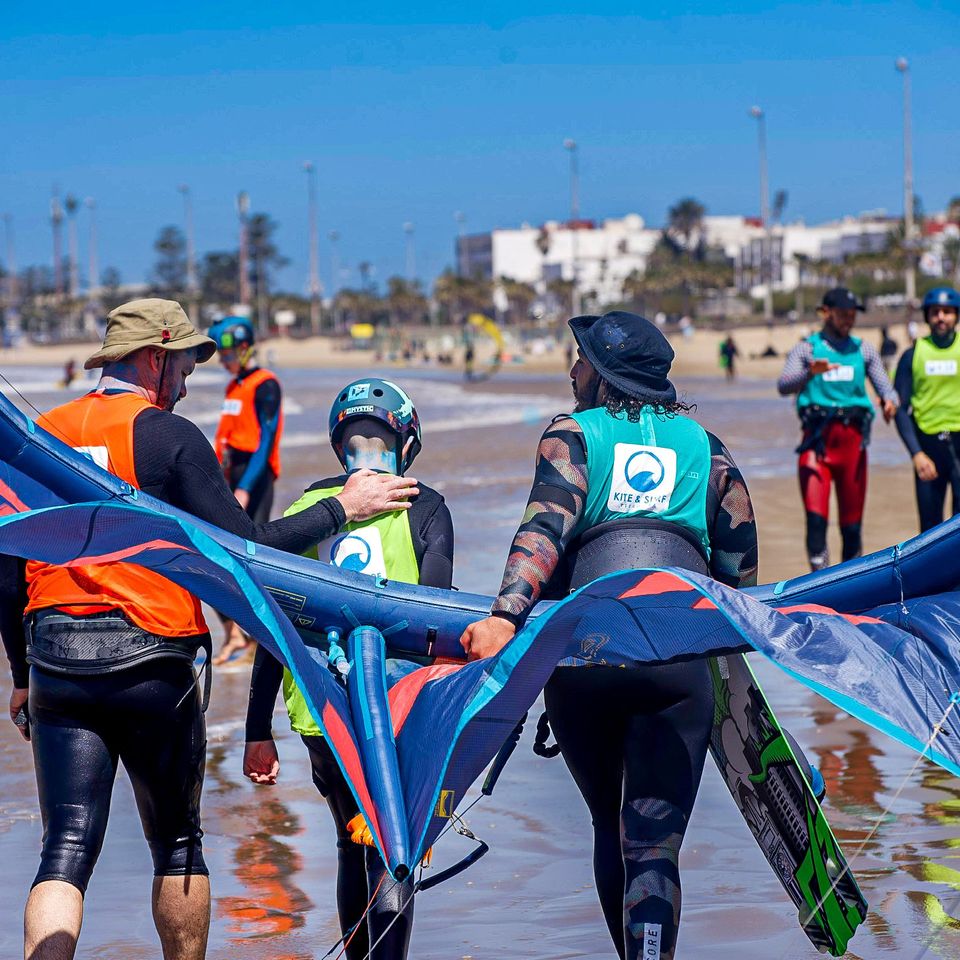
Whatever your level, the first rule holds: never start a board sport without a qualified instructor at a registered school. For kitesurfing, choose a school affiliated with the IKO (International Kiteboarding Organization) or the VDWS, which means certified instructors, well-maintained gear and insurance. You need to be able to swim, and it usually takes several sessions before you stand up on the board; on a windsurf board you sail from day one, but the shore break makes learning harder for part of the year.
- Ocean Vagabond Salt Water Elements, on the beach below the Ocean Vagabond restaurant: a pioneering centre founded in the mid-1990s (first a Club Mistral, then an ION Club), for kitesurfing, windsurfing, wing foiling, surfing and paddleboarding.
- Kite and Surf Essaouira (KSE), on the main beach: kitesurfing, surfing and wing foiling in groups of no more than four, with trips to Sidi Kaouki, Imsouane and Diabat.
- Flyin’ Surf School, in the new town: surfing, kitesurfing with IKO-trained instructors, wing foiling, eFoil and paddleboarding.
- The Diabat schools, based on second beach, for sessions in more demanding conditions.
Before booking, check the instructors’ certification, the student-to-instructor ratio, whether a rescue boat or jet ski is on hand and what the price includes (equipment, wetsuit, insurance). Our Things to do section lists our selected addresses.
Wing foil, windsurf and paddleboarding
A more recent arrival, wing foiling sees you hold an inflatable wing in your hands and ride a board fitted with a hydrofoil that lifts out of the water as it gains speed. It suits riders who already have sailing or kite experience. Windsurfing, Essaouira’s pioneering sport, still has a loyal following on the bay and at Moulay Bouzerktoun. On windless days, a paddleboard is a quiet way to explore the coast.
Practical information
- Course length: a beginner kitesurfing course usually involves around ten hours of tuition spread over several days.
- Timing: mornings for surfing, when the sea is glassy; afternoons for kiting, once the trade wind has set in.
- Pack: sunscreen, sunglasses with a strap and a windbreaker for after the session; wind-blown sand can sting on the beach.
- Safety: check tides, currents and wind strength every day, and avoid going out alone beyond the bay.
- Access: Sidi Kaouki and Moulay Bouzerktoun are reached by car or grand taxi; several schools provide transport.