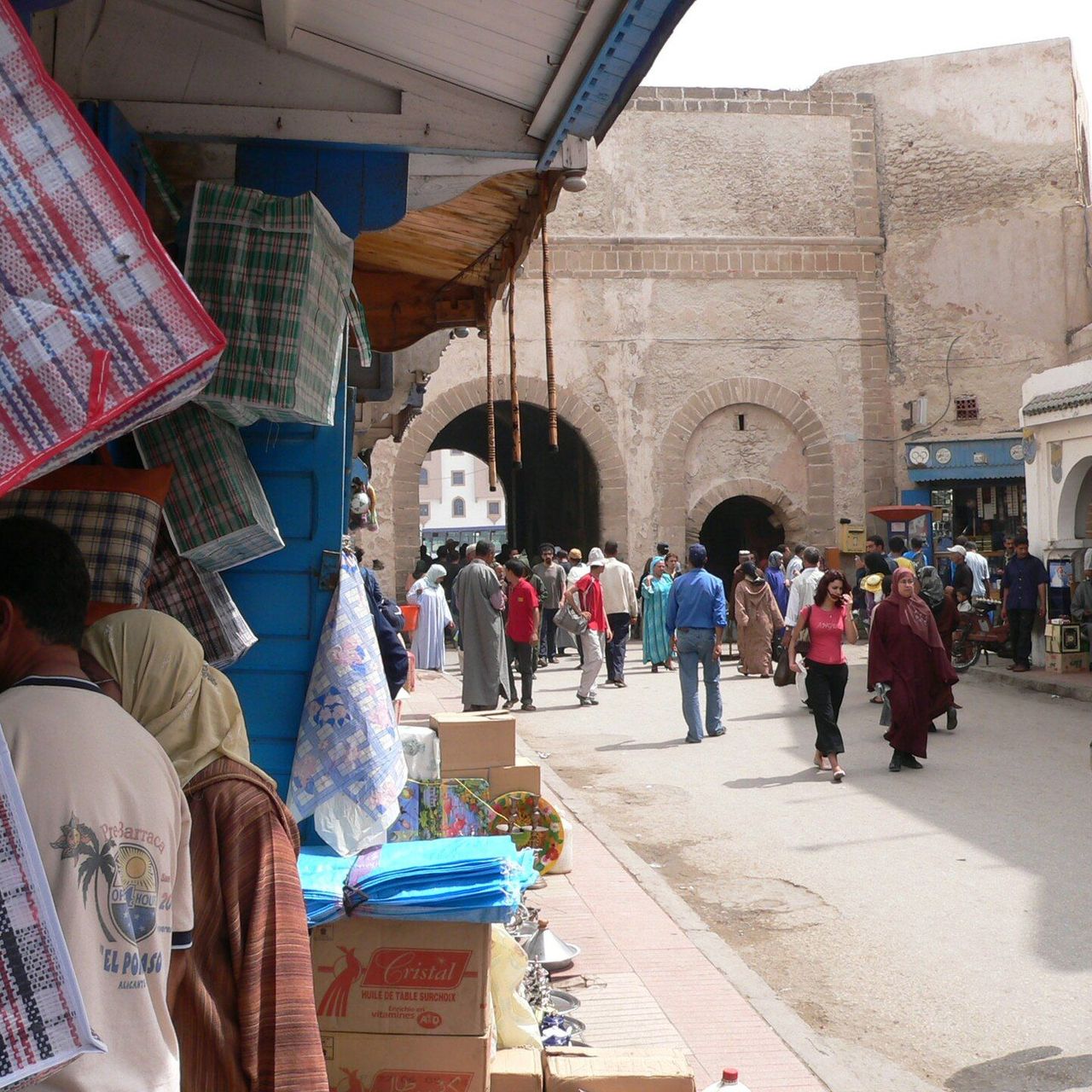
The souk street, from the clock tower to Bab Doukkala
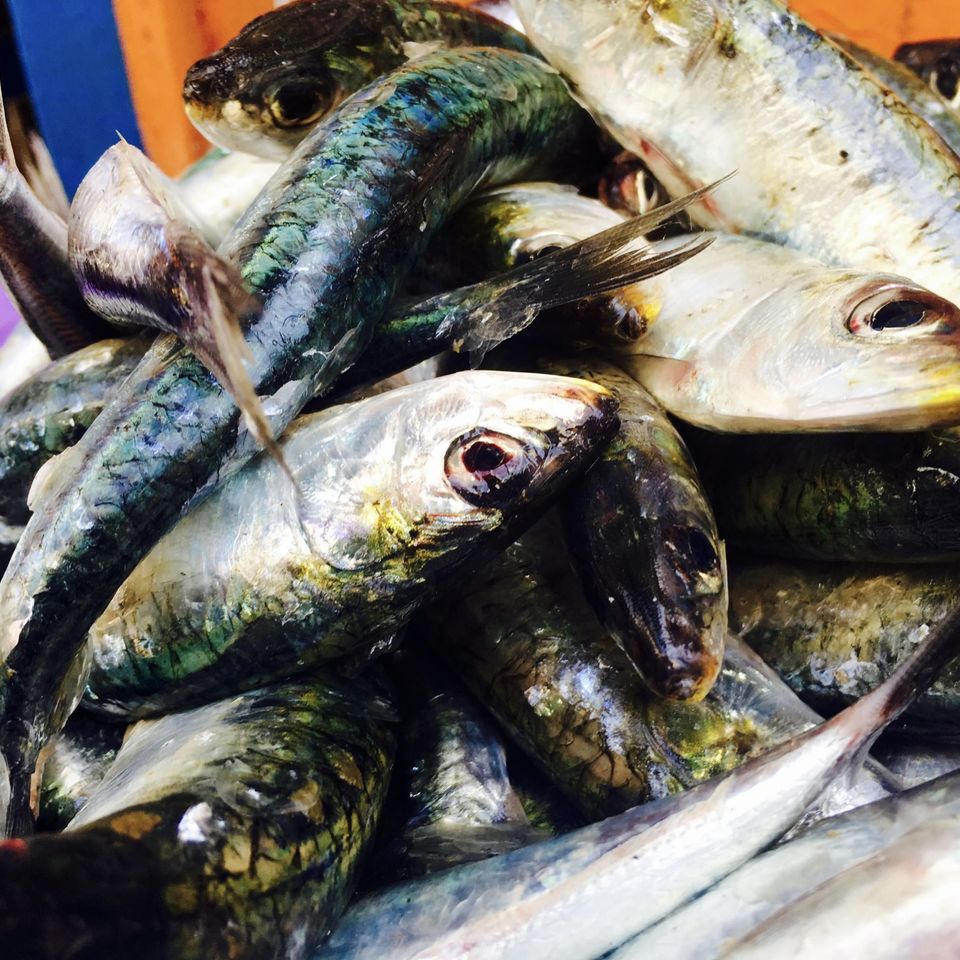
Shopping in Essaouira follows an almost straight line. From the clock tower square, Avenue de l’Istiqlal and then Avenue Mohammed Zerktouni cut through the medina to Bab Doukkala, the north-eastern gate. As you walk, shops aimed at visitors give way to those used by locals: pottery and basketware, leather, bazaars, then fabrics, babouches and djellabas. On the right, a sign marks the entrance to the jewellers’ souk, a covered market with tiled walls lined with silver rings, bracelets and necklaces. Further on are the souks of the Souk Jdid quarter: Souk Laghzal with its spices and fish market, and the arcaded grain market square.
The town’s grid plan makes it easy to find your way: stick to the main street and dip into the side lanes, where the most interesting workshops and boutiques are hidden.
Spices, herbalists and sweets
Around Souk Laghzal, spice sellers pile up ras el hanout, cumin, paprika, saffron and fish spice blends next to herbalists selling rose water, black soap, ghassoul clay, kohl and natural pigments. This is also the place for dates, dried figs and kaak, Essaouira’s ring-shaped biscuits baked in every neighbourhood and sold in almost every grocery. For argan oil, buy from a cooperative, such as the Argan Haha shop on Rue du Caire, or from a shop that clearly states where it comes from.
Rugs, babouches and textiles
The medina’s rug dealers sell pieces from all over Morocco: cream-based Berber rugs from the Middle Atlas, flat-woven kilims and colourful boucherouite rag rugs made from recycled fabric. Take time to turn a rug over: tight, even knots, colours that do not run on a damp cloth and fringes that continue the warp threads are all signs of quality. Babouche slippers are sold in stacks along the main street; hand-stitched leather pairs with a thick sole last far longer than glued ones. Weavers also sell the haik, a large wool or cotton cloth now used as a bedspread or tablecloth. For vintage rugs, Galerie Jama on Rue Ibn Rochd gathers old pieces from all over Morocco, explained with no pressure to buy.
Thuya, silver and argan: Essaouira specialities
Three purchases are unique to the town. First, thuya wood: boxes, trays, chessboards and small furniture come out of the workshops on Rue de la Skala, below the Skala de la Kasbah, and the marquetry cooperative, where you buy straight from the craftsman. Genuine thuya is heavy and smells woody when rubbed; speckled burl costs more than trunk wood. Next, silver jewellery, especially filigree, the town’s speciality: compare pieces in the jewellers’ souk with those in the workshops, where you can see work in progress. Finally, argan oil, culinary or cosmetic, best bought under a cooperative’s own label. These crafts are covered in depth in our feature on Essaouira’s artisans.
Designers and concept stores
In recent years, a new generation of shops has been reinventing Moroccan craft. A few addresses picked by our editors:
- L’Atelier, Rue Mohamed Ben Messaoud: beneath the glass roof of a former almond warehouse, a café, a concept store of Moroccan-made objects and a cookery school.
- Histoire de Filles, on the same street: the town’s first concept store, for fashion, accessories, homeware and gifts by Moroccan designers.
- Hiya Art de Vivre, Avenue de l’Istiqlal: designer Naima Zadi’s shop and workshop, for jackets, kimono-djellabas and bags made from African or vintage textiles.
For art, the medina has many galleries, such as Galerie La Kasbah on Rue de Tétouan, set in an 18th-century riad.
Tips for shopping in Essaouira
- Bargain politely: haggling is part of the exchange in the souks, less so in concept stores and cooperatives, where prices are often marked. Set yourself a budget and stay friendly.
- Compare: take a first look around before buying, especially for a rug or thuya furniture.
- Pay: many small shops take cash only; there are ATMs around the clock tower square and in the new town.
- Skip the middlemen: a “guide” who walks you into a shop usually earns a commission that ends up in your price.
- Shipping: most rug and furniture dealers can ship; ask for a detailed receipt and check the delivery terms.
- Opening hours: shops generally open between 9.30 and 11 am and close around 7 pm; on Friday lunchtime many close for prayers.
Find all our addresses in the Shopping section.