A town built with its Jewish merchants
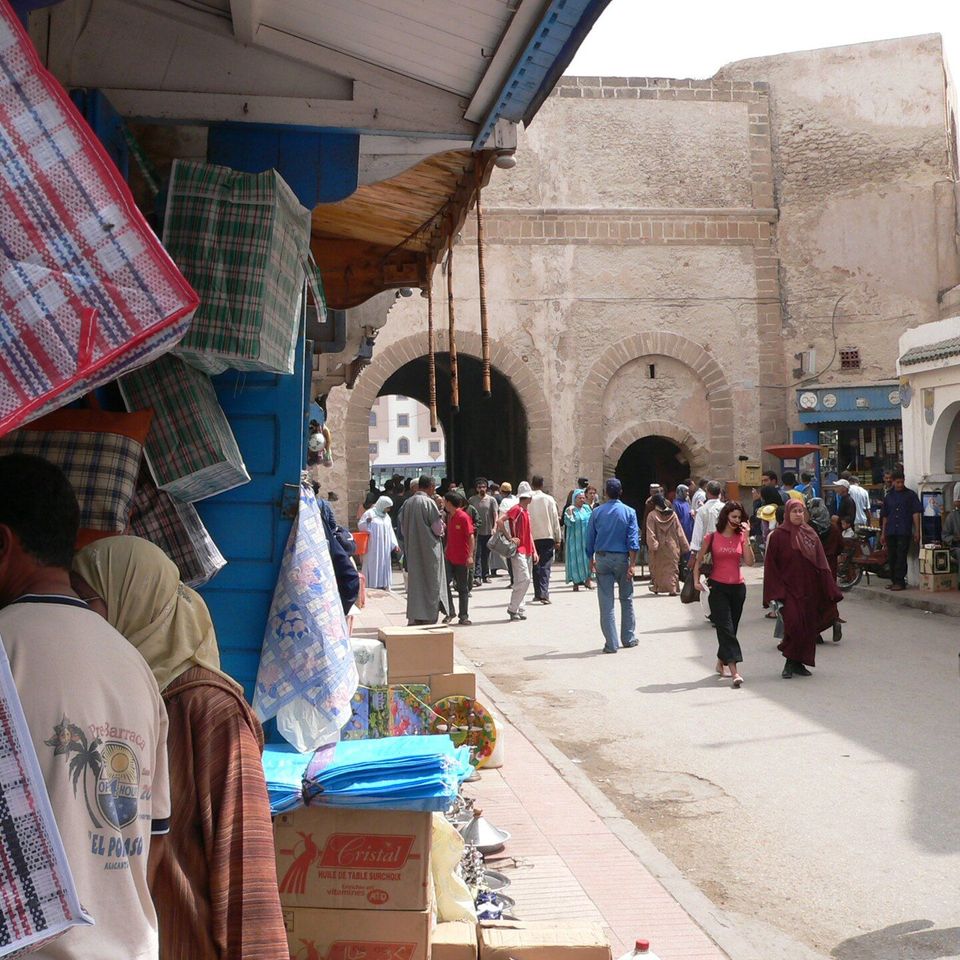
When Sultan Sidi Mohammed Ben Abdallah founded Essaouira from 1760, he meant it to become the kingdom's main port. To drive trade with Europe he brought in merchants from across Morocco, including leading Jewish families. These “sultan's merchants” (tujjar al-sultan) were given houses in the kasbah near the harbour and became the go-betweens of Atlantic trade. Other, humbler families of craftsmen, jewellers and tailors lived in the medina and, from 1807, in the mellah, the Jewish quarter laid out on the orders of Sultan Moulay Slimane in the north-eastern corner of the medina.
By the 19th century the community was so large that in 1867, according to a traveller of the time, it accounted for about half of the town's 12,000 or so inhabitants. Essaouira then had dozens of synagogues, many of them set up in private houses. After 1948, and again in the 1960s, most families left for Israel, France or Canada. By 2017 only three Jewish residents remained. The Souiri diaspora, however, stays deeply attached to the town and returns every year on pilgrimage.
The mellah, from neglect to restoration
For years the mellah was the blight of the UNESCO-listed medina. In the early 2010s, looted houses and collapsed roofs left the sky showing through, and residents were waiting to be rehoused. The turning point came with a supplementary programme to restore and enhance the old medina, presented in January 2020 and run by the state developer Al Omrane: shoring up buildings at risk of collapse and renewing utilities, alleys and façades. In June 2024 the Moroccan press reported it was 95% complete.
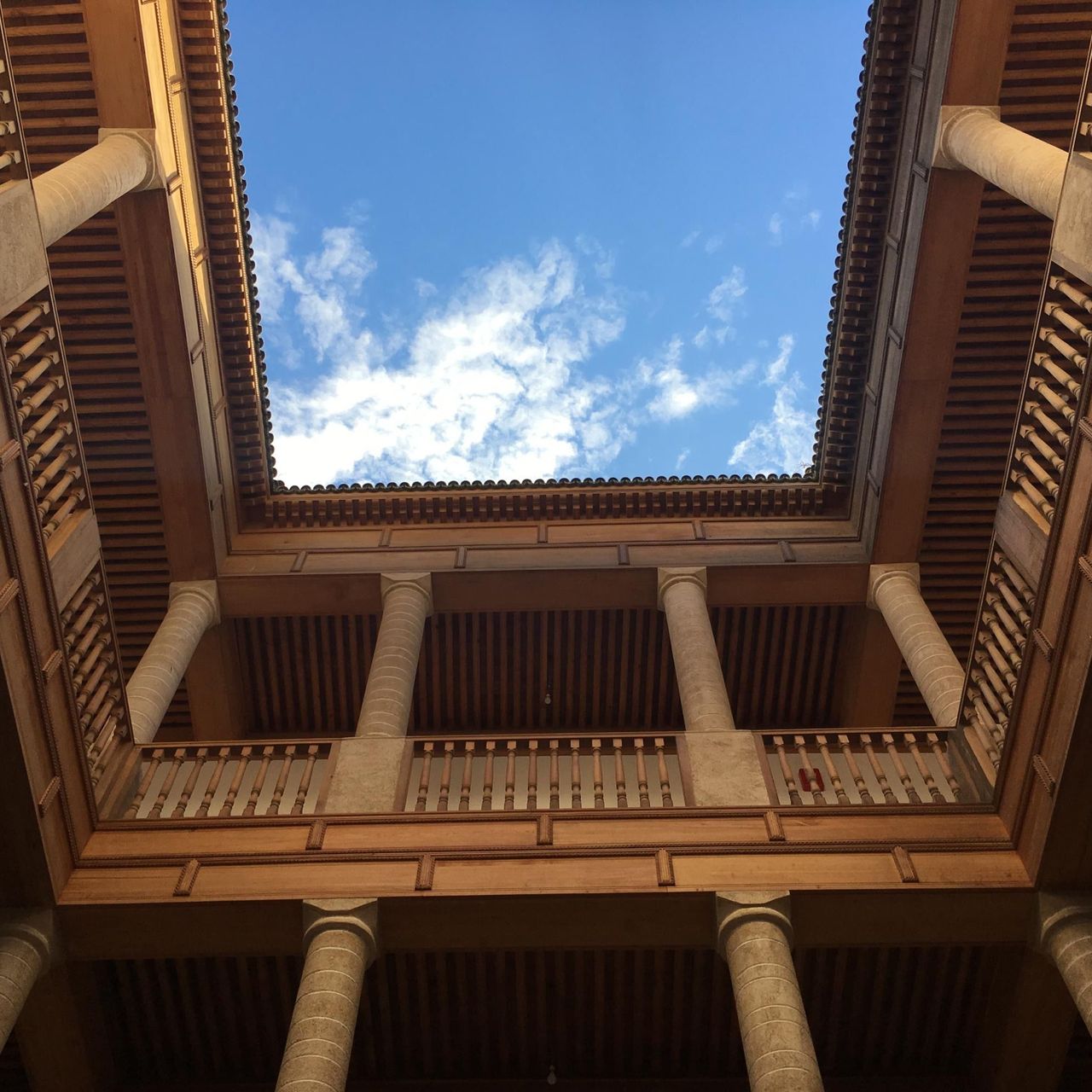
The quarter remains working-class and uneven, but it is once again a pleasure to explore. Look up and you will still spot a Star of David carved into some lintels, wooden balconies and the tall doorways of old merchants' houses.
Bayt Dakira, the House of Memory
In the old kasbah, the Slat Attia synagogue, also known as the Simon Attia Synagogue, is named after the wealthy Mogador merchant who had it built in 1882. Its carved wooden interior was made in London, a sign of the close ties between Mogador and England. Closed in 2009 and restored from 2014 to 2019 by local craftsmen, it is now the heart of Bayt Dakira, the House of Memory, inaugurated by King Mohammed VI on 15 January 2020.
Championed by André Azoulay, the king's adviser and a native of Essaouira, and by the Essaouira-Mogador association together with the Ministry of Culture, the building brings together:
- the restored prayer hall, with its women's gallery;
- exhibition rooms on the history of Essaouira's Jewish families: photographs, costumes, ritual objects and documents;
- a research centre and library, the Haïm and Célia Zafrani centre, built around the library of the Essaouira-born historian (1922-2004) who devoted his life to Morocco's Jewish cultures.
At the entrance, a sign greets visitors in two languages: “Shalom Aleykoum, Salam Lekoulam”.
Slat Lkahal, the community synagogue
In the mellah, Slat Lkahal tells another story. Begun in 1850 and inaugurated in 1859 or 1865, depending on the source, it was the only synagogue in town owned by the whole community, hence its name, “the synagogue of the community”, sometimes also called “the synagogue of the poor”. Short of space, its builders set it above a vaulted passage between two façades. Abandoned after its last service in 1972, it was faithfully restored by the Slat Lkahal Mogador association and rededicated on 26 October 2017.
More discreet, the Haïm Pinto Synagogue, on the second floor of the famous rabbi's house in the mellah, still comes alive during pilgrimages, especially at the time of the hiloula.
The Jewish cemeteries and the hiloula of Rabbi Haïm Pinto
Outside the walls, near Bab Doukkala and facing the ocean, lie Essaouira's Jewish cemeteries: two neighbouring enclosures separated by a narrow road. The old cemetery, in use until around 1875, holds headstones carved in Hebrew as well as the tomb of Rabbi Haïm Pinto, chief rabbi of Mogador, who died in 1845. Every year, usually in September, his hiloula draws hundreds of pilgrims, sometimes more than two thousand, from Israel, France and Canada for four days of prayer and reunion. In 2013 a project funded by the US Ambassadors Fund for Cultural Preservation cleaned and restored the town's Muslim, Christian and Jewish cemeteries.
Practical information
- Bayt Dakira: Rue Ziry Ibn Atiyah, open daily from 9am to 7.30pm according to its online listing (check locally). Allow 30 minutes to an hour.
- Slat Lkahal: opening hours and visiting arrangements are not published, so ask locally.
- Cemeteries: the gates are opened by a caretaker (his number is posted on the door), who is not always there; a tip is customary. Dress modestly; men should cover their heads in the mausoleum.
- Route: from Bayt Dakira through the mellah to Bab Doukkala and the cemeteries, allow two hours on foot. Continue with our history of Essaouira and our arts and culture picks.