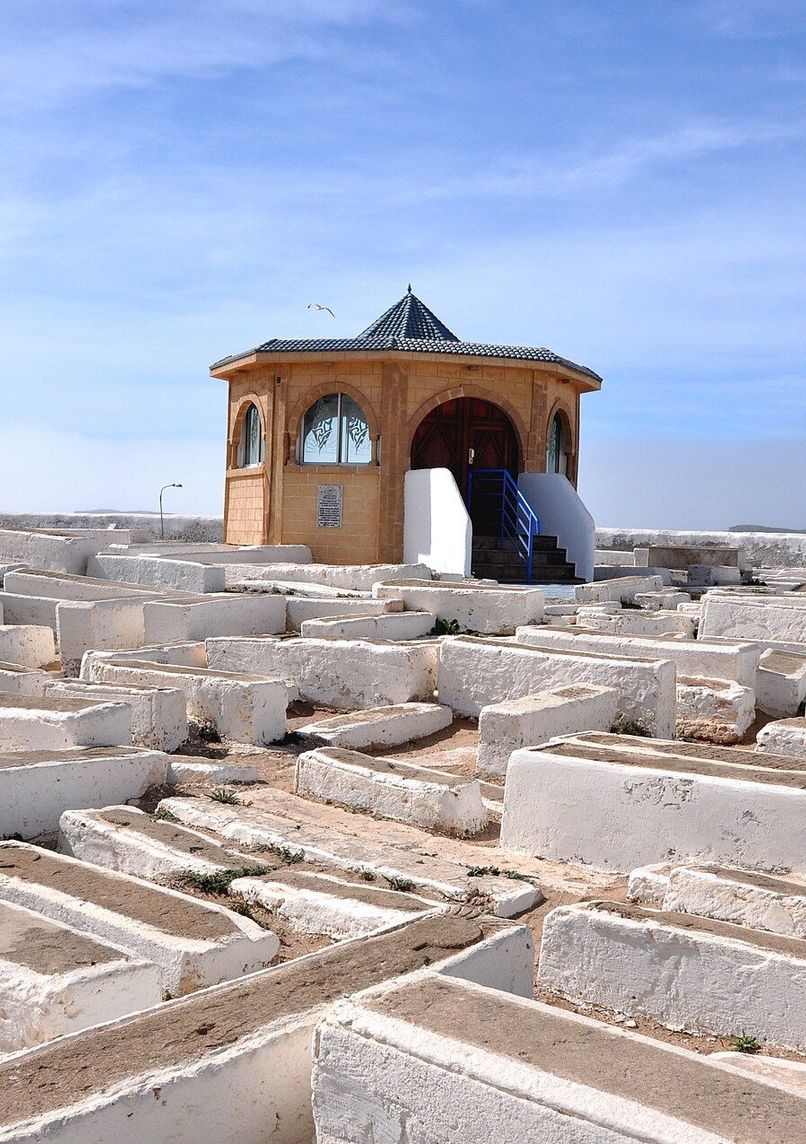
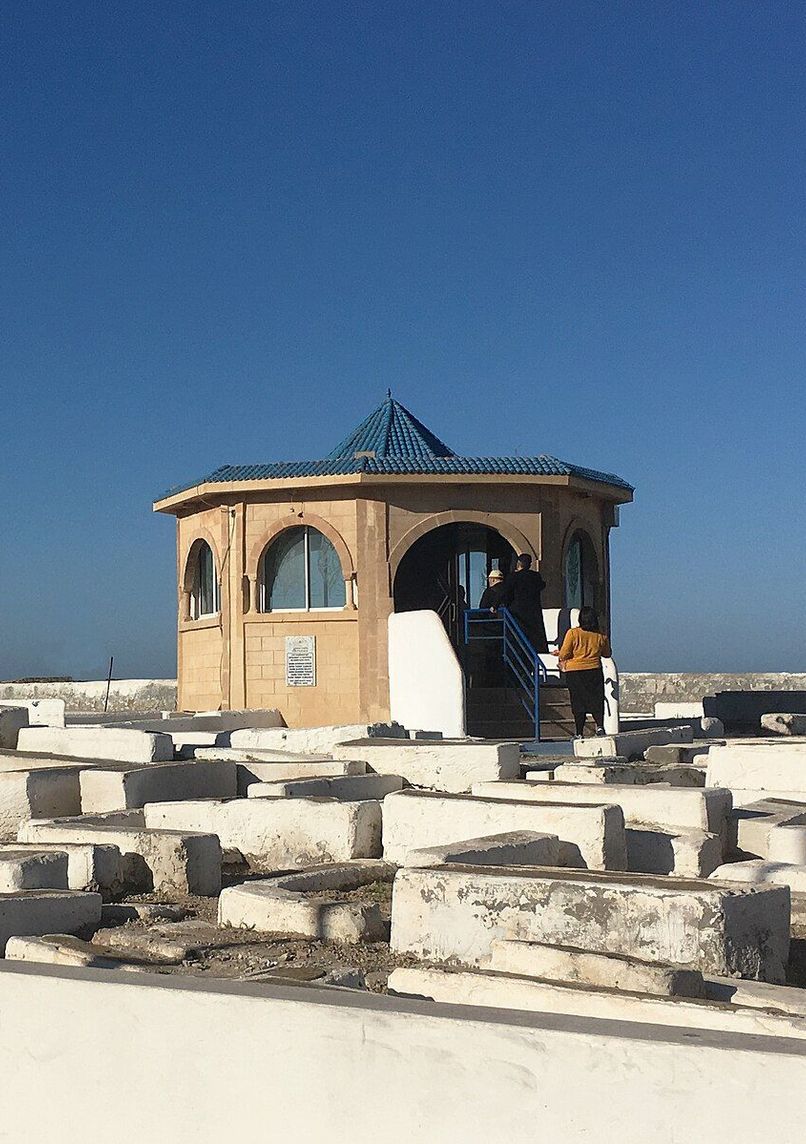
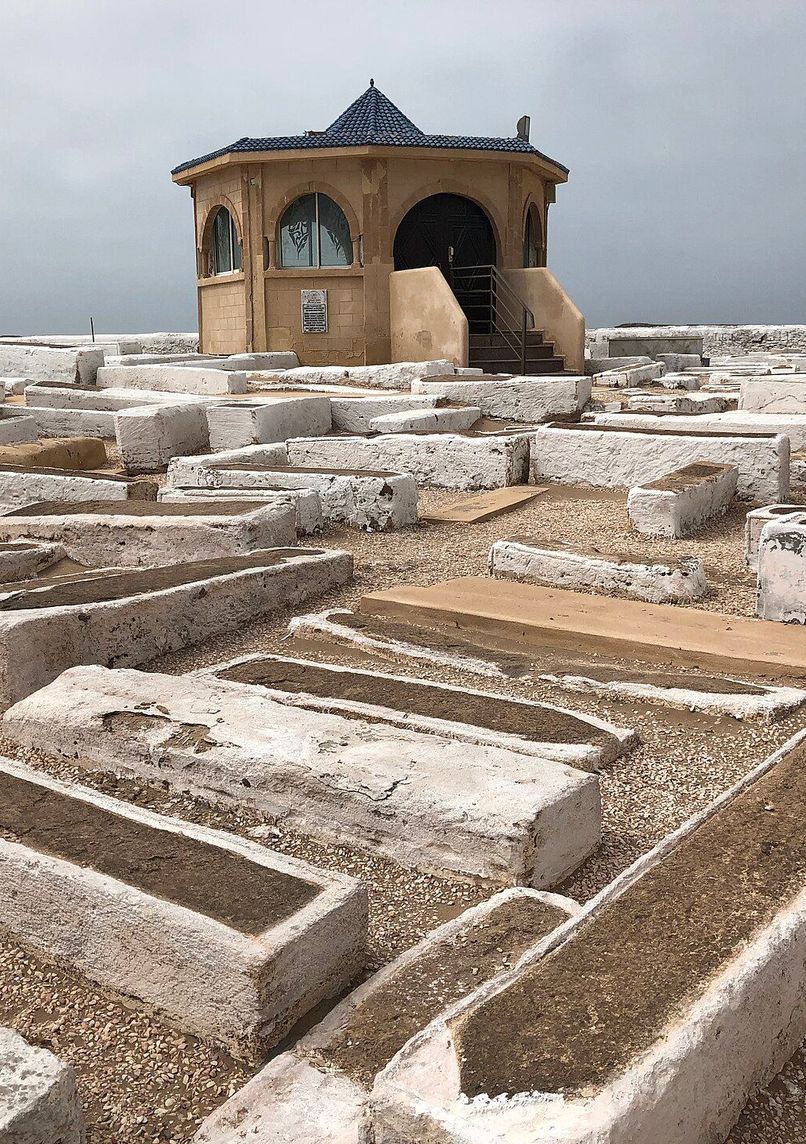
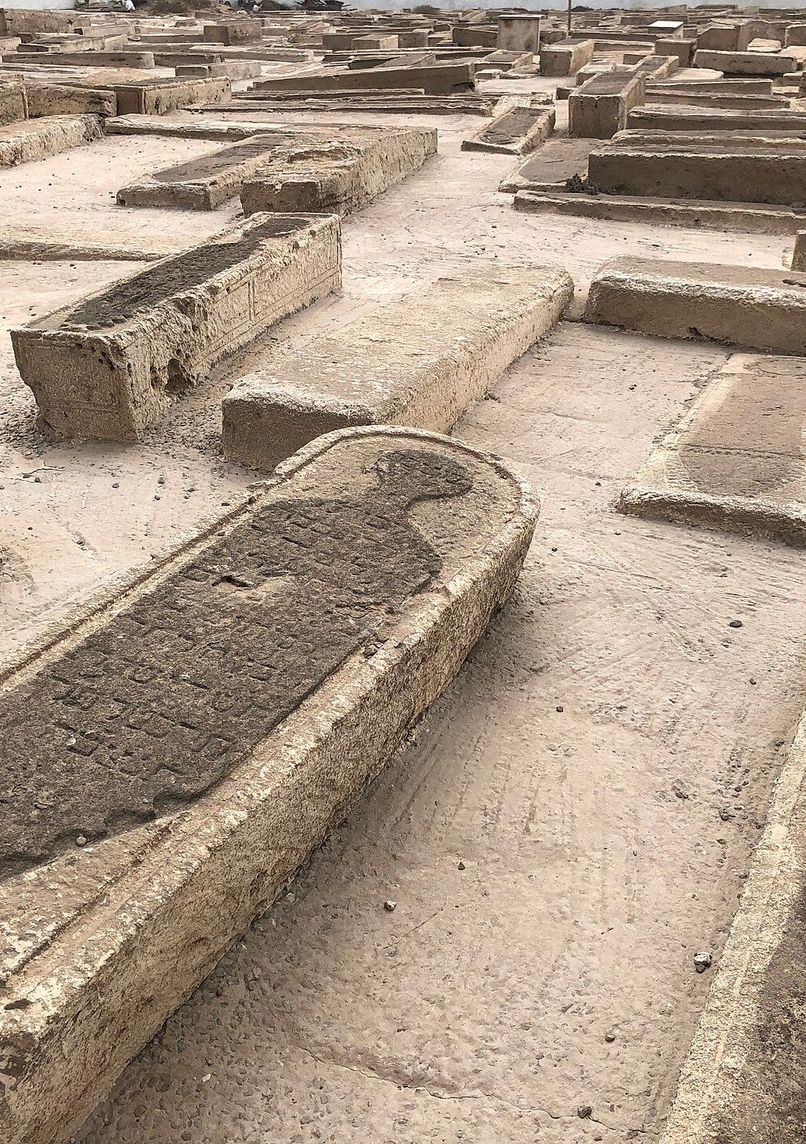
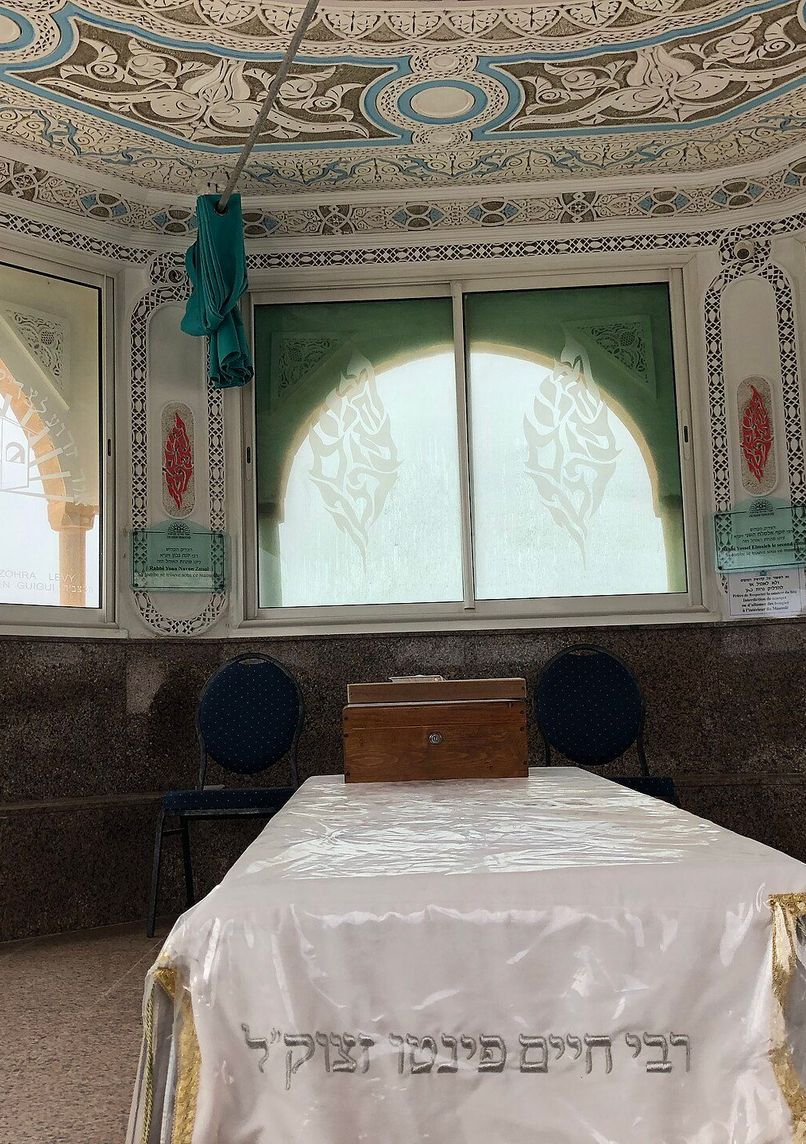
Just north-east of the ramparts, Essaouira’s old Jewish cemetery is separated from the ocean only by a wall. Its 2,400 or so headstones, the oldest dating from 1775, surround the mausoleum of Rabbi Haim Pinto, where pilgrims from around the world gather every year.
Two cemeteries, one memory
Essaouira has two Jewish cemeteries: the old one, known as the sea cemetery, right on the shore, and the new one, founded in 1892 across the way. The old cemetery was the community’s main burial ground until around 1875. It holds some 2,400 stone graves, the oldest dating back to 1775, barely a decade after the town was founded. Together they tell the story of a community that, in the 19th century, made up almost half of Mogador’s population.
The mausoleum of Rabbi Haim Pinto
Chief rabbi of Mogador for decades, Haim Pinto died on 28 September 1845. His tomb, sheltered by a small domed pavilion, is the heart of the cemetery. Every year, on the anniversary of his death in the Hebrew calendar, usually in September, worshippers from all over the world gather for his hiloula, several days of prayer and remembrance.
The writer Edmond Amran El Maleh, a major figure in Moroccan literature, was buried here in 2010 at his own request.
What to see
- Long rows of whitewashed graves lined up to face the open sea.
- Rabbi Pinto’s mausoleum and the memorial plaques of the town’s rabbis.
- To continue the visit: Rabbi Pinto’s house-synagogue in the Mellah, the Slat Lkahal Synagogue and Bayt Dakira.
Practical information
- Avenue Moulay Hicham, north-east of the medina, a few minutes’ walk from Bab Doukkala.
- A caretaker opens the gates: if they are locked, call the number posted on the door. Posted hours are 6am to 7pm, closed on Saturdays, but the caretaker is not always there.
- A tip for the caretaker is customary. Dress modestly and keep your voice down: this is a place of pilgrimage.