Essaouira's painters: a school of the self-taught
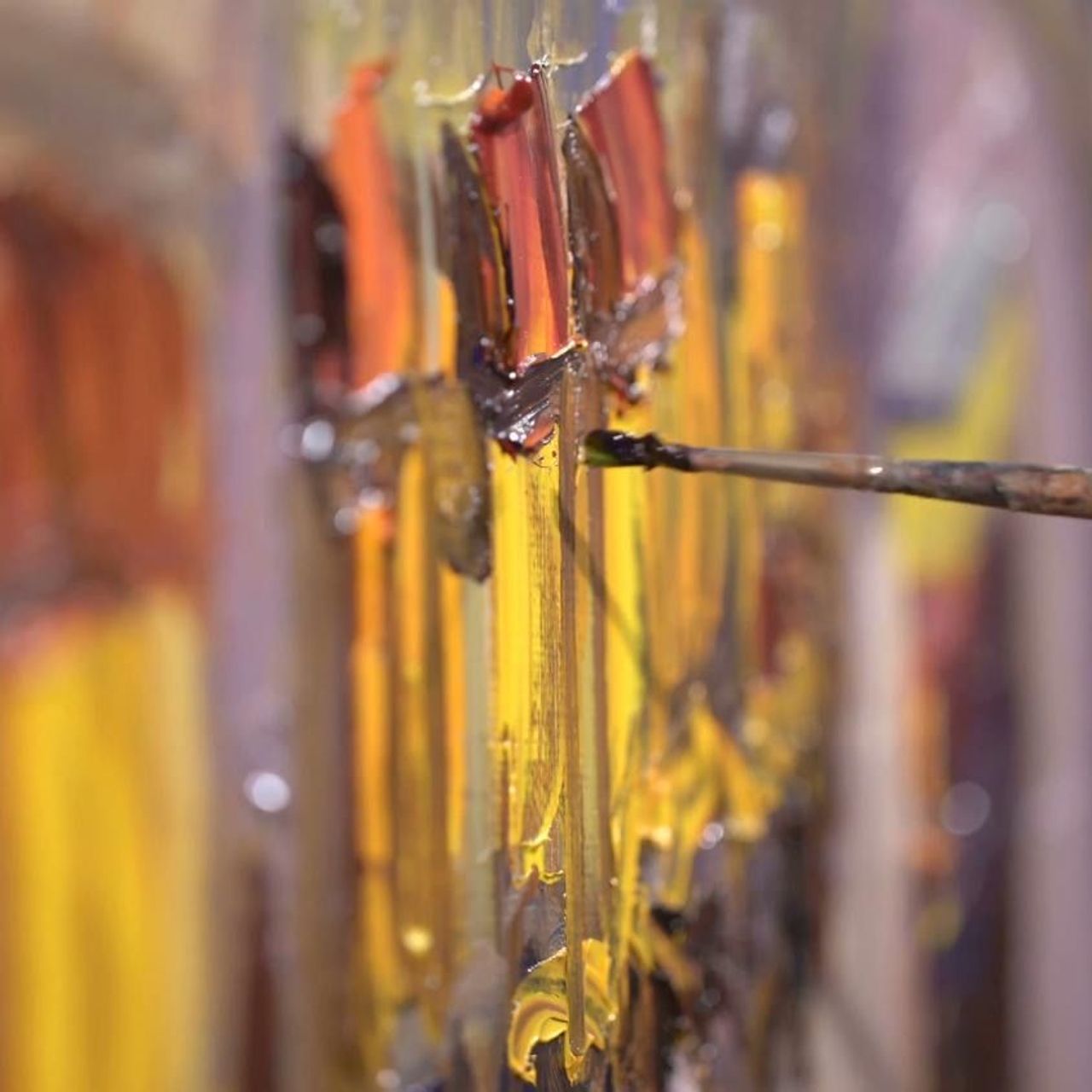
People speak of an “Essaouira school”, sometimes of “Souirisme”. The label is handy, but it describes a way of being an artist more than a single style. Most of the painters who emerged in Essaouira from the late 1980s never set foot in an art school. Many came from modest backgrounds in the town or the surrounding countryside and first worked as shepherds, farmhands, masons, carpenters or thuya-wood craftsmen.
Their imagery draws on what surrounds them: the trance and colours of the Gnawa, the Amazigh signs found on rugs and jewellery, folk tales, popular magic and the ocean. The result is exuberant, often densely patterned painting that has been compared to outsider art or naïve art, though neither label quite fits. Context mattered too: in 1988 a statement by King Hassan II, published in Le Matin, made clear that modern painting and sculpture were not at odds with Islam, which freed many vocations.
Frédéric Damgaard, the go-between
Born in 1937 in Svendborg, Denmark, and trained as a historian of Islamic art, Frédéric Damgaard settled in Essaouira and in 1988 opened the town's first art gallery on Avenue Oqba Ibn Nafiaa, near Place Moulay Hassan. His approach was unusual: he encouraged, bought and exhibited, but never told anyone what or how to paint. The sociologist Georges Lapassade called it a “Pygmalion effect”.
For almost twenty years, the Galerie Damgaard introduced these painters to audiences in Morocco and Europe. Its founder sold it in 2006 for health reasons, and it has since been run by Alain Graffe and Claude Jadot. Damgaard, who converted to Islam under the name Youssef Reggragui, died on 9 July 2024 aged 87 and is buried in Taghazout, near Agadir.
Key figures of Souiri painting
- Mohamed Tabal: a former itinerant drummer who paints the Gnawa world in dense, vibrant compositions in which Damgaard saw echoes of Gauguin.
- Saïd Ouarzaz: born in 1965 into a farming family from the region and long a farm labourer, he builds canvases crowded with interlocking figures and animals. Damgaard showed his work from 1996.
- Ali Maimoun: a former labourer whose work sits close to so-called primitive art.
- Mustapha El Hadar: a former woodworker who painted on goatskin with traditional ink.
- Abdelaziz Baki, Mohamed Zouzaf and Houssein Miloudi: three very different paths; Miloudi also created the “Barakat Mohamed” sculpture installed at the town's southern entrance in 1978.
Before them, Boujemâa Lakhdar, a self-taught artist who moved from marquetry to painting and to research into the signs of popular magic, had led the way. Shown at the landmark Magiciens de la terre exhibition at the Centre Pompidou in 1989, he also founded the Sidi Mohammed Ben Abdallah Museum on Rue Laâlouj, now closed for renovation.
From the medina to major institutions
Long sold mainly to passing travellers, these artists went on to win institutional recognition. In 2012 an exhibition and book in Paris, Y a-t-il une école d'Essaouira ?, centred on Baki, Maimoun and Tabal, asked whether a school really existed. From October 2014 to March 2015, the Institut du Monde Arabe staged a major show on Contemporary Morocco, with Tabal, Ouarzaz, Miloudi and Zouzaf among some eighty artists. The Marrakech Biennale, part of which was held in Essaouira in 2016, and the Museum of African Contemporary Art Al Maaden (MACAAL) in Marrakech in 2018 followed.
Today the scene is more varied. Moroccan painters from other regions and foreign artists living in the medina work alongside the pioneers' heirs, from contemporary calligraphy to photography.
Where to see Souiri art today
- Galerie Damgaard, Avenue Oqba Ibn Nafiaa: the historic gallery, still devoted to artists from the region.
- Le Real Mogador, Rue Mehdi Ben Toumert: an arts centre and artists' residence in the former Italian consulate, set around a large arcaded patio and devoted to local outsider art; hours are not published, so call ahead.
- Galerie La Kasbah, Rue de Tétouan: a former riad on several levels mixing painting, sculpture and antiques.
- Medina studios: on Rue Ibn Rochd, Rue de la Skala or in the Chbanat quarter, a new generation of small galleries and artists' studios is best discovered on foot.
- Borj Bab Marrakech, Rue Mohamed El Qorry: a round former powder magazine in the ramparts, now an exhibition space with a terrace over the medina.
- Dar Souiri and the Institut Français: temporary shows by local and national artists.
Browse all our arts and culture and shopping addresses.
Practical information
- When: Galerie Damgaard opens daily from 9am to 1pm and 3pm to 7pm, Galerie La Kasbah from 9am to 9pm; elsewhere hours vary, especially off season.
- Buying: ask for a certificate of authenticity and an invoice, useful when leaving the country.
- Route: from Place Moulay Hassan to Rue de Tétouan and on towards the Chbanat quarter, half a day is enough for a first tour.