The argan tree, emblem of the Essaouira region
The argan forest begins around Essaouira and stretches south towards the Souss; the tree grows wild only in Morocco. Thorny, gnarled and drought-resistant, the argan tree feeds the goats that famously climb into its branches, holds the soil together and yields the oil that made the region famous. Its importance has been recognised at several levels: UNESCO declared the argan forest a biosphere reserve in 1998, then in 2014 inscribed “Argan, practices and know-how concerning the argan tree” on the Representative List of the Intangible Cultural Heritage of Humanity. Since 2021, at Morocco’s initiative, the United Nations has marked International Day of Argan every 10 May.
Essaouira’s women’s argan oil cooperatives
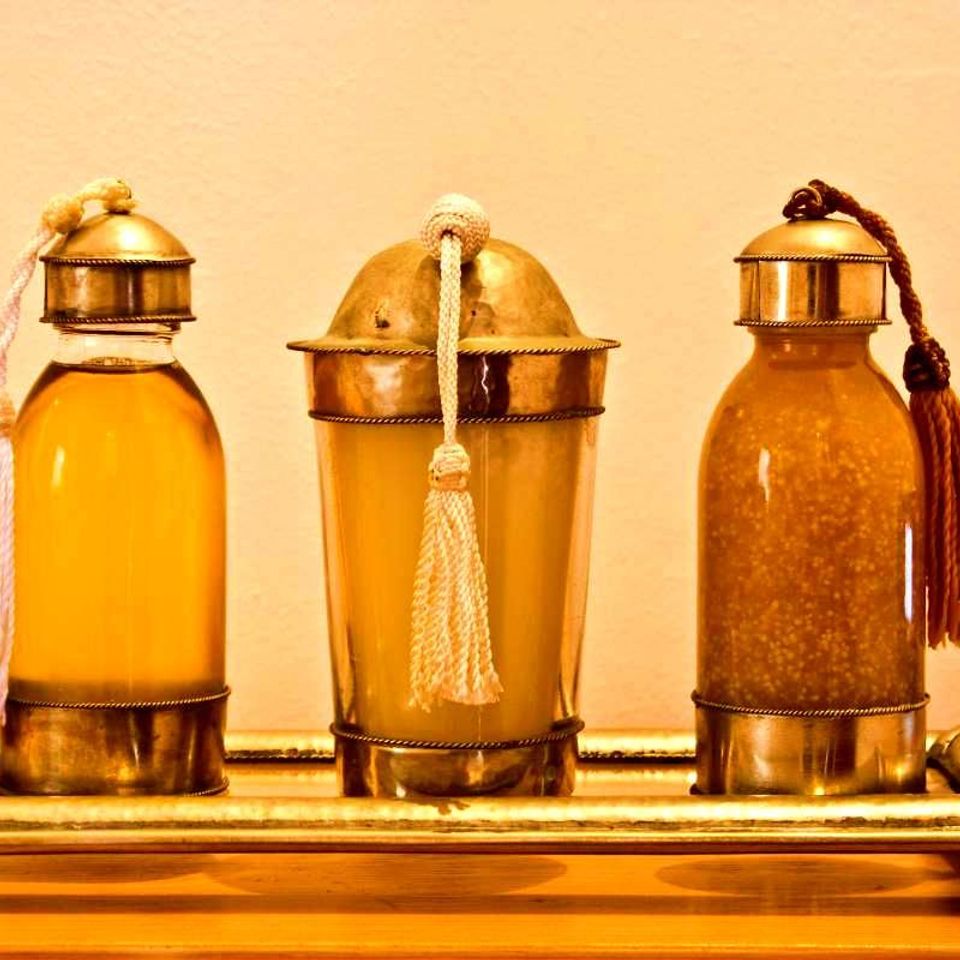
The know-how is handed down by women, who teach it to their daughters from childhood. The work is slow: gathering the fallen fruit, drying it, removing the pulp, then cracking each nut between two stones to free the kernels. Roasted kernels produce culinary oil with a toasted-hazelnut flavour, served at breakfast or blended with honey and almonds into amlou; cold-pressed raw kernels produce cosmetic oil for skin and hair.
Since the late 1990s, cooperatives have brought these women together, guaranteeing them an income and letting visitors watch each stage of production. On the Agadir road, the Ajddigue cooperative at Tidzi, about 25 km from Essaouira, was one of the first and now has around a hundred members; the Marjana cooperative is on the same road. On the Marrakech road, other cooperatives welcome visitors some fifteen kilometres from town. Visits usually end in the shop, which is the best place to buy oil whose origin you know.
Thuya, Essaouira’s signature wood
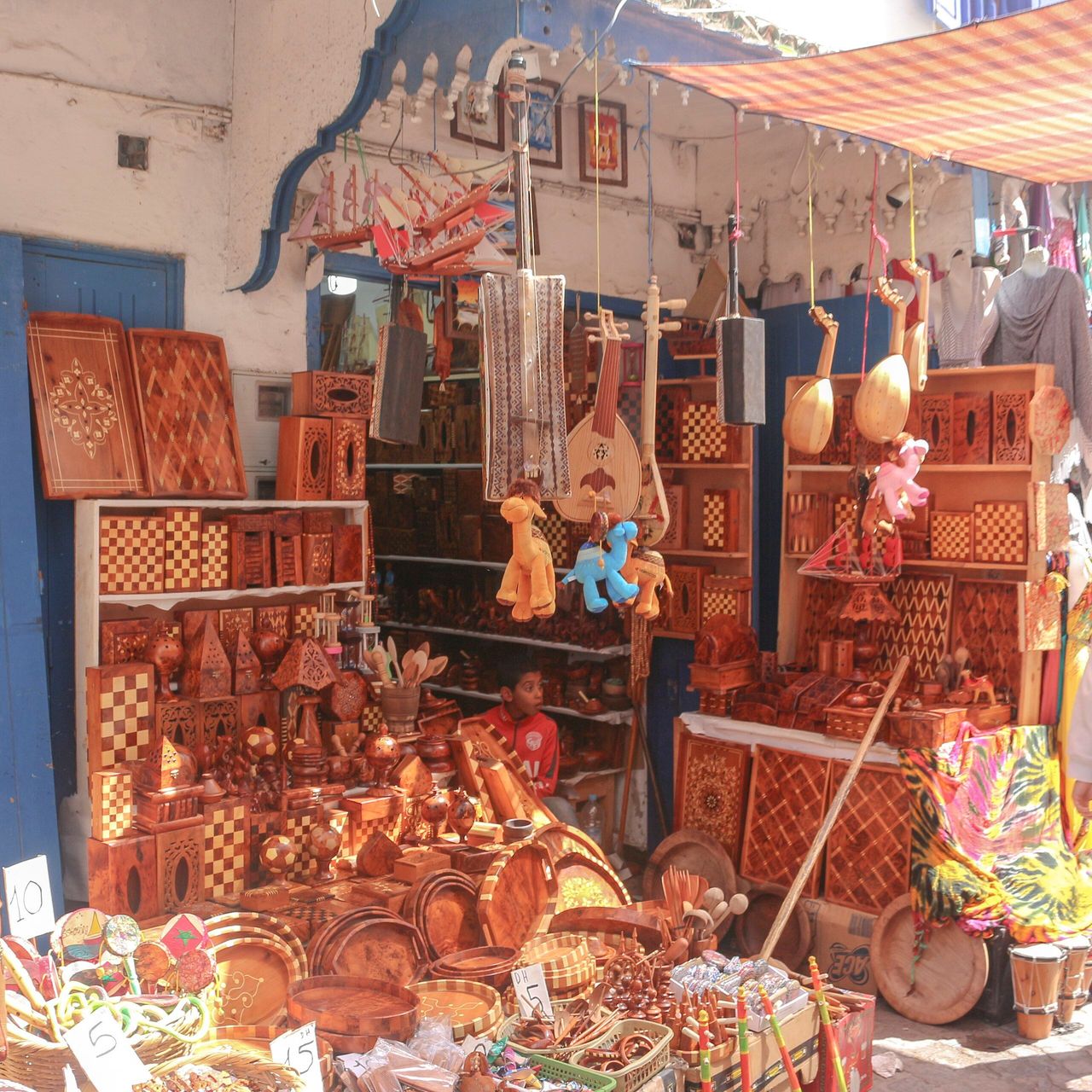
Barbary thuya, a member of the cypress family, grows in the forests inland. Dense, warm-toned and naturally fragrant, it was once used for house beams; it has since become the raw material of the craft that put Essaouira on the map. Woodworkers use two kinds of wood: trunk and branch wood, with even tones, and burl wood from the root, prized for its speckled patterns.
Three techniques sit side by side: marquetry, which inlays thin pieces of walnut, lemonwood, ebony or mother-of-pearl into the thuya; carving, which brings a shape out of the solid block; and burl veneer on larger furniture. From puzzle boxes to nesting tables, the workshops also turn out ingenious objects whose mechanisms craftsmen love to demonstrate.
The Skala woodworkers occupy the vaults running along the rampart beneath the Skala de la Kasbah, where you can watch them turning, sanding and varnishing. Close by, on Rue Khalid Ibn Oualid, the marquetry cooperative gathers its workshops around the patio of an old riad. The trade is often passed from father to son. Because the forest is under heavy pressure, replanting programmes have been launched and the use of offcuts for marquetry is encouraged; a label of origin for Essaouira-Mogador thuya products was announced in 2025.
Silver jewellery and the “dag souiri” style
Jewellery is the town’s other great craft. It grew out of the meeting of Jewish and Amazigh traditions from the Haha, the Souss and the Marrakech region, and Muslim craftsmen took over from the Jewish silversmiths of the Mellah. Locals speak of “dag souiri”, the Essaouira style, to describe simple, regular pieces, usually in silver, recognisable by a few techniques:
- filigree, fine threads and beads of silver soldered together, the town’s most emblematic technique;
- casting of pieces from molten silver;
- chasing, which carves relief into the metal itself.
The motifs are highly symbolic: the khamsa or hand of Fatima, the Berber fibula once used to fasten garments, and the Mogador rose, emblem of the town’s Jewish jewellery. You will find them in the jewellers’ souk, one of the medina souks, a covered market with tiled walls off the medina’s main street, and in the workshop-boutiques of the artisans’ centre, where you can watch pieces being made.
Weaving, haiks and musical instruments
Other crafts live on in the medina. Weavers still make the haik, the long wool or cotton sheet that the town’s women once wrapped around themselves; today it serves as a bedspread, curtain or tablecloth. Instrument makers build the guembri, the bass lute of the Gnawa, and the metal castanets that drive their ceremonies. Basket makers, blacksmiths and wood painters complete a craft scene that supports a large share of the population.
Where to buy and what to look for
- The artisans’ centre near Bab Marrakech: marquetry, jewellery and weaving workshops set around a courtyard, usually with marked prices.
- The Skala workshops: the best place to buy thuya straight from the maker, or to commission a piece.
- The jewellers’ souk: a wide choice of rings, bracelets and pendants; ask whether a piece was made locally.
- Argan cooperatives: in the medina, on Rue du Caire opposite Dar Souiri, the Argan Haha cooperative shop is open daily from 9.30am to 7pm. Choose oil sold under the cooperative’s own label, with a production date. Culinary oil smells of roasted hazelnut; cosmetic oil has a faint scent. Be wary of very low prices, often a sign of blended oil.
- Thuya: genuine thuya is heavy and gives off a woody scent when rubbed; burl is rarer and costs more than trunk wood.
To keep going, read our guide to shopping in the medina and browse the Shopping section.