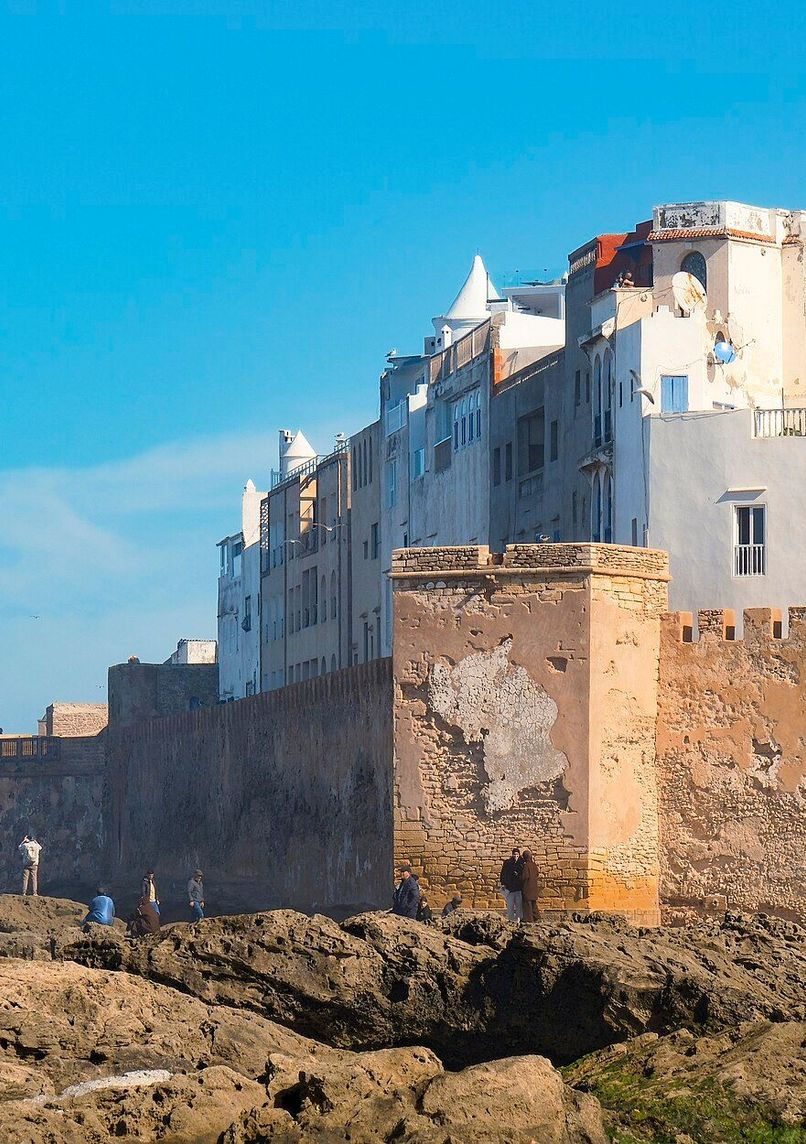
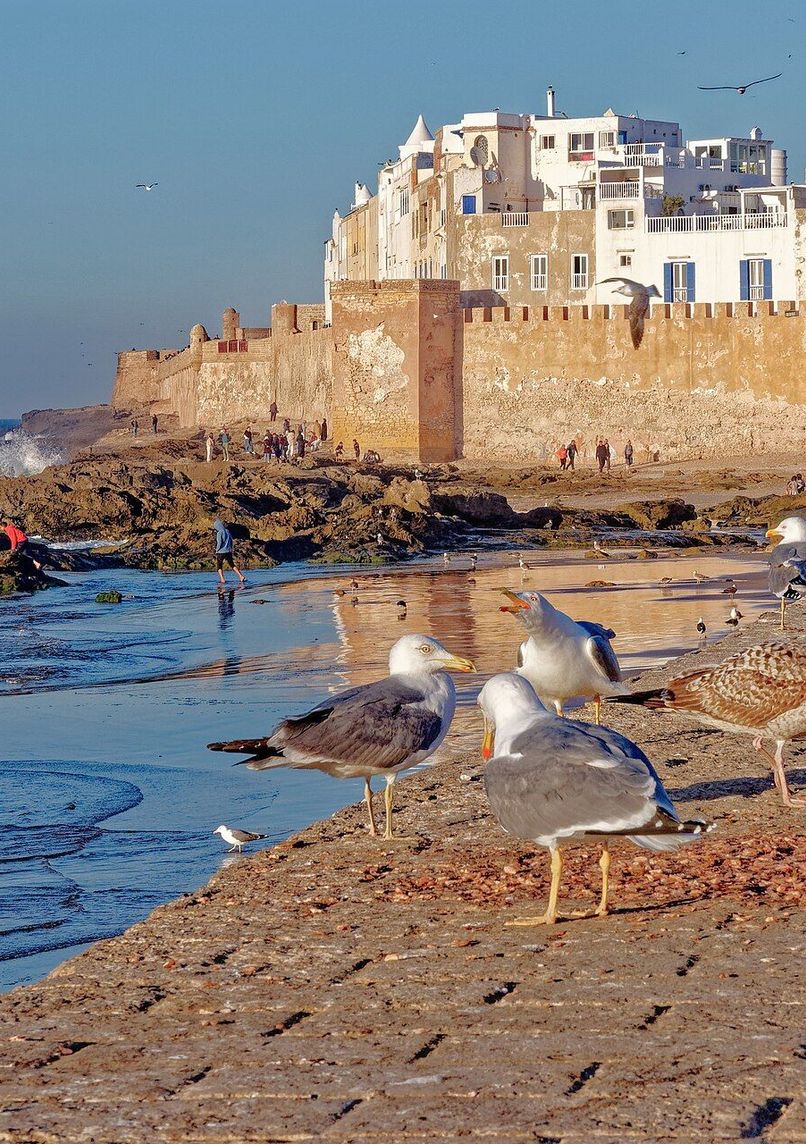
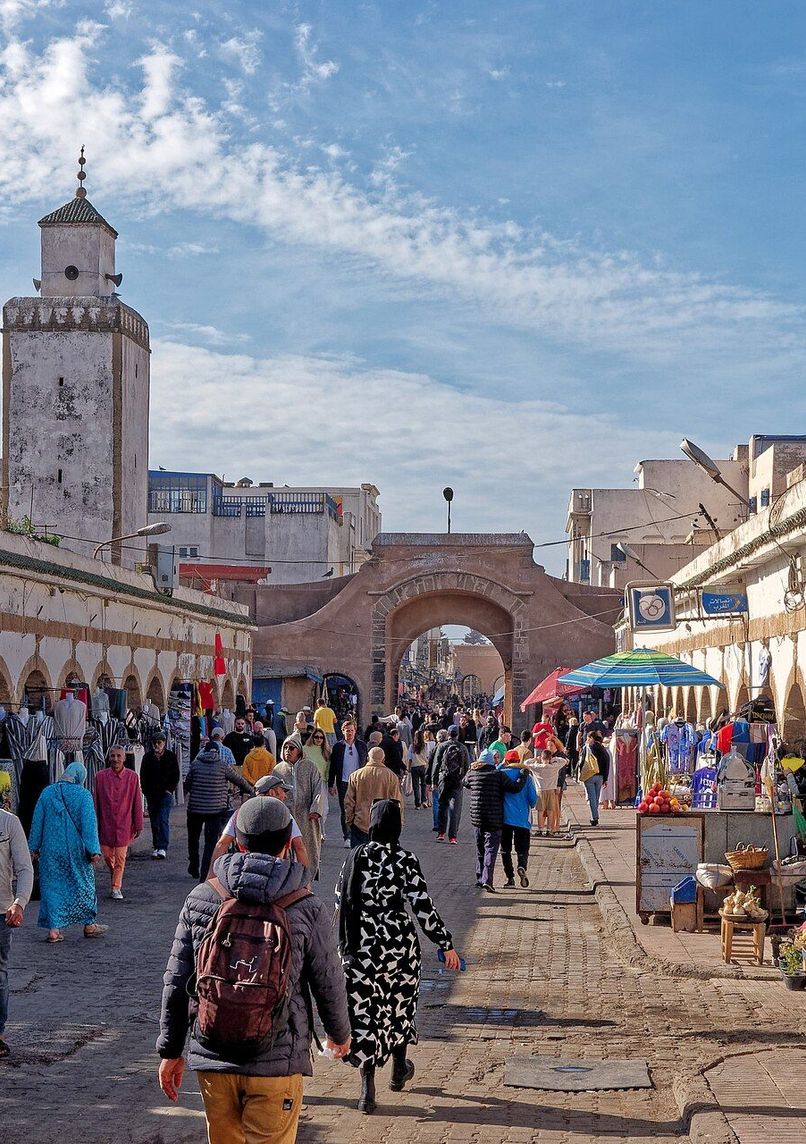
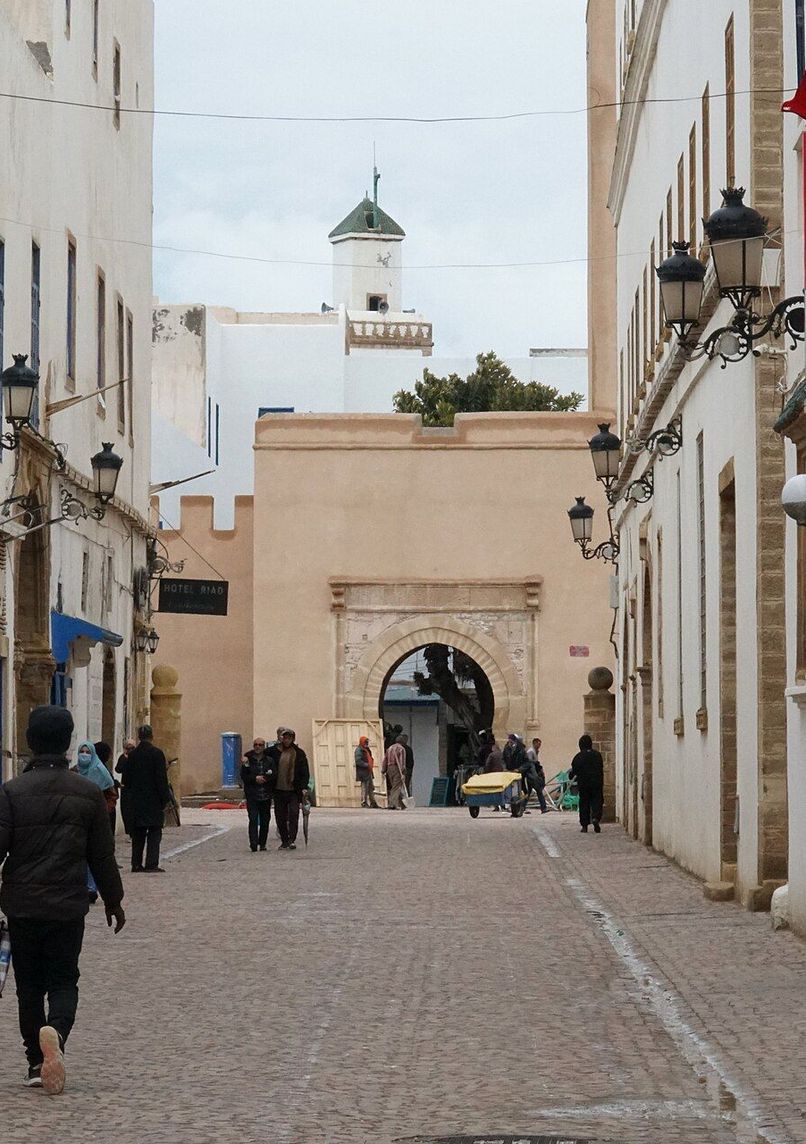
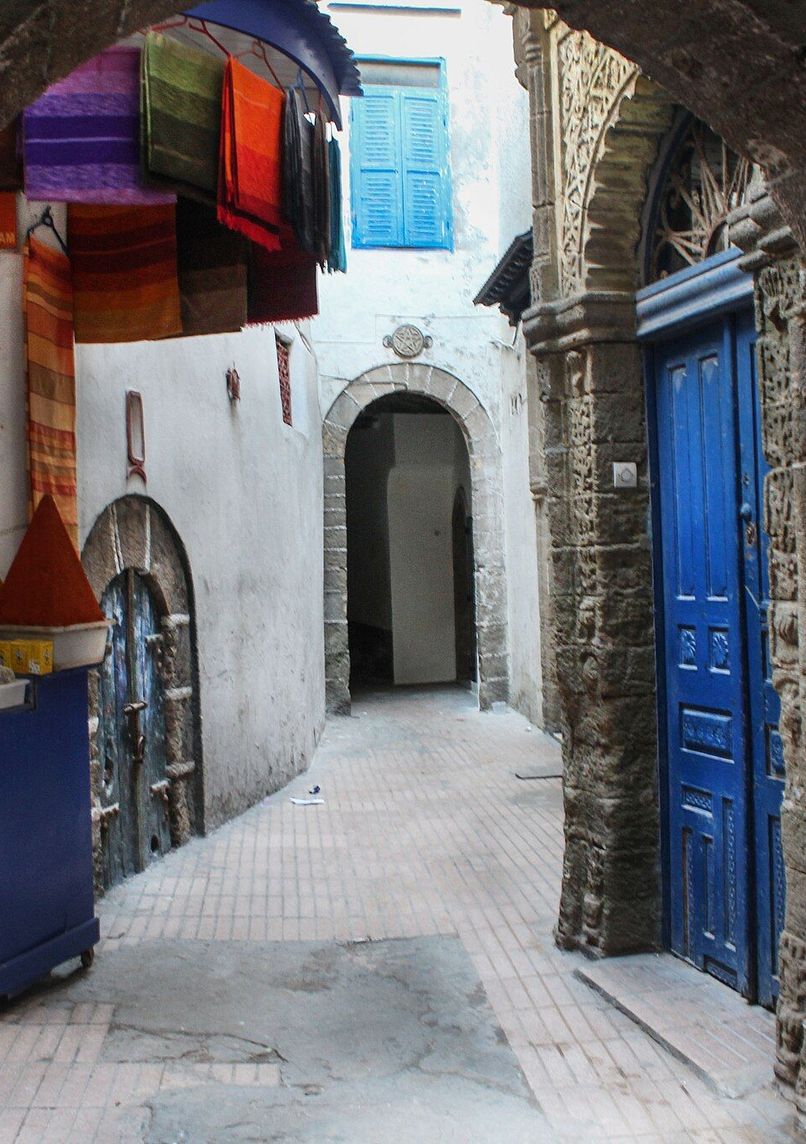
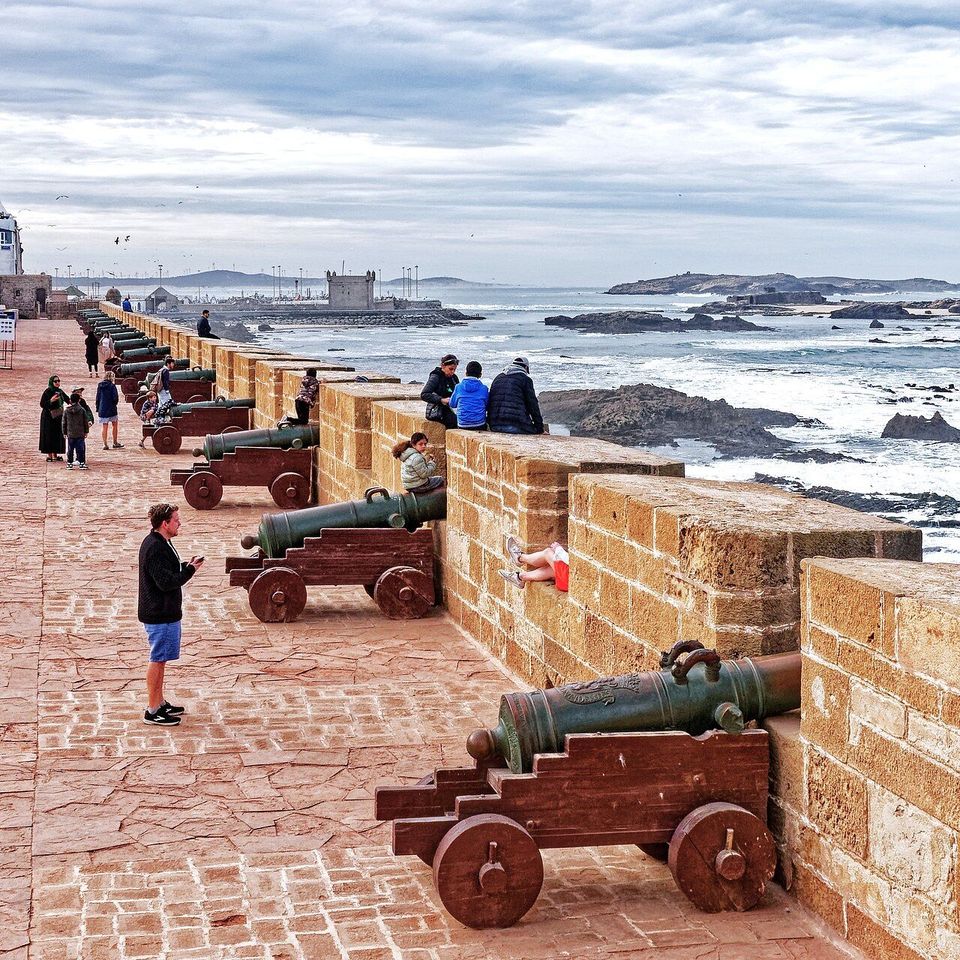
A UNESCO World Heritage Site since 2001, the medina of Essaouira is a walled town built from 1764 for Sultan Mohammed III to a European-inspired plan. Ocean-facing ramparts, a grid of whitewashed streets, the Kasbah, the Mellah and the souks: this is where every visit begins, on foot.
A royal new town
In 1764 the Alaouite sultan Sidi Mohammed ben Abdallah (Mohammed III) set out to build a fortified port facing the island of Mogador. He entrusted the plan to the French military engineer Théodore Cornut, while an English renegade, Ahmed el-Inglizi, designed the harbour entrance and the Sea Gate, dated 1184 in the Hijri calendar (around 1770). From 1765 the sultan ordered the European merchants of Rabat-Salé to move here, and until the late 19th century Essaouira was Morocco’s leading port. Its name is usually translated as “the well-designed”; sailors knew it as Mogador.
Architecture unlike anywhere else in Morocco
UNESCO listed the medina in 2001 as an outstanding example of a late-18th-century fortified town, built on the principles of European military architecture in a North African setting. Within some 30 hectares you’ll find:
- a grid plan organised around two perpendicular axes, Avenue Mohammed Zerktouni and Rue Mohamed El Qory;
- a wall pierced by monumental gates, including Bab Doukkala, Bab Marrakech and Bab Sbaa;
- two seaward artillery platforms, the skalas, which earned the town its nickname of “Morocco’s Saint-Malo” (it is twinned with Saint-Malo and La Rochelle).
A rehabilitation programme of around 300 million dirhams (2019-2023) was launched to restore the ramparts, bastions and squares.
What to see in the medina
- The Skala de la Kasbah, with its cannons facing the surf, then the Skala du Port above the blue fishing boats.
- The Kasbah, the oldest quarter, home to Bayt Dakira, a house of Judeo-Moroccan memory.
- The Mellah, the former Jewish quarter, and its synagogues.
- The souks: thuya-wood marquetry, spices, jewellery and textiles.
- Borj Bab Marrakech, a former powder magazine turned gallery, and the painting galleries behind the town’s artistic reputation.
Film and music
Orson Welles shot part of Othello here, winner of the Grand Prix at Cannes in 1952, and the fortifications stood in for Astapor in season 3 of Game of Thrones. Since 1998 the Gnaoua and World Music Festival has taken over the medina’s squares every year, usually in June.
Practical information
- Free access; the medina is almost entirely pedestrian.
- Main entrances: Bab Marrakech to the south-east, Bab Doukkala to the north-east and Place Moulay Hassan on the harbour side.
- Allow half a day for the highlights, a full day with the galleries and Bayt Dakira.
- Essaouira is known as the windy city: bring a windproof layer whatever the season.