Flying to Essaouira
Essaouira-Mogador Airport lies about 16 km south-east of town, a 20 to 25-minute drive. It has direct links to several European cities, mostly with low-cost airlines and schedules that change from season to season: Paris, Marseille, Lyon, Bordeaux, Brussels, London, Madrid and Seville have all featured in recent years. Check which flights operate on your travel dates directly with the airlines.
Since 1 November 2026, Royal Air Maroc has restored a Casablanca-Essaouira route, with two flights a week on Wednesdays and Sundays, making it possible to connect from anywhere on the airline’s international network. The other option is to fly into Marrakech, which has far more flights, and continue by road.
On arrival, taxis wait outside the terminal; the ride into town costs around 150 MAD by day, more at night. Agree on the fare before setting off. Many hotels also arrange transfers.
Marrakech to Essaouira by road
Marrakech and Essaouira are roughly 175 to 190 km apart, a drive of 2.5 to 3 hours depending on traffic. The road is in good condition but mostly single-carriageway, passing through several villages with lower speed limits, so drive carefully, especially as speed checks are common. Nearing Essaouira, the road crosses the argan forest, where you may spot goats perched in the trees.
- By coach: Supratours and CTM run several departures a day between the two cities, taking about 3 hours. Tickets cost roughly 80 to 130 MAD depending on the company and class, and can be booked online or at the station. In Essaouira, coaches arrive outside the medina, a few minutes away by taxi.
- By hire car: handy for exploring the coast and the hinterland, but unnecessary in town. Park in the car parks around the medina and along the beach; illegal parking quickly ends at the pound.
- By private transfer: the most comfortable option from Marrakech airport, bookable through your hotel or an agency.
Essaouira weather: when to go
Essaouira enjoys a mild oceanic climate, kept cool by the cold Canary Current. In summer, highs rarely top 22 to 23 °C, while Marrakech often exceeds 35 °C; winter days stay mild at around 18 to 19 °C and nights rarely fall below 8 °C, although wind and humidity make it feel cooler. Rain falls mainly between November and March and is rare from May to September. The sea stays cool all year: around 17 to 18 °C in spring and 20 to 21 °C in August.
- Spring and autumn: the best time to explore the town and region, with generally moderate wind.
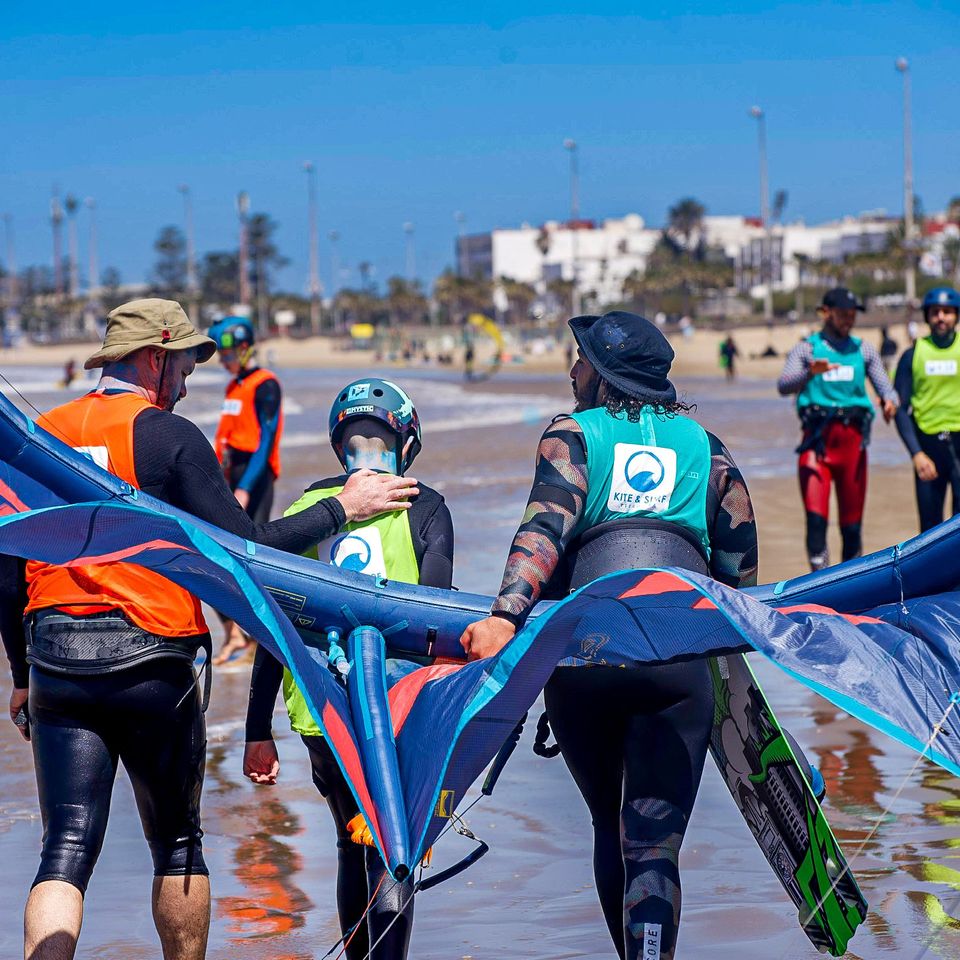
- Summer: the season for families and kitesurfing, when the trade wind is strongest; the town is lively and accommodation should be booked early, especially around the Gnaoua Festival in late June.
- Winter: mild, sunny between rainy spells and quieter; the season for surfers and swell.
The wind, a constant companion
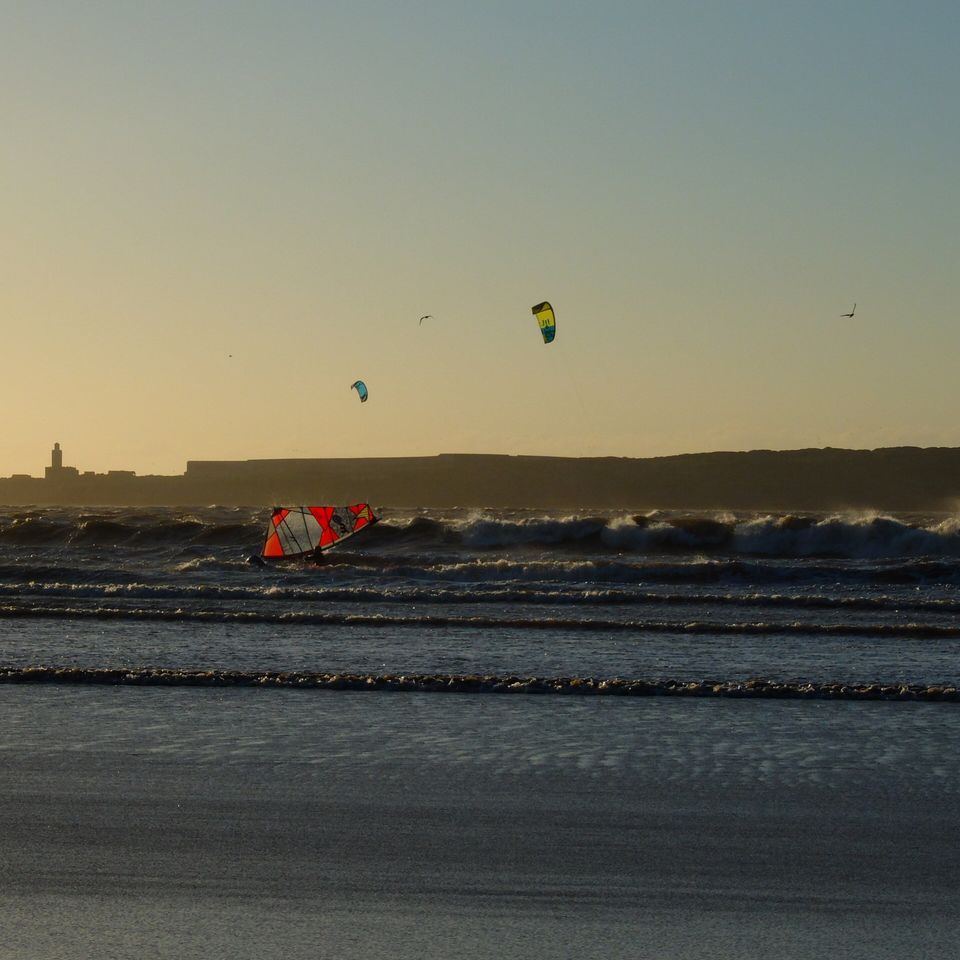
The trade wind, blowing from the north-north-east, is Essaouira’s signature. It usually picks up in late morning, peaks in the afternoon and eases in the evening, and it is strongest and most consistent from June to August. It keeps the town cool in summer and delights windsurfers and kitesurfers, but can be a nuisance on the beach, where sand flies on windy days. Plan accordingly: beach and swimming in the morning, medina, museums and souks in the afternoon, sheltered by the narrow lanes. Pack a windproof jacket, sunglasses and a scarf whatever the season.
Getting around Essaouira
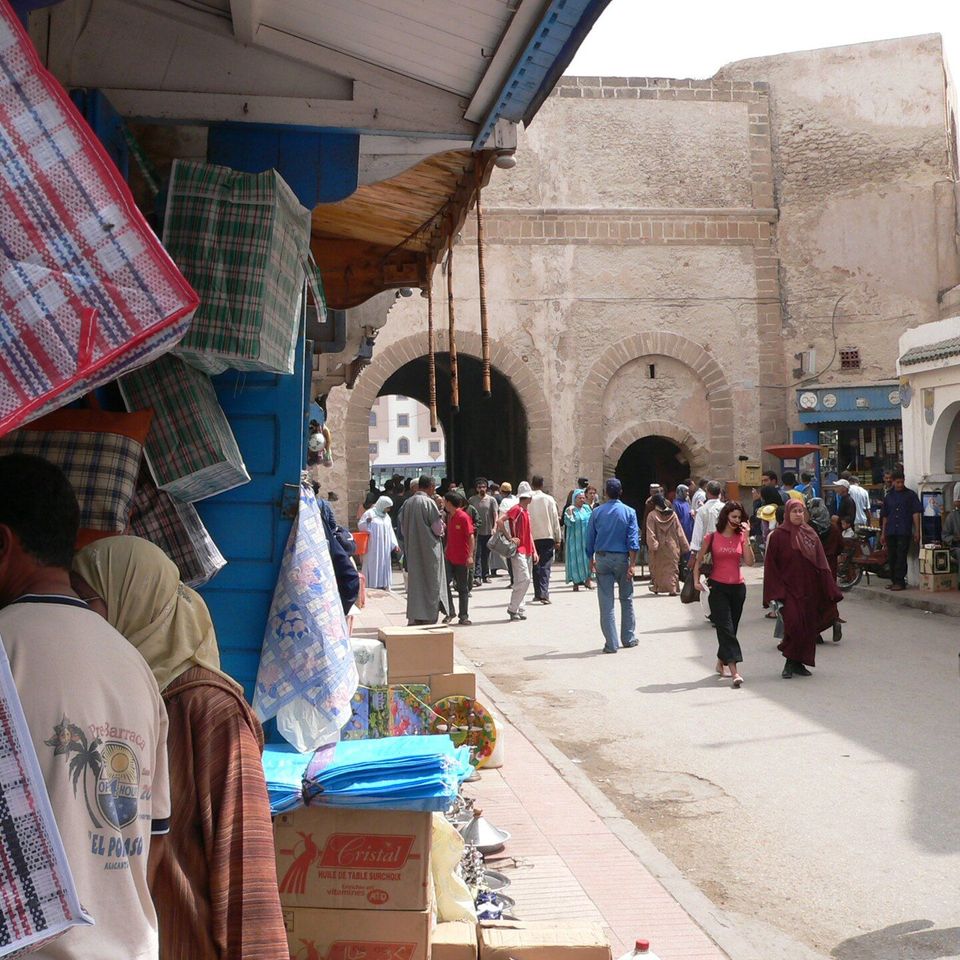
- On foot: the medina is entirely car-free and takes about fifteen minutes to cross. Porters with handcarts wait at the gates and car parks to wheel your luggage to your riad; agree on the price first.
- By petit taxi: the blue taxis cover the town and run out to Diabat and Ghazoua, carrying up to three passengers. Town rides are cheap; ask the fare before getting in and carry small change. A night supplement applies.
- By grand taxi: for Sidi Kaouki, Moulay Bouzerktoun or inland villages, shared or private, from the bus station.
- By city bus: cheap lines serve the outer districts, with limited evening services.
Safety and etiquette
Essaouira has a reputation as a calm, safe town where you can stroll around easily by day and in the evening. The usual precautions are enough: watch your belongings in crowded souks and at festivals, avoid deserted lanes very late at night and leave nothing on show in a car. For a guided tour, use an official guide holding a Ministry of Tourism card, booked through your hotel or the tourism office, and be wary of self-appointed guides who approach you in the street. A tourist police unit can step in if there is a dispute.
On the beach, swim in supervised areas and watch out for currents, which are strong at Sidi Kaouki. Clothing that covers shoulders and knees is appreciated in the medina and required in places of worship. During Ramadan, opening hours for shops, restaurants and monuments change, and alcohol is harder to find.
Practical information
- Currency: the dirham (MAD or DH). ATMs in the new town and around the clock tower square; many small shops take cash only.
- Time zone: Morocco runs on GMT+1, except during Ramadan, when it reverts to GMT.
- How long to stay: three days for the town, a week with the coast and the hinterland.
- Going further: see our ideas in the Things to do section and our pick of hotels.