Tangier is ideally placed: between two seas, at the tip of a peninsula that packs fortified towns, ancient sites, wild beaches and the Rif Mountains into less than two hours’ drive. Here are our six favourite trips, from nearest to furthest.
Choose according to your mood: heritage with Tétouan and Lixus, sea and ramparts with Asilah and Ksar Sghir, mountains and hiking with Chefchaouen. All can be done in a day, though some are better with a night on the spot.
Cape Spartel and the Caves of Hercules
About 15 km, half a day. This is the easiest outing. The Route de la Montagne runs through residential districts and pine woods to Cape Spartel, where the lighthouse built in 1864 under Sultan Mohammed IV marks the meeting point of the Atlantic and the Mediterranean. Heading down the coast, you reach the Caves of Hercules, whose opening onto the ocean traces an upside-down Africa, then Achakar beach, perfect at sunset.
On the way, Perdicaris Park, 70 hectares of forest in Rmilat, is worth a stop for its restored villa and its views over the Strait.
Asilah, the white town with Portuguese walls
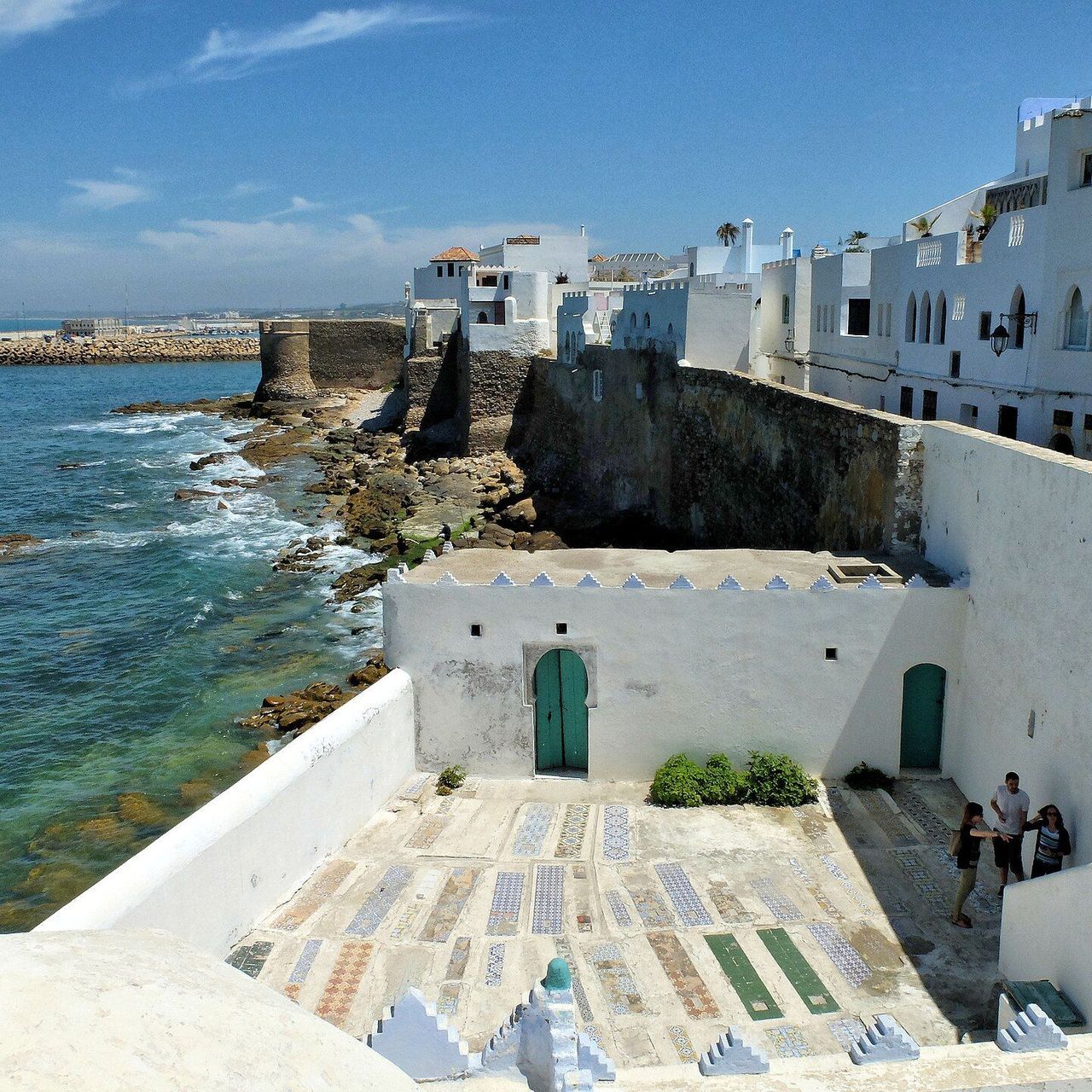
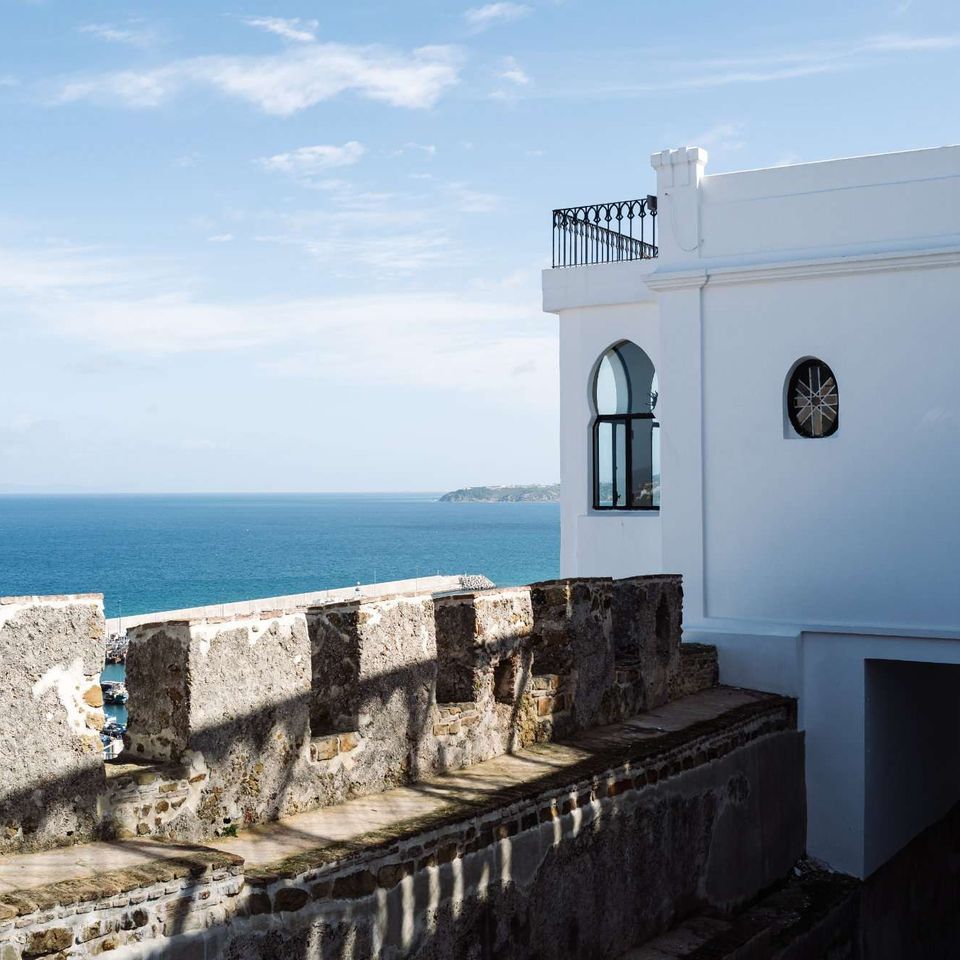
About 45 km south, a full day. Taken by the Portuguese in 1471, Asilah has kept that era’s ramparts and bastions, pounded by the Atlantic. Its white medina, with blue and green doors, is among the best kept in the country. It owes much to the International Cultural Moussem founded in 1978 by Mohamed Benaïssa, later a government minister and long the town’s mayor, and the painter Mohamed Melehi: every year artists paint murals on its walls, and the Raissouni Palace, now the Palace of Culture, hosts exhibitions and talks. The 47th edition took place in 2026, in three sessions from March to October.
Walk the ramparts to the Krikia bastion, facing the waves, before a seafood lunch by the harbour. The murals change from year to year, so each visit offers a slightly different medina. Asilah can be reached by train from Tangier.
Tétouan, daughter of Granada
About 60 km south-east, a full day. Destroyed by the Castilians in the late 14th century, Tétouan was rebuilt a hundred years later by refugees from Granada. Its medina, a UNESCO World Heritage Site since 1997, remains one of Morocco’s most authentic: embroidery, leather and zellige workshops, quarters of Andalusian houses and lively souks. Capital of the Spanish Protectorate from 1913 to 1956, the city also inherited an Ensanche of ornate white façades. The School of Arts and Crafts, opposite the Bab el-Okla gate, keeps traditional craft teaching alive.
The medina is large, busy and poorly signposted, so an official guide saves time. In summer, carry on to the Mediterranean beaches of Martil, Cabo Negro or M’diq.
Ksar Sghir and the Strait road
About 35 km east, half a day. The coast road towards Ceuta runs along the Strait, with Spain on the horizon. At Ksar Sghir, a medieval embarkation port for armies bound for Andalusia, the Portuguese held a fortress from 1458 to 1550; its ruins still overlook the river mouth. Nearby, the coves of Dalia and Oued Aliane offer calmer water than the Atlantic, and several viewpoints look out over shipping in the Strait. Further east, the road reveals the Tanger Med port complex, symbol of the region’s new industrial face.
Larache and ancient Lixus
About 90 km south, a full day. Just before Larache, on a hill above the Loukkos river, the site of Lixus brings together Phoenician, Mauretanian and Roman remains: temples, baths, fish-salting works and an amphitheatre. Myth places the Garden of the Hesperides and its golden apples here. Larache itself, a former Spanish town, keeps an arcaded square and a balcony over the Atlantic. Its Spanish cemetery is the resting place of writer Jean Genet and novelist Juan Goytisolo.
Asilah and Larache combine easily in a single day.
Chefchaouen, the blue city
About 115 km, one or two days. Founded in 1471 in the Rif Mountains, Chefchaouen is famous for its blue-washed medina, ochre kasbah and the Ras el-Ma spring. It is reached via Tétouan in two to two and a half hours, and the drive itself, climbing from the coast into the forested Rif, is part of the pleasure. Stay a night to enjoy the lanes in the morning and push on to the Akchour waterfalls in Talassemtane National Park. Our dedicated Chefchaouen story explains why the town is blue.
Practical information
- Getting around: a hire car or private driver makes it easy to combine stops; trains serve Asilah, and buses link Tangier with Tétouan, Larache and Chefchaouen.
- Good combinations: Cape Spartel and Achakar late in the day; Asilah and Larache; Tétouan and Chefchaouen with a night in the Rif.
- Season: April to June and September to October; in July and August the beaches and coast roads are very busy.
- Back in town: our Tangier addresses under Restaurants and Hotels, with more ideas under Things to do.