Few cities have inspired as many books as Tangier. It is not just a matter of light or landscape: for three decades its international status made it a refuge, a free port and a stage where anything seemed possible. Painters discovered it before writers did; writers turned it into a myth; Tangerine authors then told its story from the inside.
The International Zone, 1925-1956
Coveted for its position on the Strait of Gibraltar, Tangier was given special status by a convention signed in Paris on 18 December 1923. In force from 1925, the International Zone was run by a control committee of European powers, joined by the United States after the Second World War, under the nominal sovereignty of the sultan, represented by his mendoub. Spain occupied it from 1940 to 1945. The regime ended on 29 October 1956, a few months after Moroccan independence.
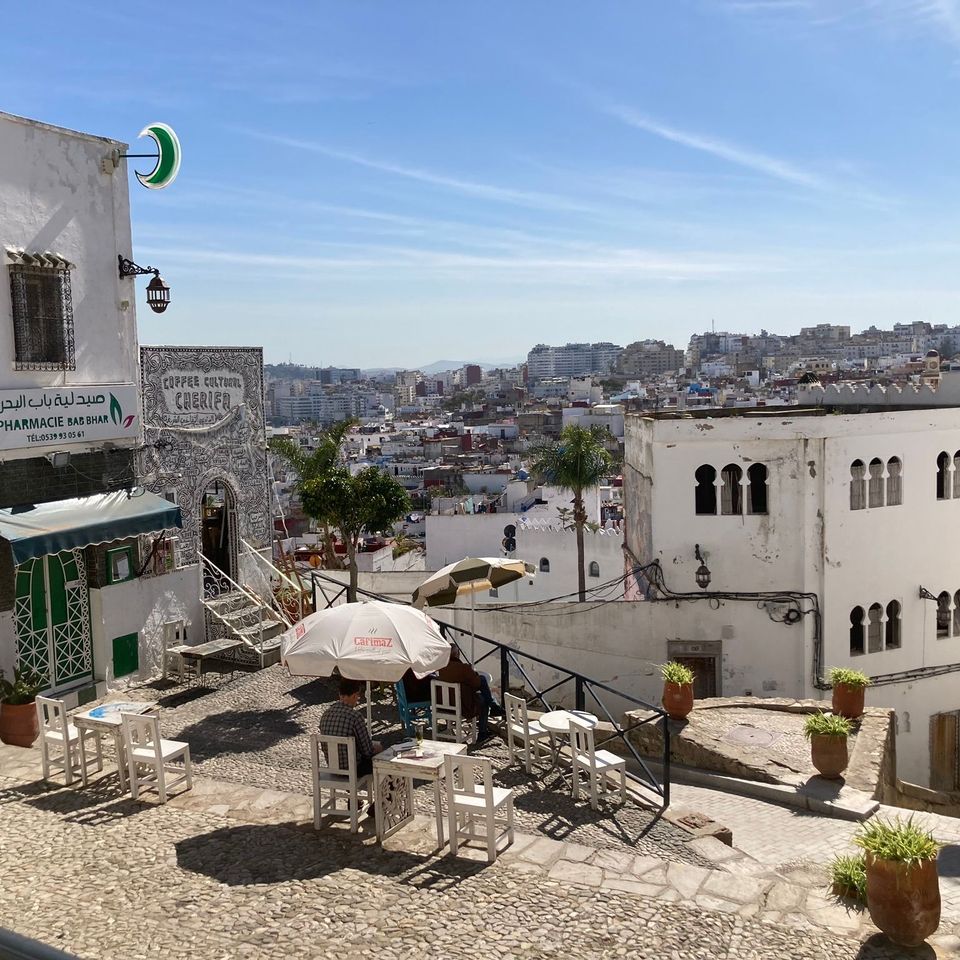
Light taxation, banks, free currency exchange, smuggling and spies from every camp: this cosmopolitan Tangier, where Arabic, Spanish, French, English and Haketia were all spoken, attracted adventurers and artists. The Petit Socco and its Gran Café Central were its living room, El Minzah its smart address and Gran Café de Paris its lookout on Place de France.
Before the Zone: Delacroix and Matisse
In January 1832, Eugène Delacroix landed in Tangier with the Comte de Mornay’s diplomatic mission to Sultan Moulay Abderrahmane. His sketchbooks and watercolours fed his painting for thirty years, from Women of Algiers to his fantasia scenes, and fixed an image of Morocco that would captivate the Orientalists.
Henri Matisse arrived in 1912 and returned in the winter of 1912-1913. From room 35 of the Grand Hotel Villa de France he painted the view over the bay, St Andrew’s Church and the medina: Window at Tangier, now in the Pushkin Museum in Moscow. These stays, which produced some twenty canvases, transformed his palette. Reopened after restoration, the hotel has turned room 35 into a tribute to the painter.
Paul Bowles, Tangier’s American
A composer before he was a writer, Paul Bowles first came to Tangier in the summer of 1931 with Aaron Copland, on Gertrude Stein’s advice. He settled there in 1947 and was joined the following year by his wife, the novelist Jane Bowles. The Sheltering Sky, published in 1949, made his name; he never left the city, where he died on 18 November 1999.
Bowles was also a go-between. In 1959, backed by the Rockefeller Foundation and the Library of Congress, he recorded Morocco’s traditional music. He translated into English the tales of Tangerine storytellers such as Mohamed Mrabet, as well as the work of Mohamed Choukri. His memory is preserved at the American Legation, where an entire wing is devoted to him: manuscripts, photographs, instruments and furniture.
Burroughs, the Beats and the Hotel Muniria
William Burroughs arrived in 1954. Holed up in a room at the Hotel El Muniria, he spent three years piling up the fragments that would become Naked Lunch. In early 1957 Jack Kerouac, then Allen Ginsberg, Peter Orlovsky and Alan Ansen joined him and helped type and arrange the manuscript, published in Paris by Olympia Press in 1959. The Tangerinn bar, on the Muniria’s ground floor, keeps the memory alive.
Around them circled the painter Brion Gysin, who introduced Westerners to the Master Musicians of Jajouka, along with Tennessee Williams, Truman Capote and, later, the Rolling Stones. Brian Jones recorded in Jajouka in 1968.
Genet, Choukri and Tangier’s own voices
Jean Genet stayed regularly in Tangier and elsewhere in Morocco late in life; since 1986 he has been buried in the Spanish cemetery at Larache, south of the city. Yet the most Tangerine work of all is surely Mohamed Choukri’s. Written in Arabic in 1972, For Bread Alone is an unflinching account of a childhood of poverty and life in Tangier’s underworld. Translated into English by Paul Bowles in 1973 and into French by Tahar Ben Jelloun in 1980, the book, long banned in Morocco, has become a classic. Other voices followed, among them the Spanish novelist Juan Goytisolo, who lived between Tangier and Marrakech.
Literary landmarks to visit
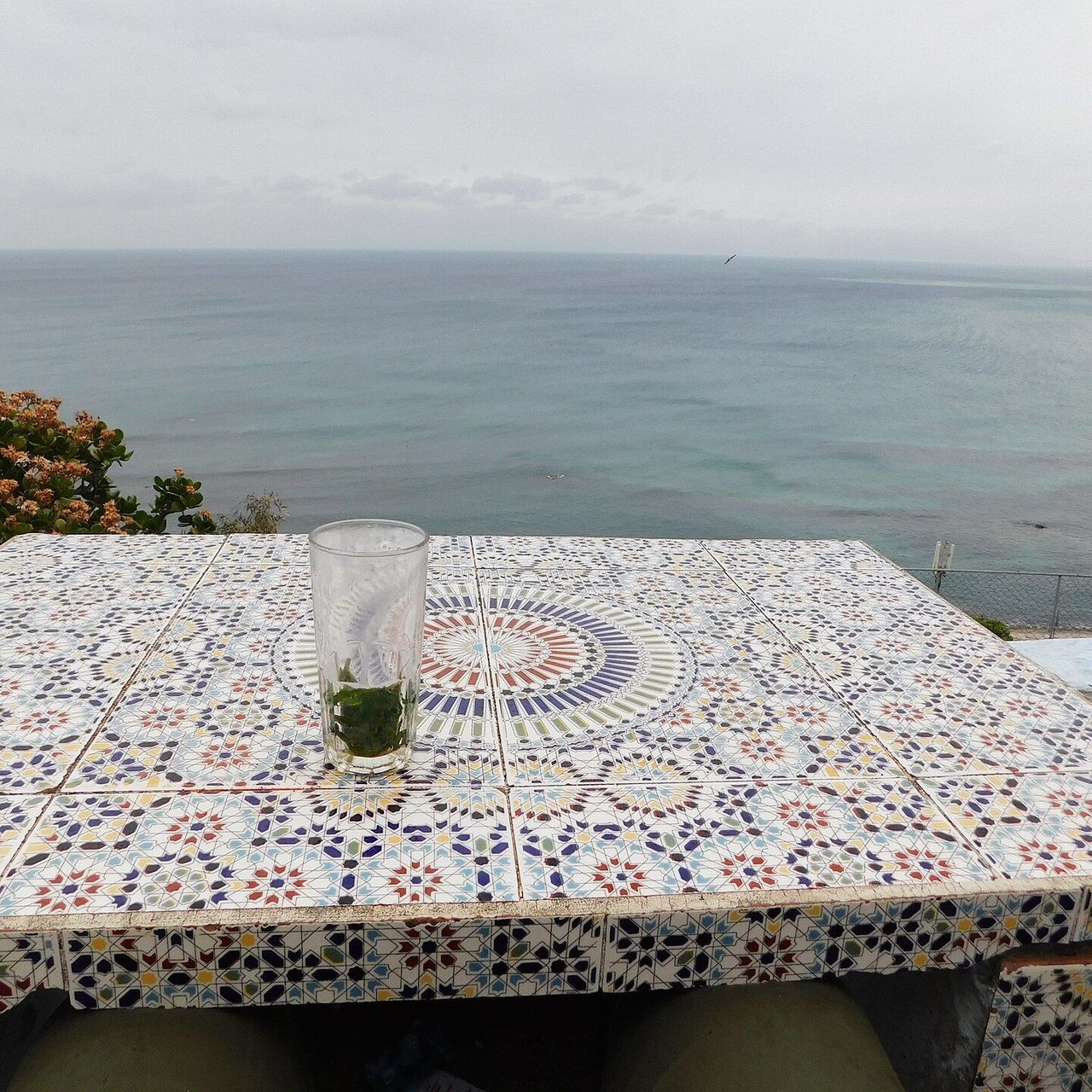
- Café Hafa: opened in 1921 on the Marshan cliffs, it welcomed Bowles, Genet, Burroughs and many more. The mint tea and the view of the Strait have not changed.
- Librairie des Colonnes: founded in 1949 on Boulevard Pasteur by the Gerofi family, it was the city’s literary antechamber. Taken over by Pierre Bergé and later by new owners, it reopened in January 2023.
- Gran Teatro Cervantes: opened in 1913 and once a stage for leading Spanish companies, it has been under restoration since its handover to Morocco.
- Cinémathèque de Tanger: housed in the Cinema Rif on the Grand Socco, it carries on the city’s calling as an artistic stage.
To follow in their footsteps, see our listings under Arts & Culture and our coffee houses under Cafés.