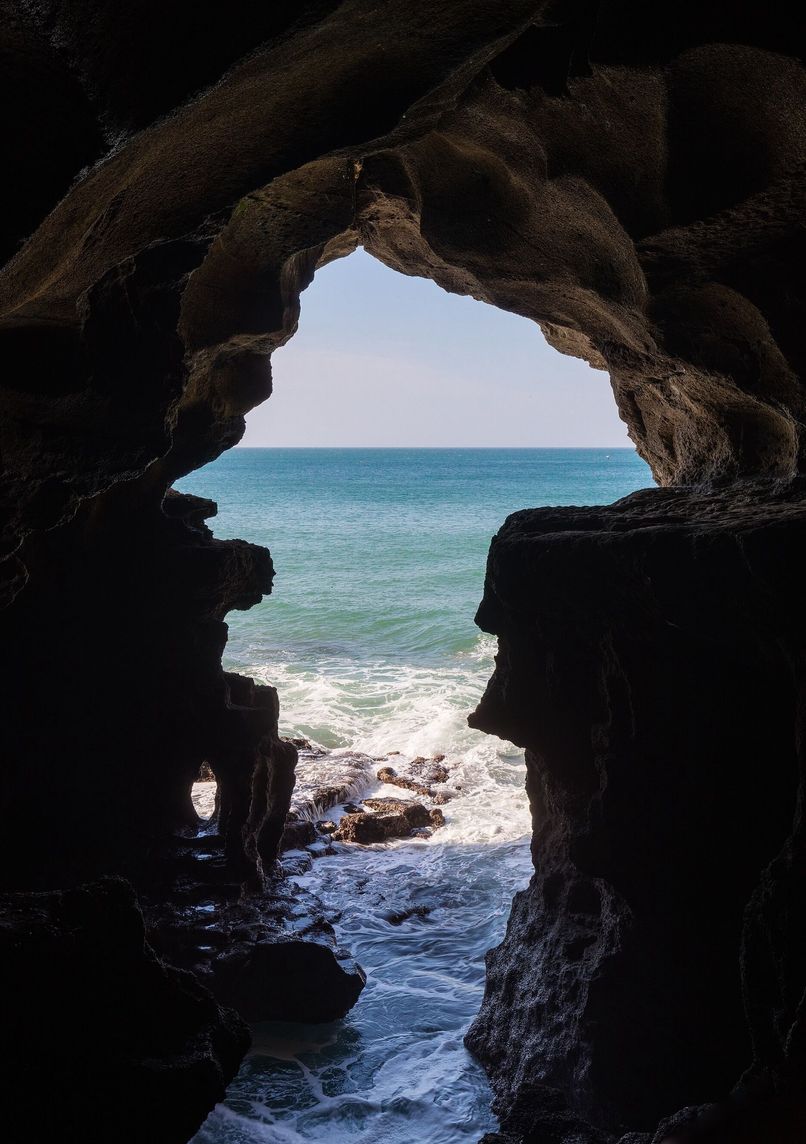
Some 14 km west of Tangier, beneath Cape Spartel, the Caves of Hercules open onto the Atlantic through a gap whose outline recalls a map of Africa. The city’s most visited sight combines ancient myth, Neolithic traces and walls shaped by centuries of millstone cutting.
The Caves of Hercules, myth and quarry
Hollowed out of the limestone cliffs at Achakar, where the Atlantic meets the Strait of Gibraltar, the Caves of Hercules open both inland and onto the ocean. Legend has it that Hercules rested here before his eleventh labour, fetching the golden apples from the Garden of the Hesperides. Tradition adds that the hero split Europe from Africa, opening the strait. Another long-held belief claimed the cave was bottomless and linked by a tunnel to the Rock of Gibraltar on the far shore.
Thousands of years of history
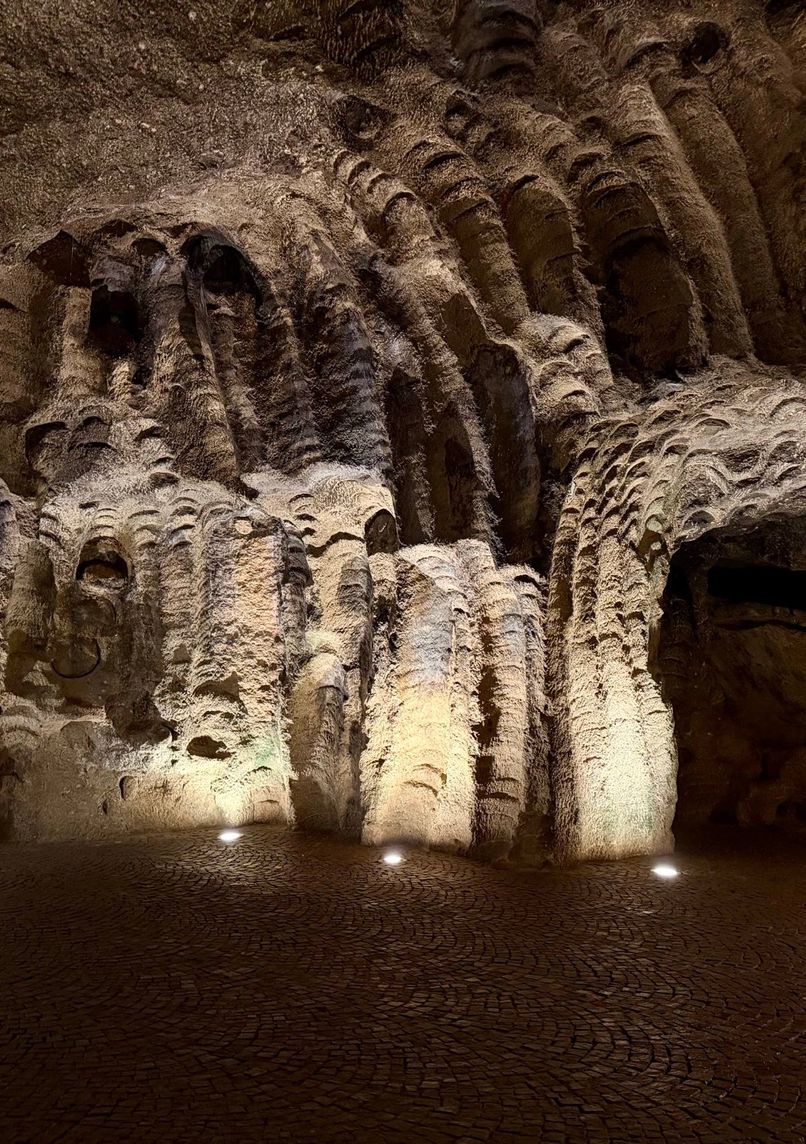
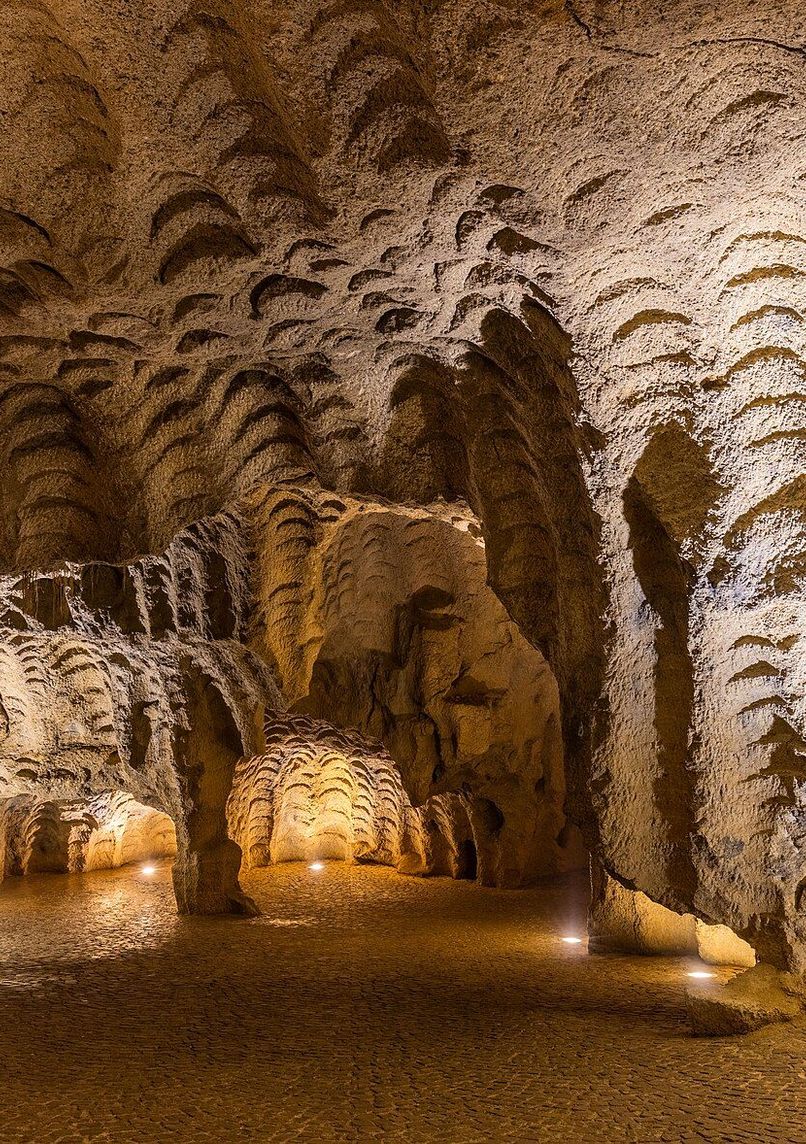
The cave is partly natural and partly man-made: for centuries, millstones were cut from the rock here, and their semicircular marks still cover the walls.
- Remains point to occupation as early as the Neolithic
- Opened to the public in 1920, listed as national heritage in 1950
- The ashes of artist and writer Brion Gysin were scattered here in 1986
- On 23 October 1995, Def Leppard played one of three concerts on three continents in a single day here, a Guinness world record
- A 10-million-dirham restoration in 2014 (reinforced walls, new lighting), inaugurated by King Mohammed VI on 16 October 2015
What to see
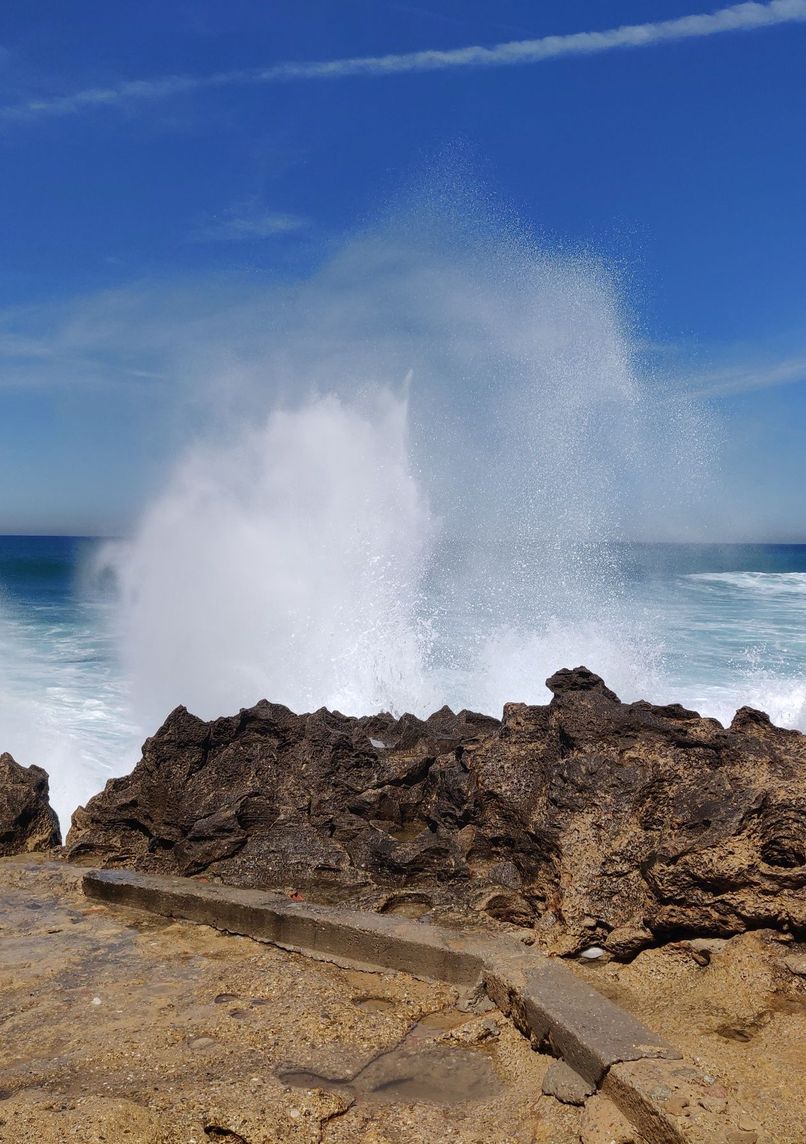
- The opening onto the ocean, where waves surge between the rocks: its silhouette, often compared to the outline of Africa, is the site’s signature view
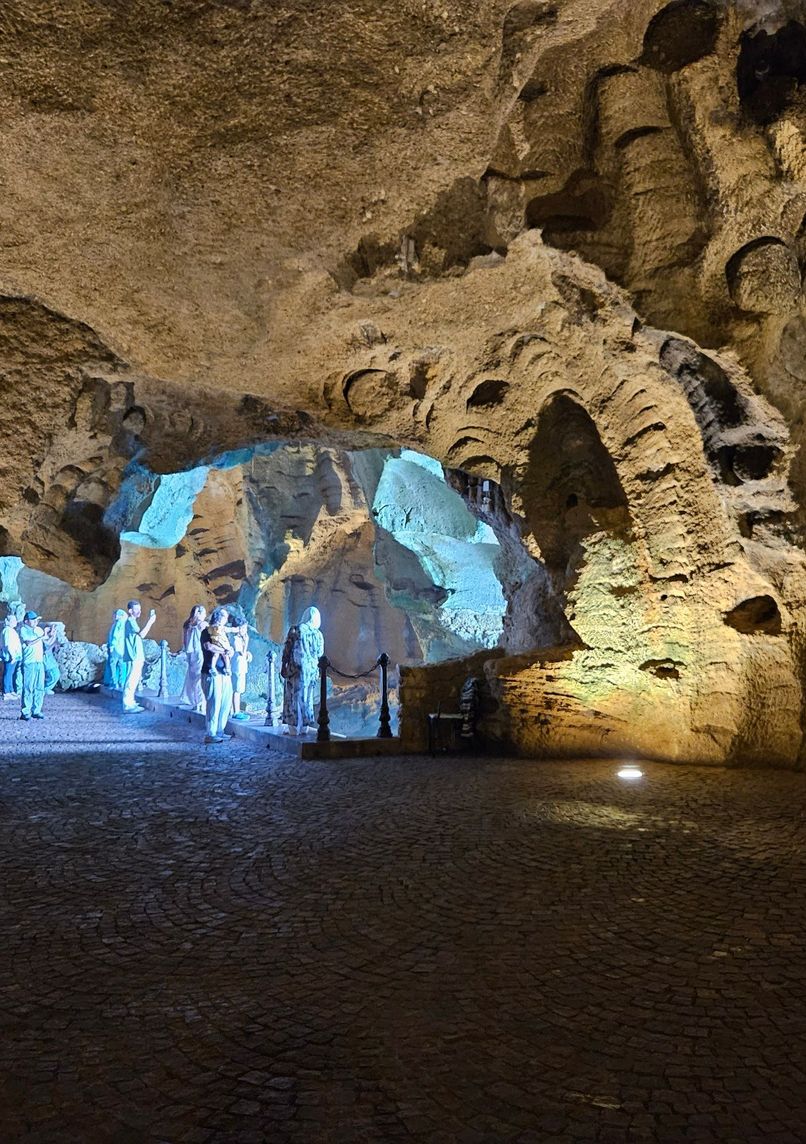
- The lit chambers, their ceilings pitted by millstone extraction
- A recent light installation telling the story of Hercules
- The esplanade, laid out as a viewpoint over the Atlantic with cafés and shops, plus a small neighbouring cave with separate admission
Practical information
- About 20 minutes by car or taxi from the city centre, along the Cape Spartel road
- Open daily, with longer hours at weekends and in summer; check times on site
- Paid entry at the ticket office (prices differ for Moroccan and foreign visitors)
- A short visit of 30 to 45 minutes: come early in the morning to avoid summer queues
- Easily combined with nearby Cape Spartel and Achakar beach