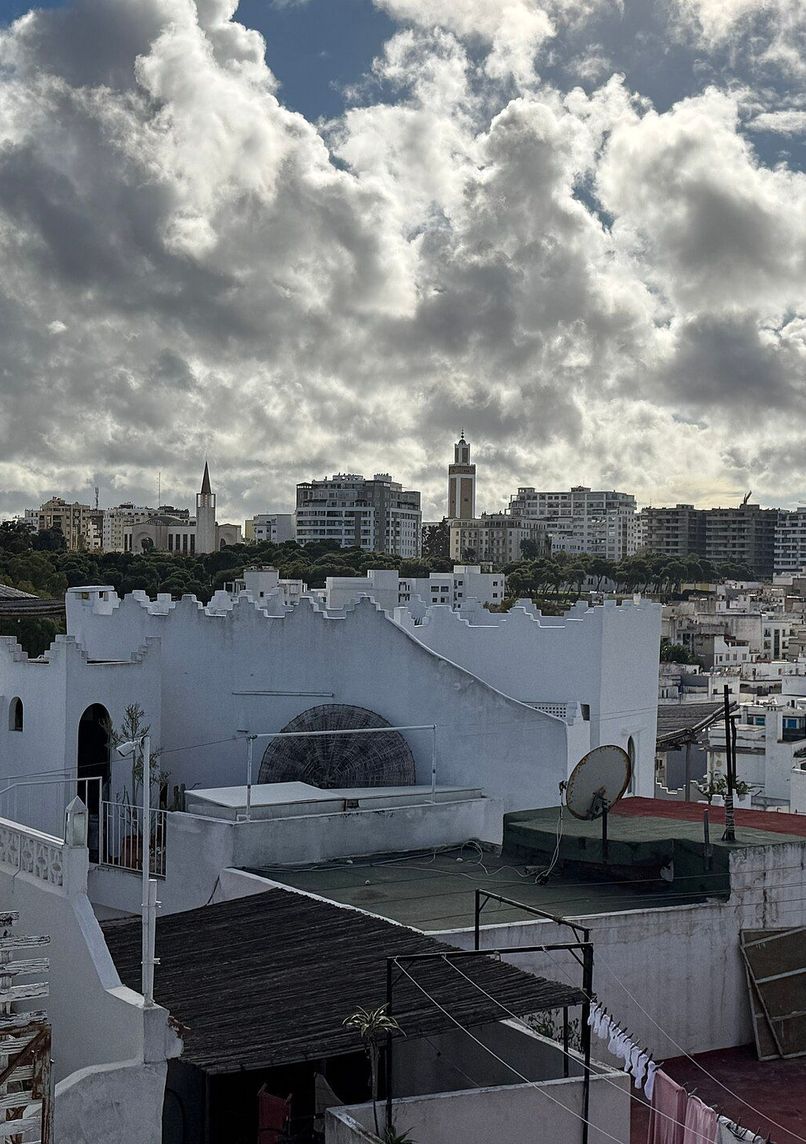
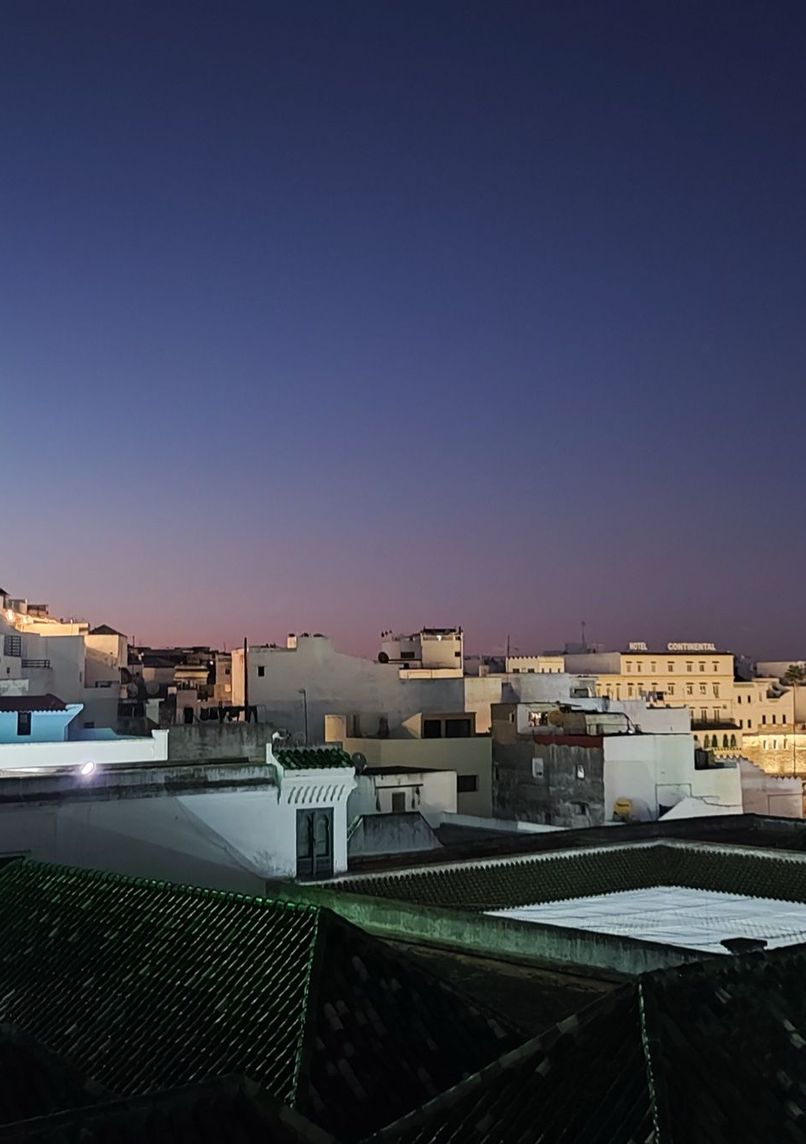
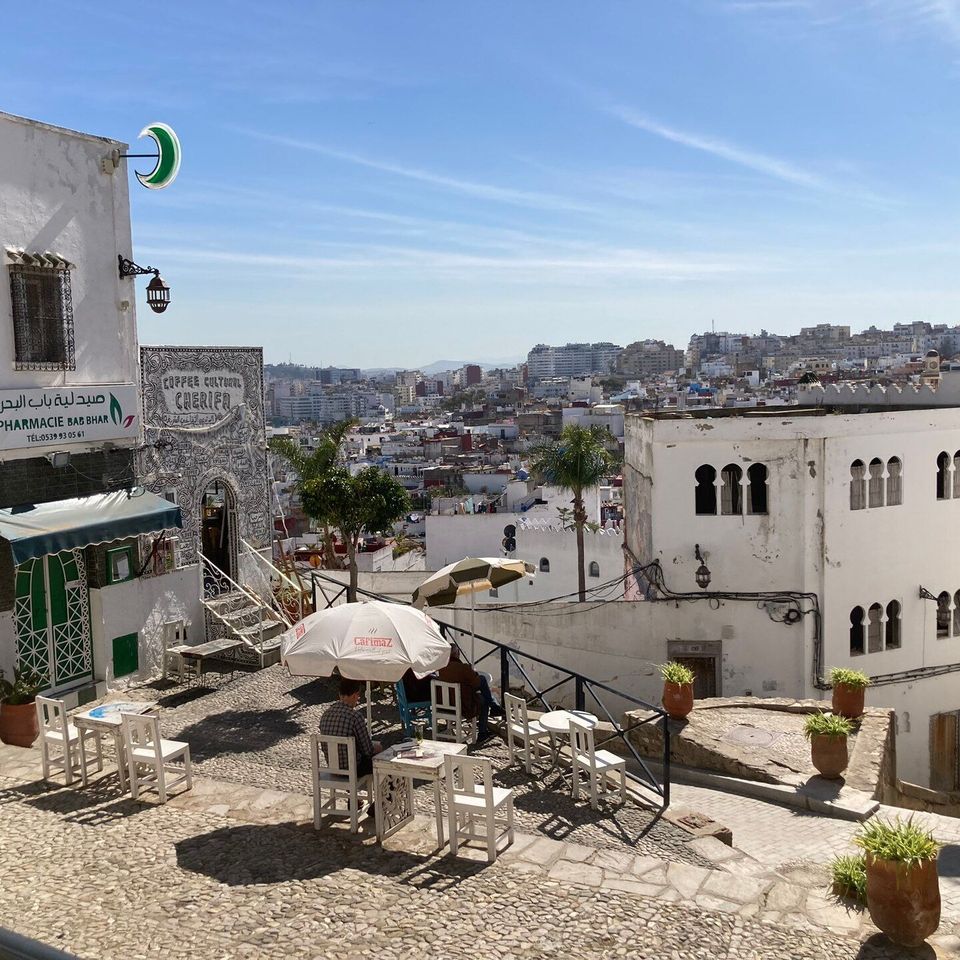
Rising from the port to the kasbah hill, Tangier’s medina unfolds its white lanes within restored Portuguese ramparts. Souks, the Grand and Petit Socco squares, former legations, museums and terraces facing the Strait of Gibraltar make it the city’s historic heart, best explored on foot.
Tangier’s medina, a walled city
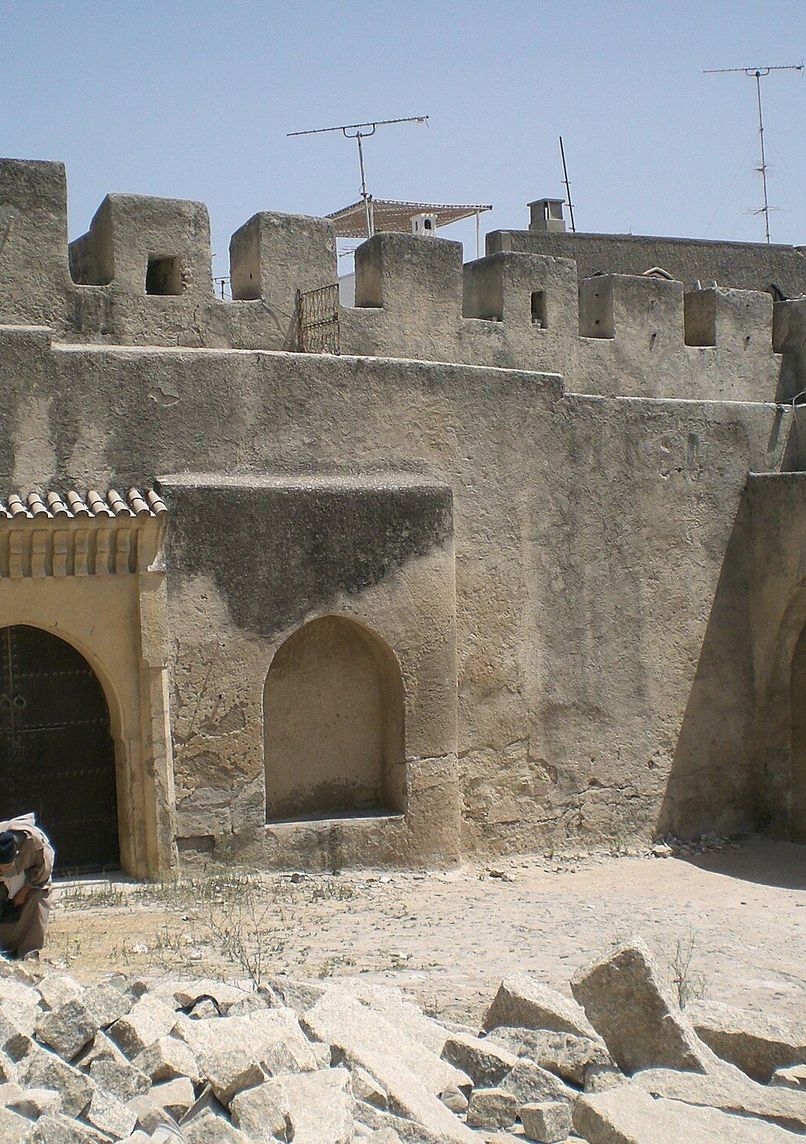
Clinging to the hill above the port and the Strait of Gibraltar, Tangier’s old town is still enclosed by more than 1.8 km of stone ramparts, most of them dating from the Portuguese period. After the English left in 1684, Sultan Moulay Ismail rebuilt the fortifications; in 1844 the French fleet bombarded the city and destroyed part of them. A restoration programme launched in the early 2020s has since brought ramparts, bastions, caravanserais and fountains back to life.
Gates, bastions and kasbah
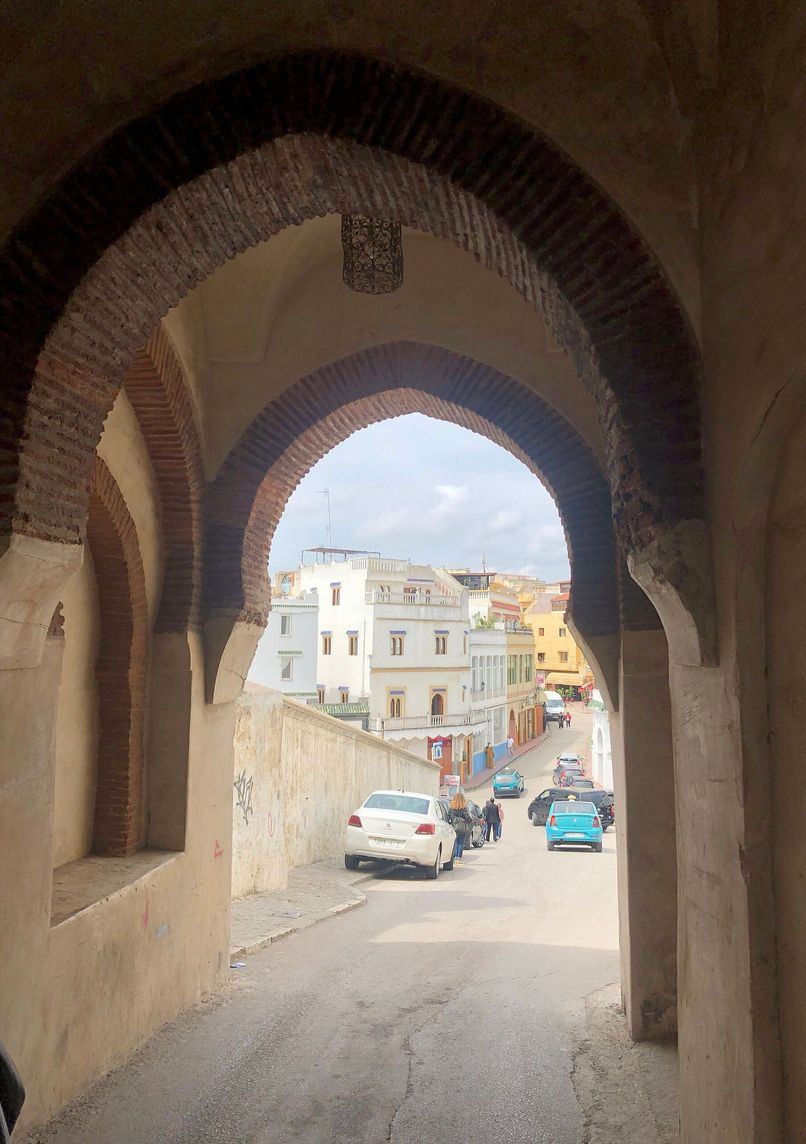
- Around ten historic gates, including Bab Fahs, Bab Kasbah, Bab el-Bahr and Bab Marsa
- Seafront bastions: Borj al-Naam, Borj Dar el-Baroud and Borj Ben Amar, built between 1662 and 1684 and reopened in 2023 as a space devoted to the city’s memory
- At the top, the kasbah, the former citadel, and the governors’ palace, now the Kasbah Museum
Medina highlights
Souks and crafts
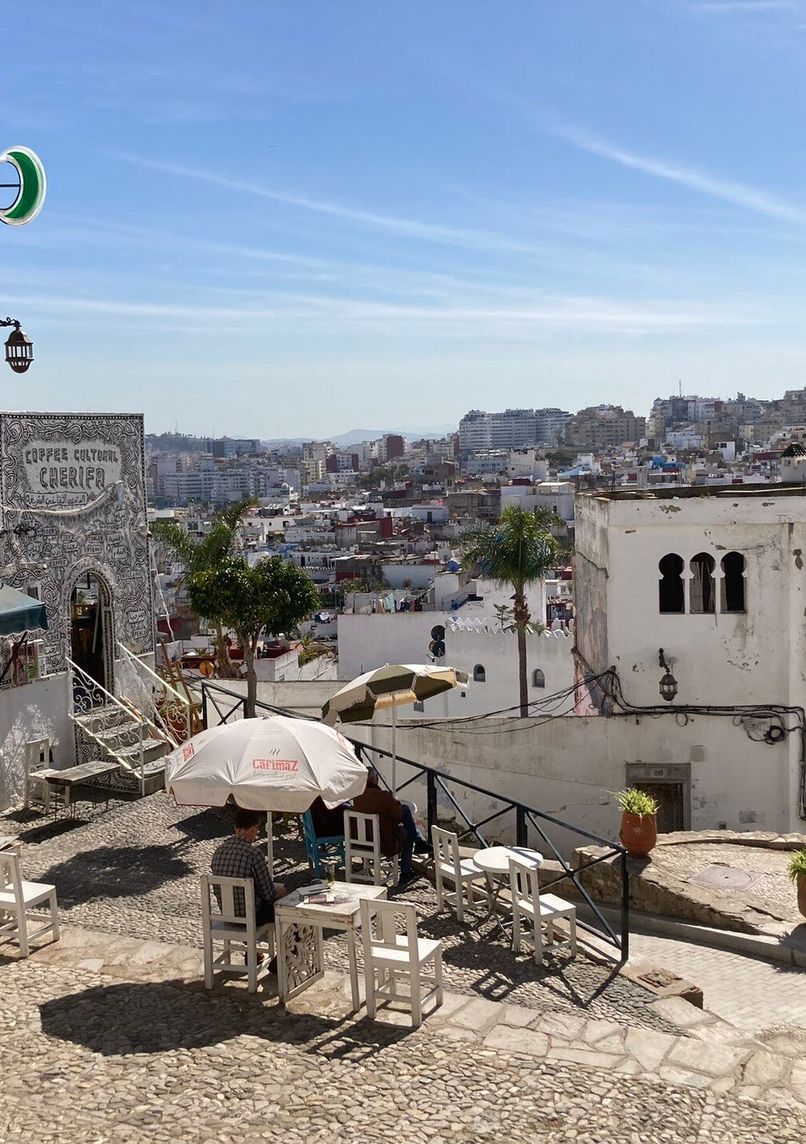
The shopping lanes linking the two Soccos are lined with craftsmen: leather, wood, silver, traditional clothing and babouches. Grocers, pastry shops and small cafés fill the gaps, while terraces at the top of the medina look out over the port and the Spanish coast.
Practical information
- Free access on foot: enter from the Grand Socco or, from the top, through Bab Kasbah
- Steep lanes and steps: wear comfortable shoes
- Allow half a day for the medina and kasbah, a full day with the museums
- Several museums close on Tuesdays, so check before planning your route