Before the city: a major prehistoric heritage
Long before Anfa, early humans lived along the Casablanca coast. Quarries opened in the 20th century to build the city uncovered some of North Africa's most important sites. In the Thomas I quarry, a layer dated to around 1.3 million years ago holds the oldest known trace of human occupation in Morocco, and the Hominid Cave has yielded remains dated to about 780,000 years. In 1955 a human jawbone was found in the Littorines Cave at Sidi Abderrahmane: the so-called "Sidi Abderrahmane Man".
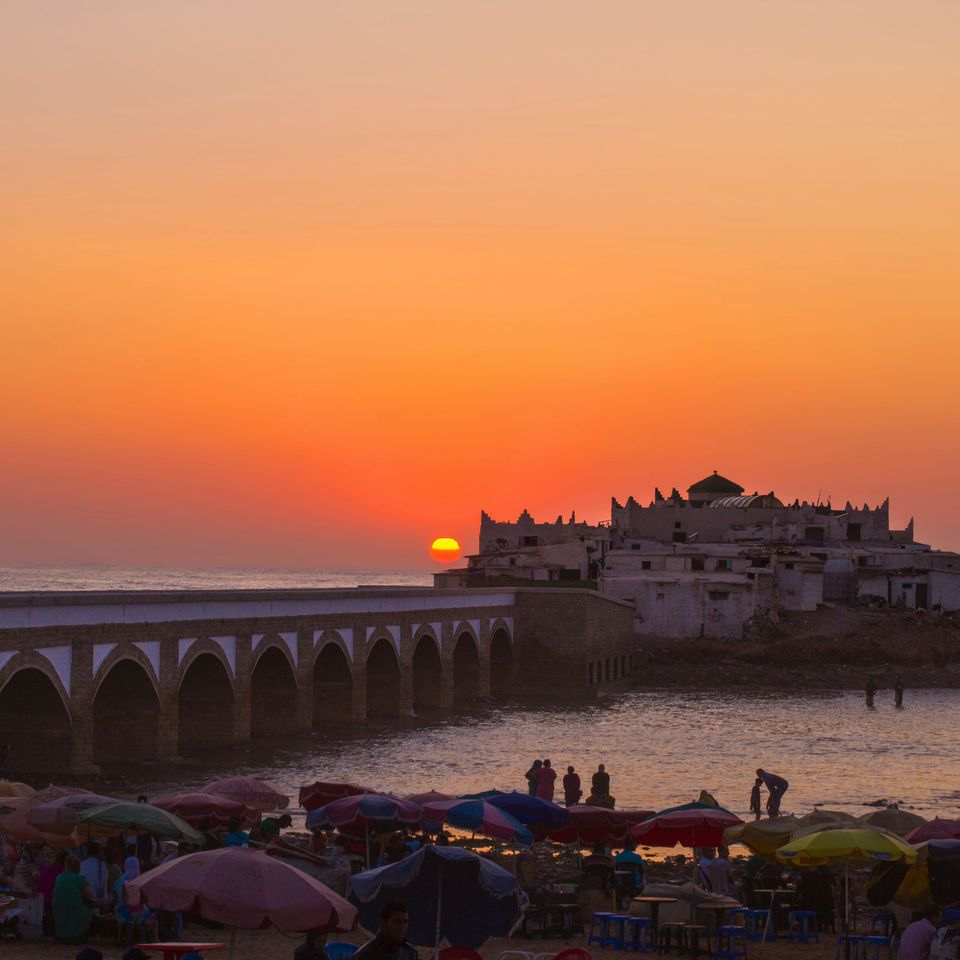
Since 16 July 2025 the former quarry has been home to the Sidi Abderrahmane Archaeological Park: five hectares near Aïn Diab beach, a 900 m² interpretation centre and a trail of more than two kilometres there and back.
Anfa, Berber port and corsair town
Anfa's origins are uncertain. Leo Africanus credited the Romans, other writers the Phoenicians or Carthaginians; historians agree it was a Berber port, linked to the Barghawata kingdom until the 11th century. The geographer al-Idrisi mentions it in the 12th century, and the Marinid sultan Abu Inan built a madrasa there in the 14th.
In the 15th century, Anfa sheltered corsairs who preyed on Portuguese shipping. In retaliation, an expedition ordered by King Afonso V destroyed the town in 1468. The site lay almost deserted for nearly three centuries.
Dar el-Beida, the "white house"
Around 1760, the Alaouite sultan Sidi Mohammed ben Abdallah rebuilt the town, gave it walls, a mosque, a hammam and a madrasa. It was renamed Dar el-Beida, "the white house", which Spanish merchants translated as Casa Blanca; the name appears in the late 18th century. The Sqala bastion on the edge of the old medina recalls this era of fortification against the ocean.
In the 19th century the port shipped grain and wool to Europe. A Spanish consulate opened in 1799, others followed in the 1860s, and the population grew as traders arrived from all over Morocco. Popular tradition also ties the city to its saints: Sidi Belyout, whose shrine stands near the port, and Sidi Allal el-Kairouani, whom legend links to his daughter Lalla Beida, sometimes cited as the origin of the city's name.
1907-1956: from bombardment to independence
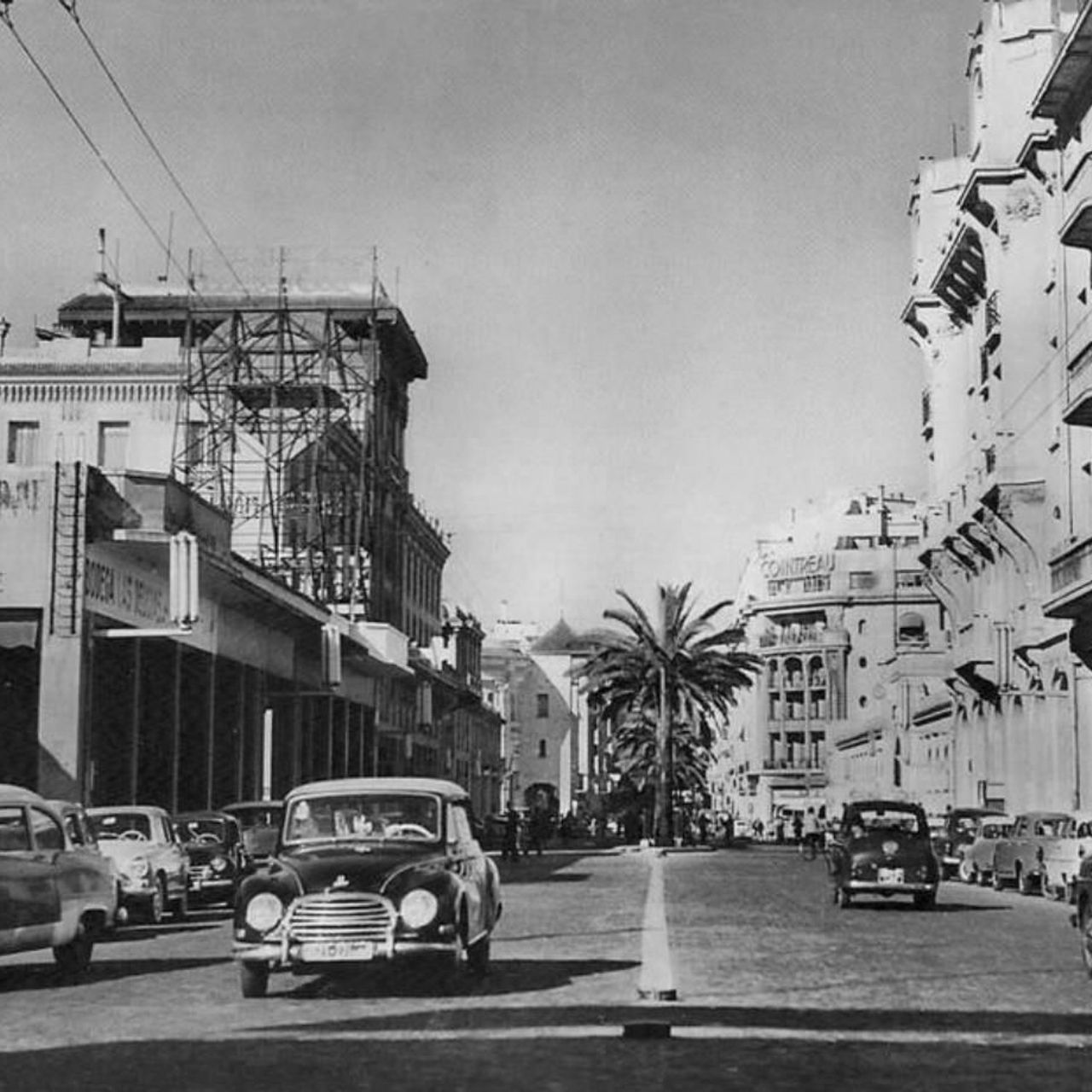
In July 1907, European workers building the port were killed in a riot. From 5 to 7 August the French navy shelled the town and troops landed. Five years later the Treaty of Fez (1912) established the protectorate. Lyautey made Casablanca the country's economic showcase: a major port, a new city planned by Henri Prost, the Habous quarter for Moroccan families and Art Deco blocks along the boulevards. Within a generation the population grew from a few tens of thousands to several hundred thousand.
From 14 to 24 January 1943, the Anfa hotel hosted the Casablanca Conference between Roosevelt and Churchill, where Sultan Mohammed ben Youssef, the future Mohammed V, met the American president. On 7 April 1947, colonial troops opened fire in working-class districts, killing between 180 and several hundred people depending on the source; days later in Tangier, the sultan gave the speech that put independence on the agenda.
Casablanca became a centre of the resistance, and its main boulevards now bear the names of its heroes: Mohammed Zerktouni, who died in 1954 after his arrest, and Brahim Roudani, who founded underground networks. On 11 June 1955, industrialist and newspaper owner Jacques Lemaigre-Dubreuil, a supporter of independence, was assassinated outside the Liberté building. Morocco became independent in 1956.
The modern metropolis
As the kingdom's economic capital, Casablanca has also known social unrest. On 23 March 1965 a students' protest turned into riots. On 20 and 21 June 1981, rising food prices and a call for a general strike led to the "bread riots": the Equity and Reconciliation Commission later put the death toll at 114, and a cemetery for the victims was inaugurated in 2016.
The following decades reshaped the city: the Hassan II Mosque, built over the sea between 1986 and 1993; the tram in 2012, expanded to four lines in 2024; the new Casa Anfa district on the former airport; and the restoration of Arab League Park and the former Sacré-Cœur Cathedral. With around 3.2 million people at the 2024 census, Casablanca is Morocco’s largest city.
Where to discover Casablanca's history
- The Casablanca Memory Museum, open since February 2025 in Villa Carl Ficke, a 1913 Neo-Moorish mansion restored by architect Salima Naji: the city's history, 20th-century architecture and painters of the Casablanca School.
- Sidi Abderrahmane Archaeological Park, for prehistory.
- The old medina and the Sqala, the heart of Dar el-Beida.
- Place Mohammed V and the Art Deco downtown, witnesses of the protectorate city.
- The Habous quarter, a "new medina" built from the 1920s.
- Notre-Dame-de-Lourdes church, completed in 1956, for its stained glass by Gabriel Loire.
Practical information
- Casamémoire's Heritage Days, held every spring, offer free guided tours of the historic districts.
- Museum opening times vary with the seasons and during Ramadan, so check before you go.
- Find our cultural venues in the Arts & Culture section.