Hay Mohammadi, cradle of Nass El Ghiwane
In the early 1970s Hay Mohammadi was Casablanca’s great working-class district, home to families from all over the country with their dialects, music and Sufi brotherhoods. It was here that Nass El Ghiwane came together around Larbi Batma, Omar Sayed, Boujemaa Hagour, Allal Yaala and Abderrahmane "Paco" Kirouche, who came from Essaouira with his guembri. Several of them had met on stage, in the experimental theatre of the time.
Their revolution was simple: folk instruments (bendir, guembri, banjo, tbila), rhythms borrowed from Gnawa, aita and Sufi traditions, and above all lyrics in Darija, poetic and often outspoken, about injustice and everyday life. Songs such as Essiniya and Lebtana became part of the collective memory. Martin Scorsese, who called them "the Rolling Stones of Africa", used Ya Sah on the soundtrack of The Last Temptation of Christ (1988).
The band weathered loss: Boujemaa died in 1974, Larbi Batma in 1997 and Paco in 2012. Yet Nass El Ghiwane, with Omar Sayed and a new generation, still performs in Morocco and abroad, and its songs are still sung at weddings. Other bands of the same movement followed in its wake, such as Jil Jilala and Lemchaheb.
L’Boulevard, launchpad for a generation
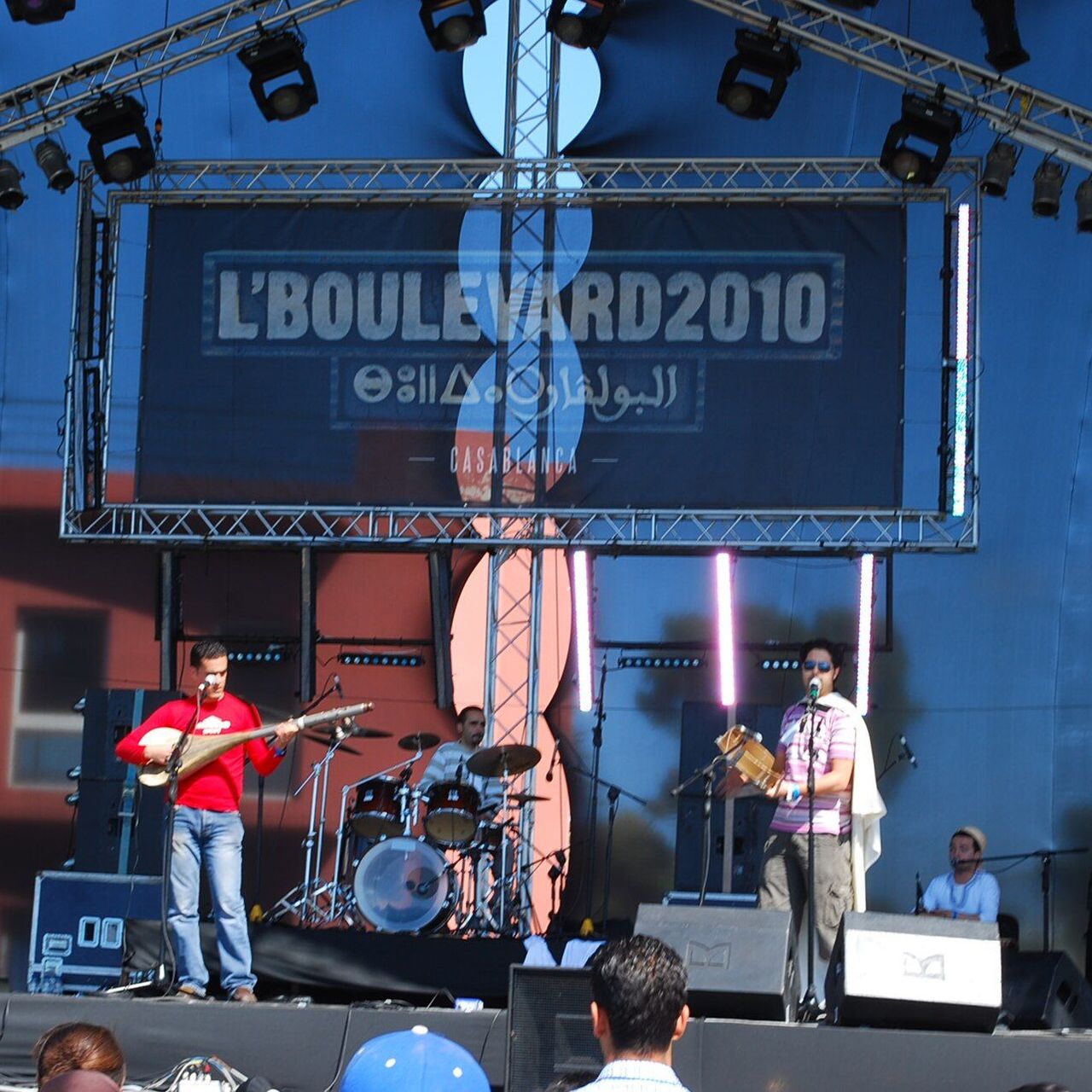
In the late 1990s two enthusiasts, Hicham Bahou and Mohamed "Momo" Merhari, organised a festival for young musicians in the FOL hall (Fédération des œuvres laïques). L’Boulevard was born. Its talent contest discovered bands from all over the country and, unusually, put metalheads, rappers, rockers and fusion musicians on the same stage. The festival is run by the EAC-L’Boulvart association, which also operates Boultek, its year-round contemporary music centre.
In 2003 the arrest of fourteen young metal musicians accused of "Satanism" sparked a campaign that reached far beyond the music scene. For sociolinguist Dominique Caubet, that pivotal year marked the moment a hitherto underground scene stepped into the open.
The Nayda, Casablanca’s movida
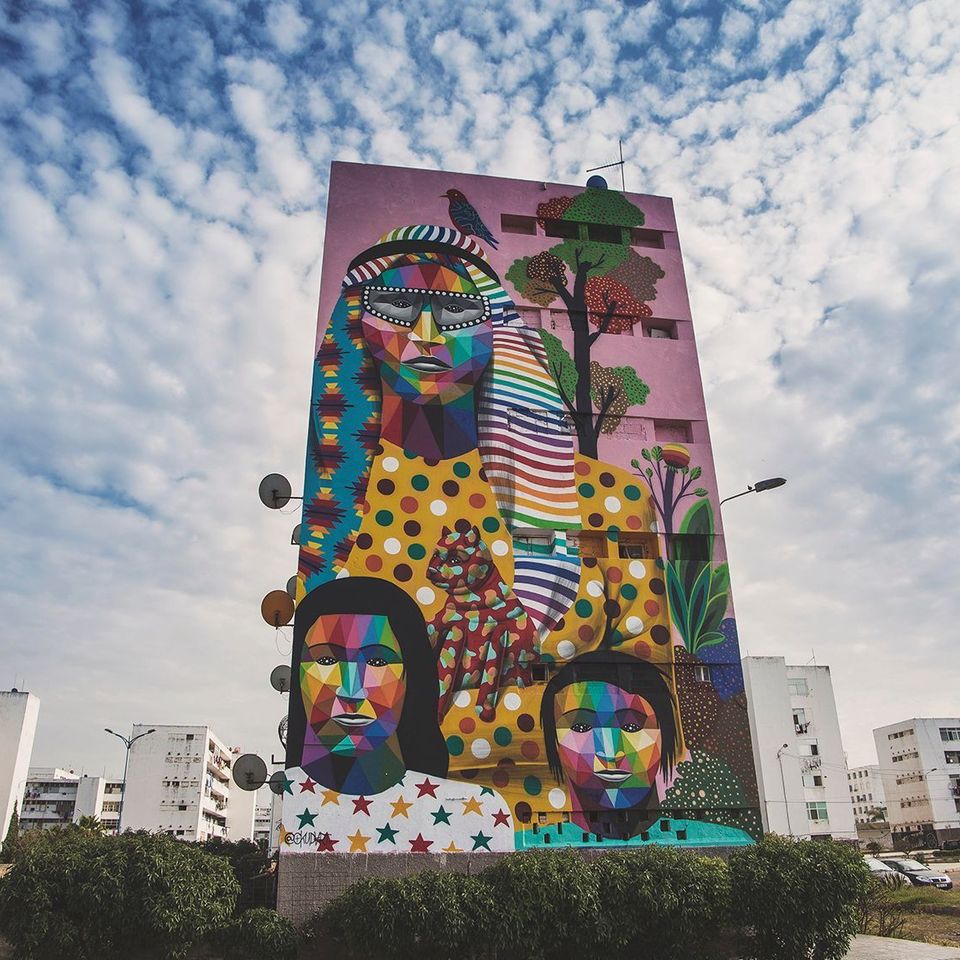
Around 2005 the press was talking about a "Moroccan movida"; two years later the movement took the name Nayda ("it’s happening"). Dominique Caubet filmed it in 2007 in the documentary Casanayda!, just as private radio and television were discovering these artists. The Nayda went beyond music: Darija was used openly, urban fashion invented its own codes, graffiti took hold, and Casablanca’s former slaughterhouses became an alternative arts venue.
Musically, Hoba Hoba Spirit, formed in Casablanca in 1998, blended rock, reggae and Gnawa into what it calls "hayha". Rapper Bigg, later Don Bigg, born in Casablanca in 1983, established rap in Darija with his first album, Mgharba Tal Mout, in 2006, and teamed up with Hoba Hoba Spirit on Goulou Bazz.
Casablanca, capital of Moroccan rap
Twenty years on, rap has become the country’s most popular music, and Casablanca remains its centre of gravity. ElGrandeToto, born in 1995 in Benjdia, a working-class district of the city, mixes trap with North African influences in Darija, French and English; in 2022 he became the first Moroccan artist to receive a gold record, and he is among the most streamed Moroccan rappers. Nabil Ayouch’s film Casablanca Beats (2021) showed another side of the scene: passing it on, through the Positive School founded by rapper Anas Basbousi at the Sidi Moumen cultural centre.
L’Boulevard has followed the shift. Now free and held at the RUC stadium, the festival drew more than 40,000 people over four days in September 2025 for its 23rd edition. The 24th, from 17 to 20 September 2026, opened with a rap night featuring Bo9al, Dizzy Dros and Figoshin, before a line-up stretching all the way to Sepultura’s metal. The organisers have announced a 25th edition for 2027.
Where to hear music today
The highlight of the year is still L’Boulevard in mid-September, preceded in early summer by the selection for its talent contest. The rest of the year, concerts and open stages are shared between cultural centres, foreign cultural institutes and clubs. To round off the evening, our Bars & Nightlife section picks the venues with live music, and Arts & Culture lists the city’s performance spaces.
Practical information
- L’Boulevard: every September at the RUC stadium; free entry; programme on boulevard.ma.
- Hay Mohammadi: working-class district in the east of the city, birthplace of Nass El Ghiwane; best explored with a guide.
- Listen to: Nass El Ghiwane (Essiniya, Lebtana), Hoba Hoba Spirit (Trabando, 2007), Don Bigg, ElGrandeToto.
- Watch: Casanayda! (2007) by Dominique Caubet and Casablanca Beats (2021) by Nabil Ayouch.