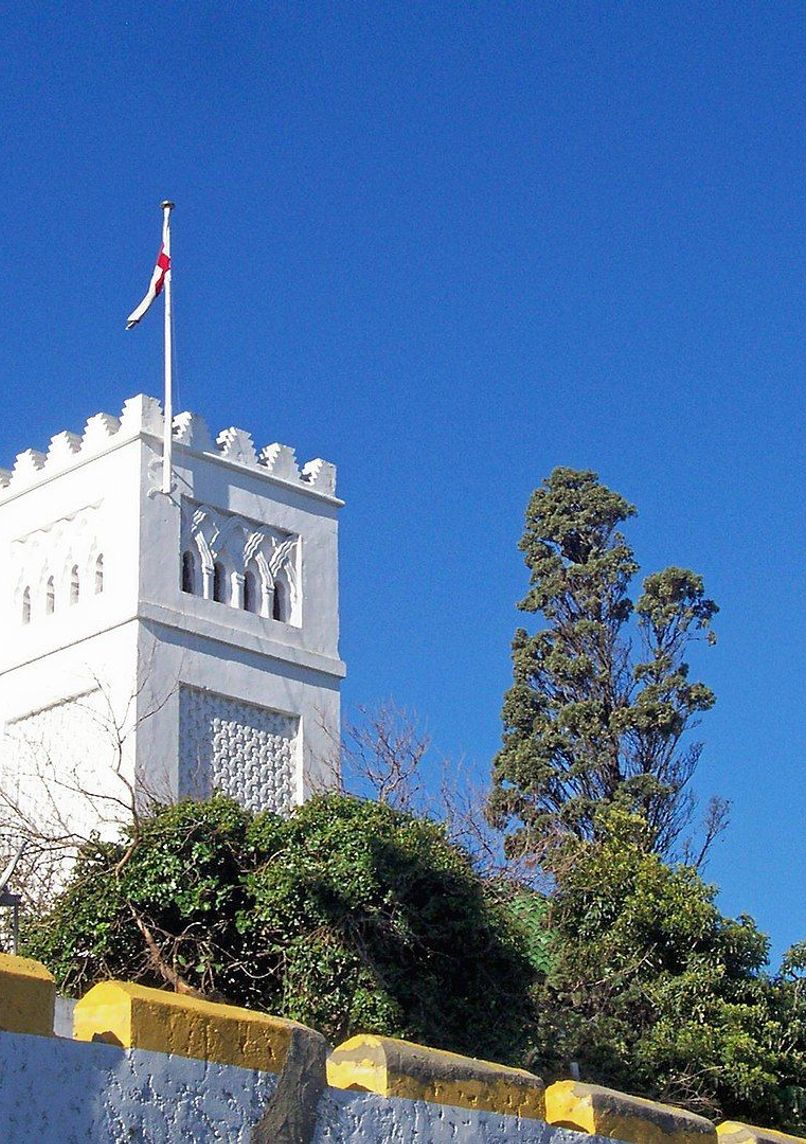
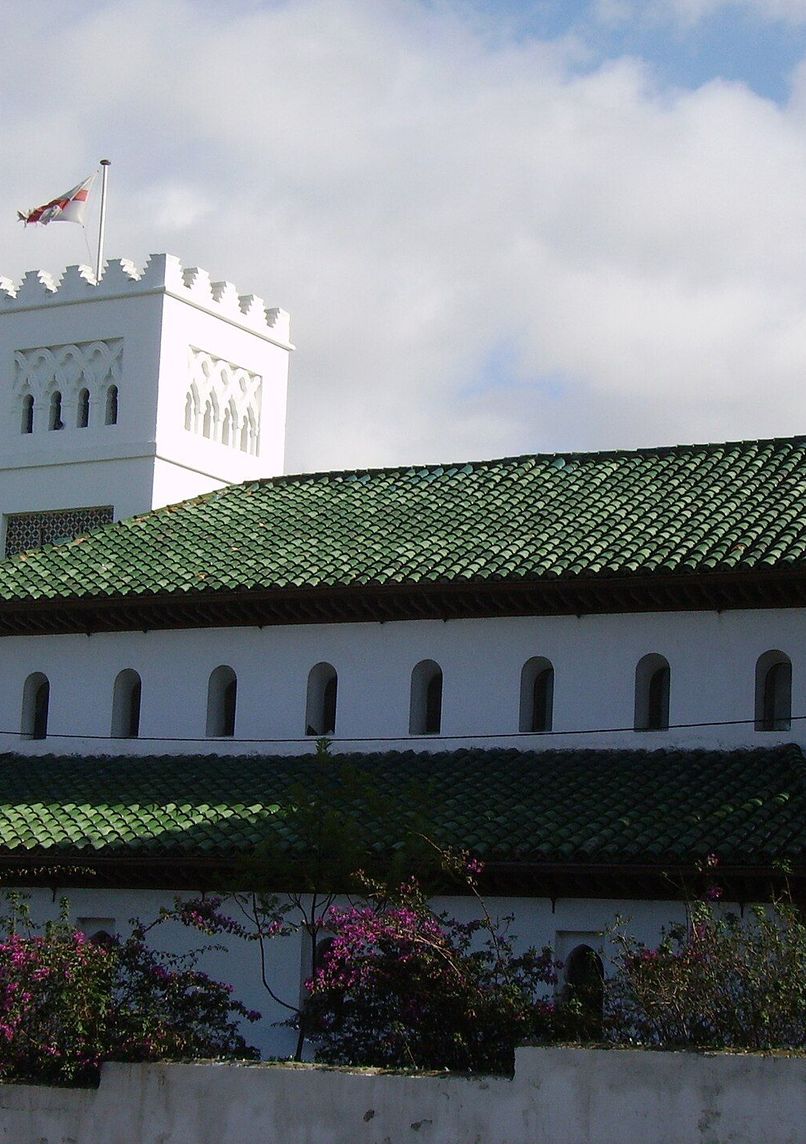
Above the Grand Socco, St Andrew’s Anglican Church blends Moorish architecture with English liturgy: a minaret-shaped tower, horseshoe arches inside and a shady graveyard where Walter Harris and other figures of international Tangier lie. Matisse painted it from his hotel window.
A Moorish church
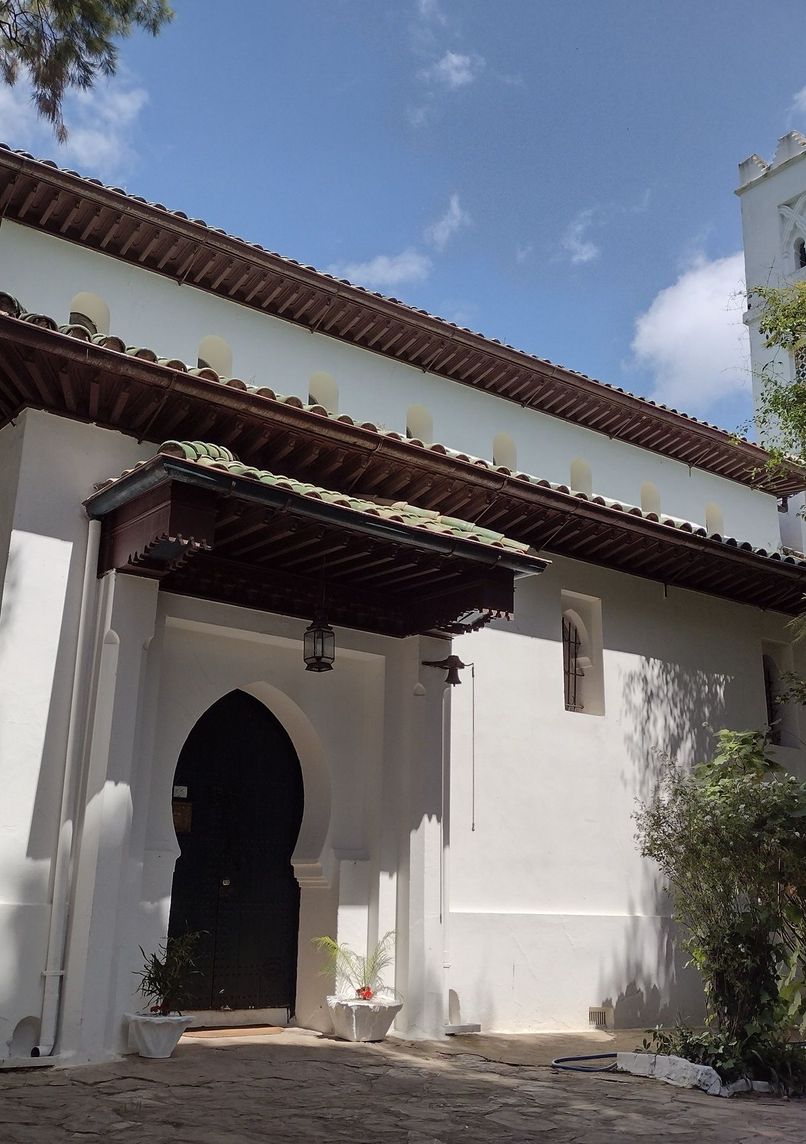
In 1880 Sultan Hassan I gave the British community in Tangier a plot of land to build an Anglican church. When the first building proved too small, a new church was built in 1894 and consecrated in 1905. It borrows the language of Moroccan architecture: whitewashed walls, green-tiled roofs and a square, minaret-like tower that rises above the graveyard.
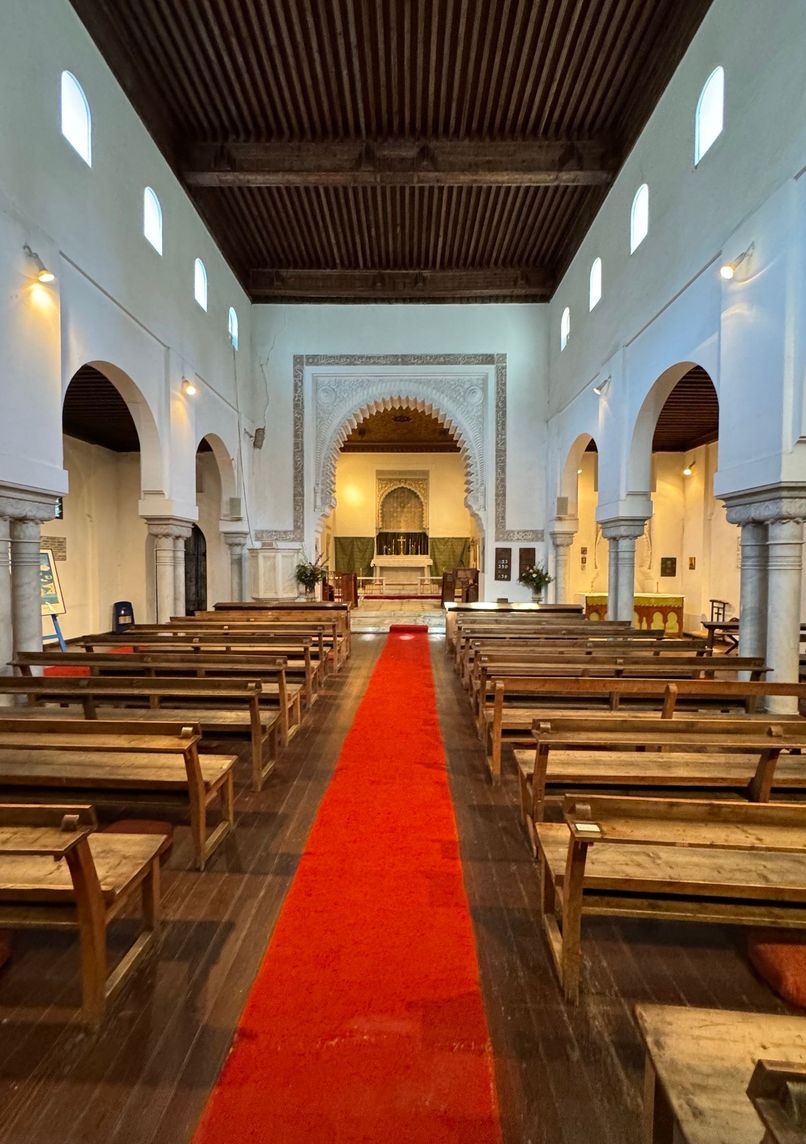
An unusual interior
- A nave lined with horseshoe arches beneath a wooden ceiling
- A chancel decorated with carved plaster and inscriptions, including a dedication to Sir John Hay Drummond Hay, British representative in Morocco for forty years
- Memorial plaques, among them one to airman Thomas Kirby-Green, one of the escapers of “The Great Escape”, executed after his recapture
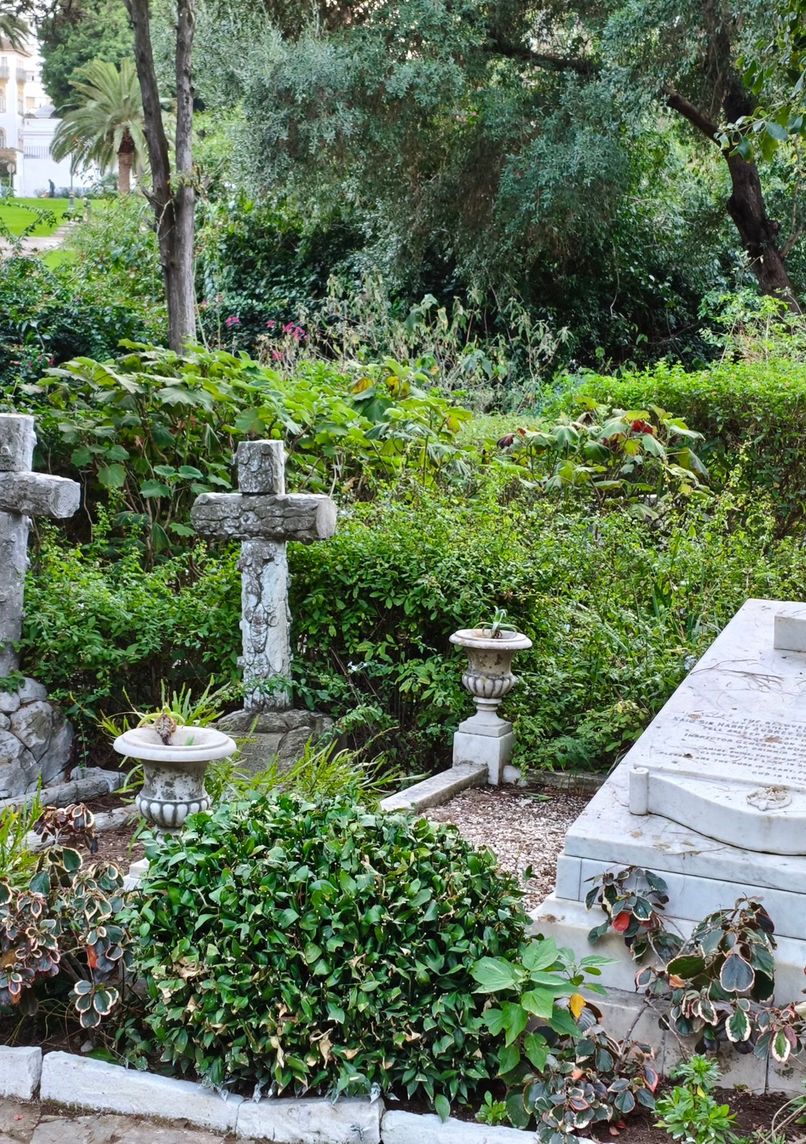
The graveyard
The garden graveyard, shaded by trees and shrubs, holds the graves of figures from cosmopolitan Tangier: journalist Walter Burton Harris (1866-1933), whose villa is now the Villa Harris Museum, collector Christopher Gibbs (1938-2018) and Sir Harry MacLean (1848-1920), commander of the Moroccan army.
Matisse and St Andrew’s
During his stays in Tangier in 1912 and 1913, Henri Matisse painted the church and its tower from the window of his room at the nearby Grand Hotel Villa de France.
Practical information
- A working Anglican parish, part of the Archdeaconry of Gibraltar
- Open to visitors during the day, usually in the morning and mid-afternoon; the caretaker shows visitors around and asks for a contribution to upkeep
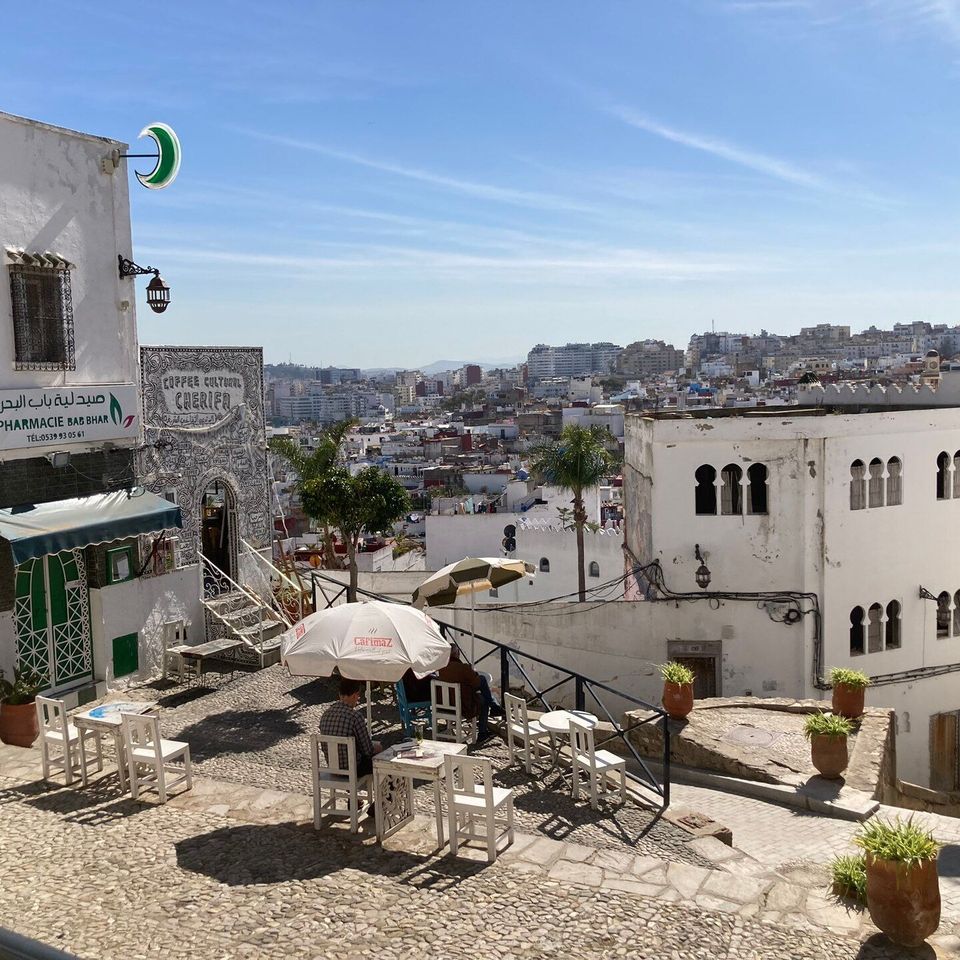
- On Rue d’Angleterre, a short walk from the Grand Socco; on Thursday and Sunday mornings, the Rifi women’s market sets up along its wall