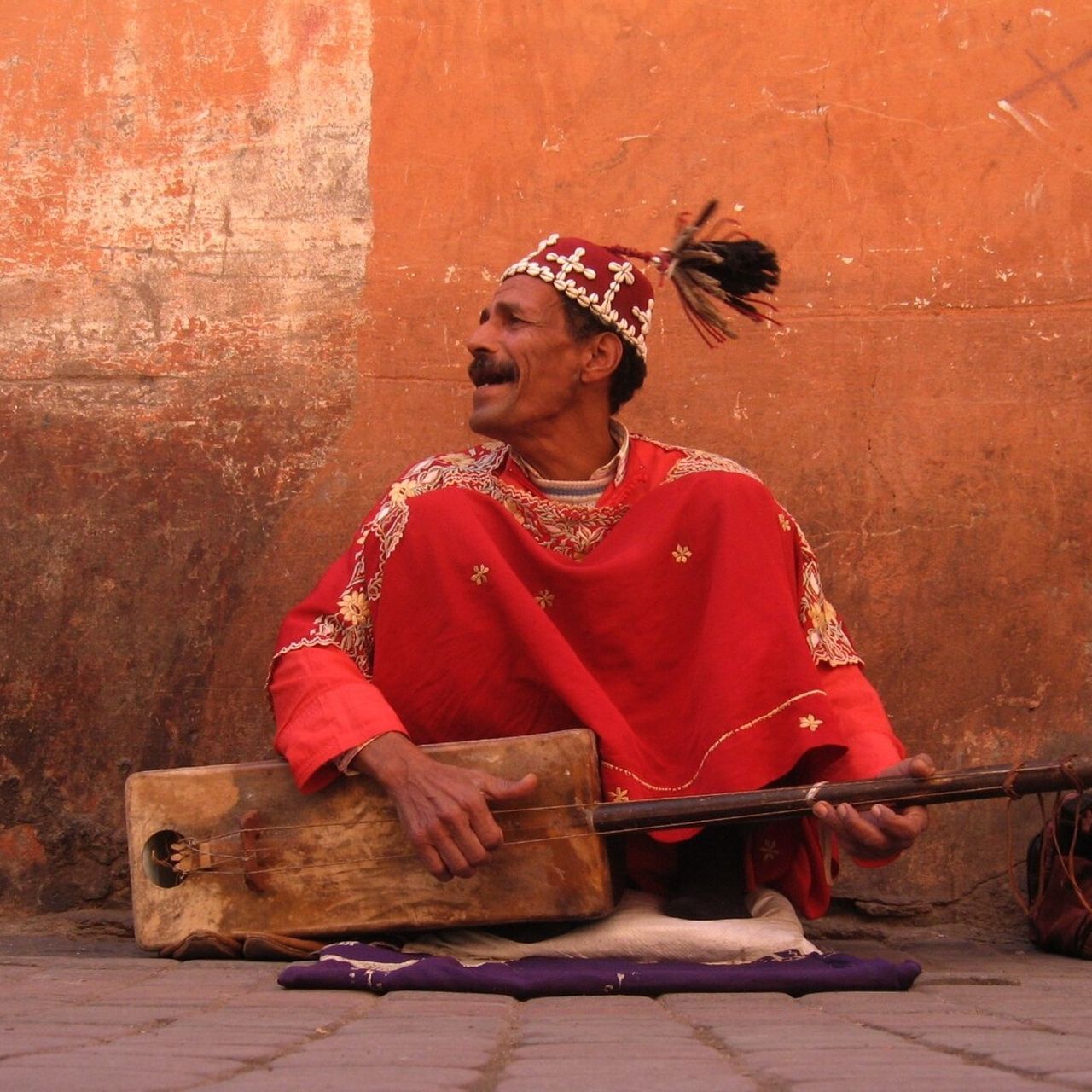
The Gnaouas are a cornerstone of Jemaa el Fna Square, with their frenetic and vibrant rhythms instinctively drawing tourists to this legendary spot. Both enthusiasts and the curious gather predominantly around this historically charged performance. Photo : Guimbri Player
The Gnaouas are a cornerstone of Jemaa el Fna Square, with their frenetic and vibrant rhythms instinctively drawing tourists to this legendary spot. Both enthusiasts and the curious gather predominantly around this historically charged performance. Photo : Guimbri Player
The Gnaouas are not just a musical genre; this brotherhood has cultivated a world combining body expression, folk music, and spirituality.
Photo: DR
History
Originally, the Gnaouas were slaves who arrived in Morocco with merchant caravans. Coming from Senegal, Sudan, and other Sub-Saharan countries, these men were placed in influential households or in service to the Sultan. Various theories attempt to clarify the appellation Gnaoua, also known as Gnawa. Ethnologist Maurice Delafosse provided an explanation based on etymological and historical data.
According to M. Delafosse, the word 'Gnaoua' stems from the Berber expression akal-n-iguinaouen, which means 'land of the blacks.' This Berber phrase is the origin of the words 'Guinea' and 'Gnaoua,' phonetically similar, meaning 'black men' or 'from the land of the blacks.'
Jemaa el Fna, the square of the Gnaouas
Founded in the 11th century, Jemaa el Fna Square stands out due to its diverse artistic and social potential, having been designated a UNESCO Intangible Cultural Heritage site since 2008. Numbering over 100 members, the Gnaoua brotherhood contributes to this richness, having coexisted on the square since 1966, along with the Hmadchas (dancers and singers of the popular Sufi tradition) and the Aïssawas (snake charmers and musicians from a mystico-religious order).
Positioned at the entrance of the square, the Gnaouas often wear brightly colored outfits. They are recognized by their red toque dotted with cowries, 'a shell that slaves inserted into their scepters which, when struck against the ground, emitted a sustained rhythm, a kind of release from the harsh conditions,' explains Moustapha Weld Ba Hmed, a Gnaoui from father to son. An emblematic figure of Jemaa el-Fna Square, this 51-year-old Marrakeshi emphasizes the spiritual dimension of Gnaoui music because according to him, 'The lyrics, sound, and rhythm of the Gnaoua music offer a form of therapy to the audience while presenting a spectacle of body expression: the acrobatic movements are synchronized with the melodies, plunging the Gnaoui into a trance, creating a mystical atmosphere around them.'.
A favorite attraction for visitors, the Gnaouas stand out with their unique instruments and distinct sounds such as the guenbri and the crotals.
In recent years, Gnaoua music has begun to gain international attention thanks to bands like Gnawa Diffusion and the National Orchestra of Barbes. On the national scene, Gnaoua music has its own festival. Established in 1998 in Essaouira, the Gnaoua Festival transforms the city into a sort of Moroccan Woodstock each year.
A crowning moment in 1995 when rock band Led Zeppelin, accompanied by Gnaoui musicians, gave a free concert in Jemaa el Fna Square. Incorporating melodies similar to jazz and blues, artists such as Randy Weston and Bill Laswell frequently collaborate with Gnaoui musicians for compositions and performances.
Italian cuisine, much like its 'mamma', is generous and welcoming! Brimming with Mediterranean flavors and sunshine, this traditional cuisine inspires many chefs and delights both the young and the old. From antipasti, pastas, pizzas, and risottos, to salads, cheeses, cold cuts, tiramisu, and panna cotta, here is our selection of places to savor all these traditional dishes. Photo by Yoav Aziz
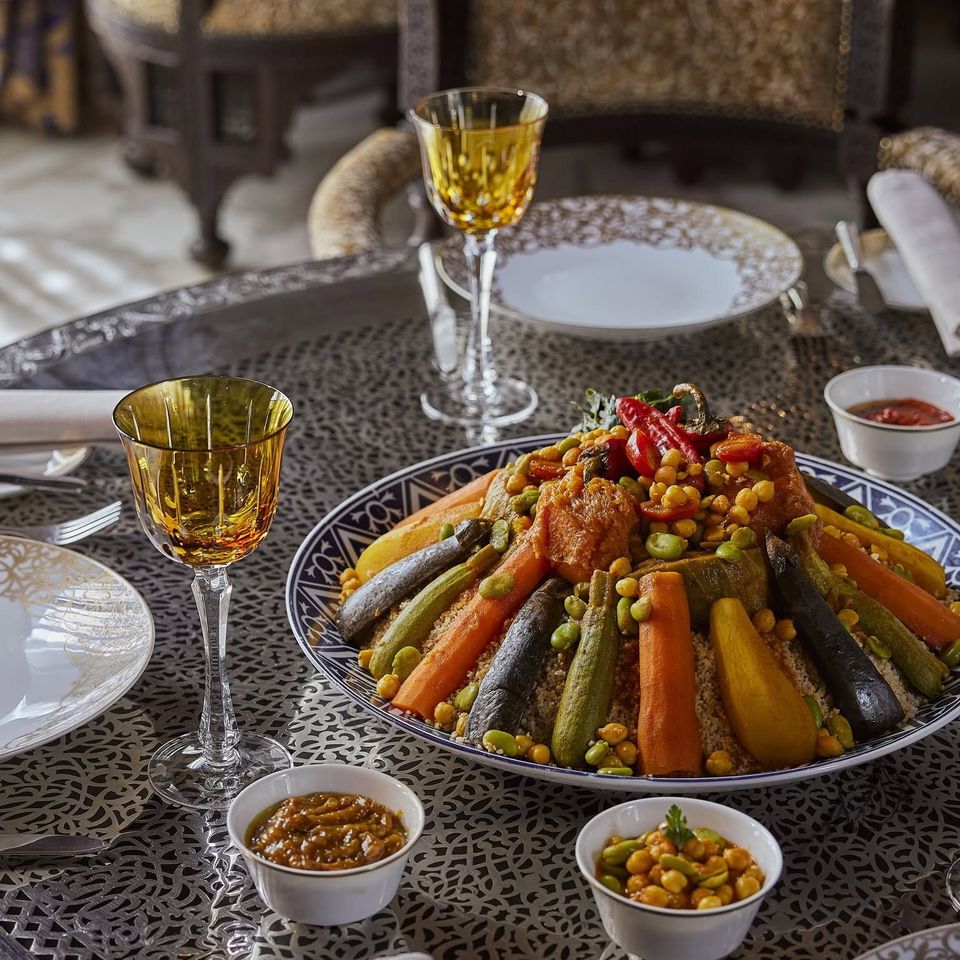
Couscous, a dish that needs no introduction, is a Friday lunchtime staple. Whether with chicken, beef, or vegetarian, there's something for every taste and budget! Our editorial team reveals its 5 favorite spots to savor a delicious couscous in Marrakech.
Photo: La Grande Table Marocaine
Mahi Binebine's exhibition "Silent Elevations" has been extended until May 20 at the Mandarin Oriental. This event is a must-see for lovers of contemporary Moroccan art and those who want to explore a unique blend of sculpture and painting.
Ramadan is a time for shared moments, and Marrakech offers many exceptional places to break the fast with family or friends. Here is a selection of establishments where you can enjoy a memorable ftour in Marrakech during the holy month.
Looking to escape your daily routine, soak up nature, see the sea and feel the sea spray, hike in the mountains and breathe in the fresh air, or simply discover a different atmosphere... The areas around Marrakesh are incredibly diverse! While staying in Morocco, Made in Marrakesh suggests ten getaways accessible by car or plane, thanks to new flight routes, all within three hours. So, what are you up to this weekend? Photo: Samuel C
Marrakech never fails to amaze visitors with its culture, enchanting landscapes, and most notably, its world-renowned culinary scene. If you are a fan of fine dining, the city boasts some of the biggest names in international cuisine. Let's dive into the world of these renowned chefs who delight guests' taste buds at select establishments in the city. Photo: L'Ô à la bouche