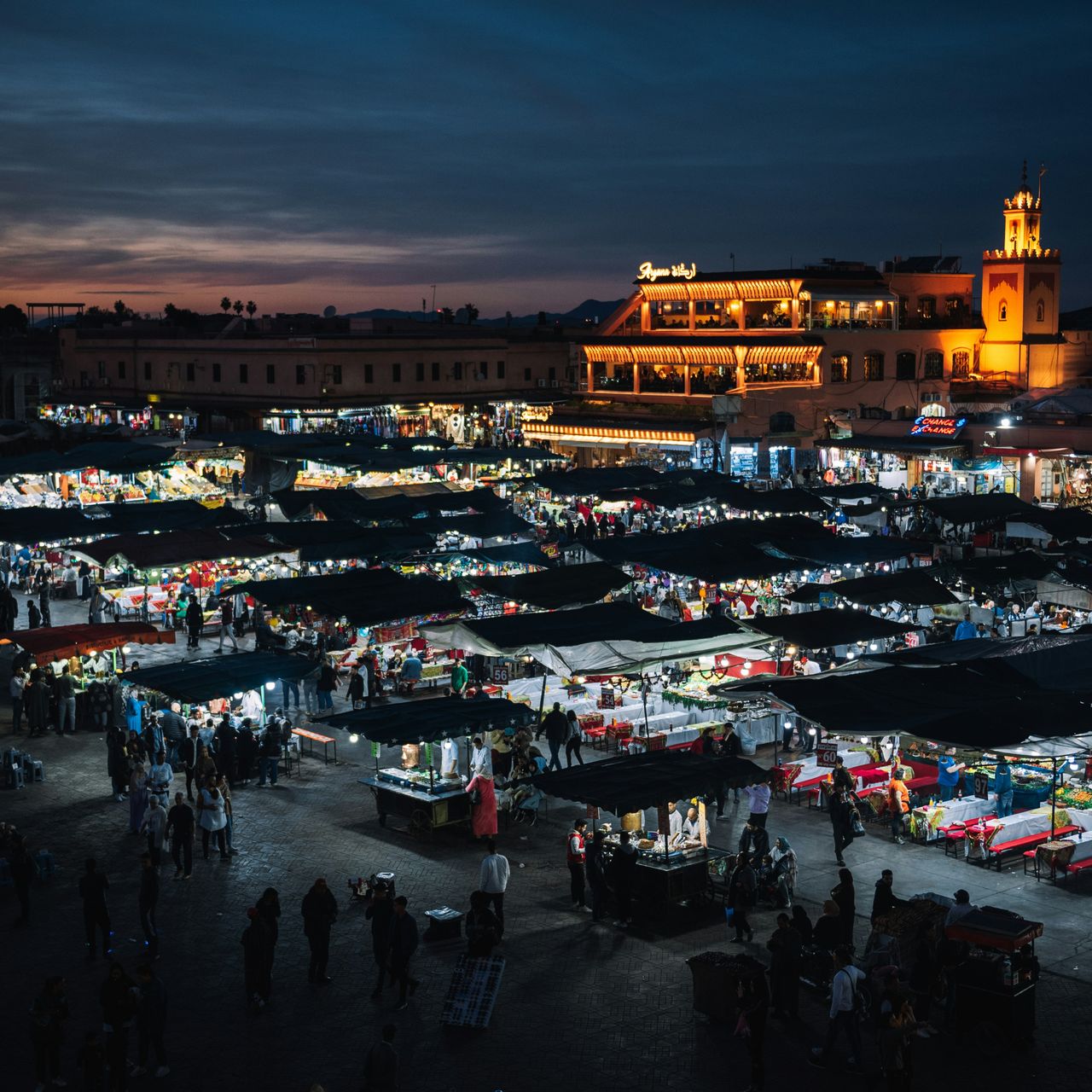
Recognized by UNESCO as part of the world’s intangible cultural heritage, Jemaa el Fna square always amazes! Storytellers, acrobats, dried fruit vendors, as well as henna artists and snake charmers come together during the day. And as the sun sets, musicians and street food vendors transform the square into a new kind of spectacle. Here are all the activities and the vibrant life of Jemaa el Fna summarized in 10 snapshots. Photo: Abdou Faiz
Recognized by UNESCO as part of the world’s intangible cultural heritage, Jemaa el Fna square always amazes! Storytellers, acrobats, dried fruit vendors, as well as henna artists and snake charmers come together during the day. And as the sun sets, musicians and street food vendors transform the square into a new kind of spectacle. Here are all the activities and the vibrant life of Jemaa el Fna summarized in 10 snapshots. Photo: Abdou Faiz
Fresh fruit juice stalls
The colorful stands offering freshly squeezed orange juice are a must-visit in the square. This relatively recent tradition, dating back to the mid-20th century, quickly became a symbol of local cuisine. Citrus fruits, cultivated in the region since the Arab-Andalusian era, have become emblems of Moroccan freshness and hospitality.
Photo: Annie Spratt
Traditional music players
The captivating melodies of Gnawa musicians echo around the square, creating a unique atmosphere. Inheritors of a musical tradition from sub-Saharan African slaves, these artists continue an ancient repertoire blending African rhythms with Arab influences. Their presence on Jemaa el Fna dates back to the 16th century when Marrakesh was a major cultural crossroads.
Photo: DR
Bird sellers
Sellers with their colorful cages add a touch of poetry to the square's atmosphere. This practice, dating back to when birds were used for hunting or as messengers, has become a pet trade. Today, it raises ethical questions but remains embedded in the traditions of Jemaa el Fna.
Photo: DR
Storytellers
The halqa, these circles formed around storytellers, are the soul of the square. These masters of speech perpetuate a millennial oral tradition, narrating folk tales, legends, and epic stories. Their art, threatened by modernity, remains a pillar of Moroccan cultural heritage and contributes to preserving the collective memory.
Photo: DR
Acrobatic performances
Acrobats and entertainers enliven the square with their spectacular performances. Heirs of Berber and Arab traditions, these artists perpetuate ancient techniques passed down through generations. Their acts, combining strength, agility, and balance, showcase the richness of Moroccan cultural heritage.
Photo: DR
Fishing game stalls
Surprisingly popular in a desert city, the fishing game is a hit at the square. This fun activity, which appeared in the 1960s, offers children the chance to win small prizes by catching plastic bottles. It illustrates the adaptability and innovation of Jemaa el Fna's vendors in response to societal changes.
Photo: DR
Snail vendors
The snail stalls, known as "babouches" in Moroccan dialect, are a popular local specialty. This culinary tradition, inherited from Berber influence, developed in the square in the early 20th century. Snails, considered a delicacy with medicinal properties, are prepared using age-old recipes passed down through generations.
Photo: DR
Street food vendors
When the sun sets, the square transforms into an open-air restaurant. Food stalls, assembled and disassembled daily, offer a variety of traditional dishes. This practice dates back to when Jemaa el Fna was a stopping place for caravans, providing travelers a warm meal before resuming their journey.
Photo: DR
Snake charmers
Snake charmers have been an integral part of Jemaa el Fna for generations. Sitting cross-legged, they skillfully handle cobras to the hypnotic sound of their flute. This practice dates back to when the square served as a gathering place for desert caravans, attracting itinerant artists from across North Africa.
Photo: DR
Vendors of dried fruits and pastries
Stalls brimming with dried fruits, spices, and traditional pastries are a feast for the eyes and taste buds. This commercial tradition dates back to when Marrakech was a major stop on caravan routes. The products offered, often from surrounding regions, reflect Morocco's geographical and cultural diversity.
Mahi Binebine's exhibition "Silent Elevations" has been extended until May 20 at the Mandarin Oriental. This event is a must-see for lovers of contemporary Moroccan art and those who want to explore a unique blend of sculpture and painting.
Ramadan is a time for shared moments, and Marrakech offers many exceptional places to break the fast with family or friends. Here is a selection of establishments where you can enjoy a memorable ftour in Marrakech during the holy month.
Looking to escape your daily routine, soak up nature, see the sea and feel the sea spray, hike in the mountains and breathe in the fresh air, or simply discover a different atmosphere... The areas around Marrakesh are incredibly diverse! While staying in Morocco, Made in Marrakesh suggests ten getaways accessible by car or plane, thanks to new flight routes, all within three hours. So, what are you up to this weekend? Photo: Samuel C
Marrakech never fails to amaze visitors with its culture, enchanting landscapes, and most notably, its world-renowned culinary scene. If you are a fan of fine dining, the city boasts some of the biggest names in international cuisine. Let's dive into the world of these renowned chefs who delight guests' taste buds at select establishments in the city. Photo: L'Ô à la bouche
As you know, Valentine's Day is just around the corner! Choosing the perfect restaurant to end this special day perfectly can be tricky. Made in Marrakech is here to help with a selection of offers to dazzle your beloved. Photo: Amanjena
The Christmas market season is officially open. Expect a friendly atmosphere, artisan stalls, tastings, and even charitable activities. Here are the 6 Christmas markets you shouldn't miss! Photo: Annie Spratt